
TL;DR
A good personal knowledge management system isn’t the one with the most features. It’s the one that gives you lasting leverage, fits how you actually think, and keeps working when life gets messy. Over time, the best system is usually the one you can return to without friction, grow without effort, and can use without spending more energy maintaining it than doing the work itself.
A personal knowledge management system is mostly talked about in terms of features, aesthetics, or appealing workflows.
I also used to think this way for years.
Even now, I don’t resent those ways of thinking about PKM systems. Features are easy to point to and easy to talk about. A beautifully arranged note-taking system looks convincing from the outside.
But after using different PKM apps for nearly ten years, I came to realize that this is not the whole point. The most important aspects of a personal knowledge management system that actually work in the long run are usually harder to see and less talked about.
There’s a reason for that.
Those qualities do not have the same immediate appeal, so they also do not have the same immediate selling power.
Looking back, I can see that not noticing them earlier is what kept me stuck in years of trial and error across different PKM apps. But once you see what really matters, it becomes much easier to understand why some systems keep working as your projects grow more complex, while others start to collapse under their own structure.
Over time, I came to judge a personal knowledge management system by three main standards.
- First, is it giving me any leverage, or just storing things?
- Second, does it actually fit the way I think and work?
- And third, can it survive real life over the long run?
Everything else matters too, but those are the questions that now sit above the rest.
Key Takeaways:
- The best personal knowledge management system isn’t the one with the most features. It’s the one that fits how you think and actually holds up over time.
- A good system should reduce friction, not add to it. Start small, keep retrieval simple, and only add complexity when you genuinely need it.
- The system that matters most is the one you keep coming back to: through different projects, different responsibilities, and different versions of yourself.
Table of Contents
A PKM system is for leverage, not storage.
For the longest time, I used to think of a PKM system as a place to store knowledge, a place where you can offload things.
That’s a start, and to some extent, a reasonable one.
You read things, learn things, collect things, and you need somewhere to store them. So a PKM system starts to look more like a personal archive. A private encyclopedia. A neatly arranged external brain.
But over time, that framing turns out to be too narrow. The point of a good personal knowledge management system is not storage. It is leverage.
That’s a big difference.
A good system helps you build on prior thinking instead of starting from scratch every time. It reduces restart costs. It helps you return to half-formed ideas before they disappear. It helps you pick up a project after a difficult week without having to rebuild the context from the ground up. It helps you see what matters, what is pending, what belongs together, and what has already been thought through and is ready to move on to the next step.
This is a significantly higher standard than a mere knowledge dump.
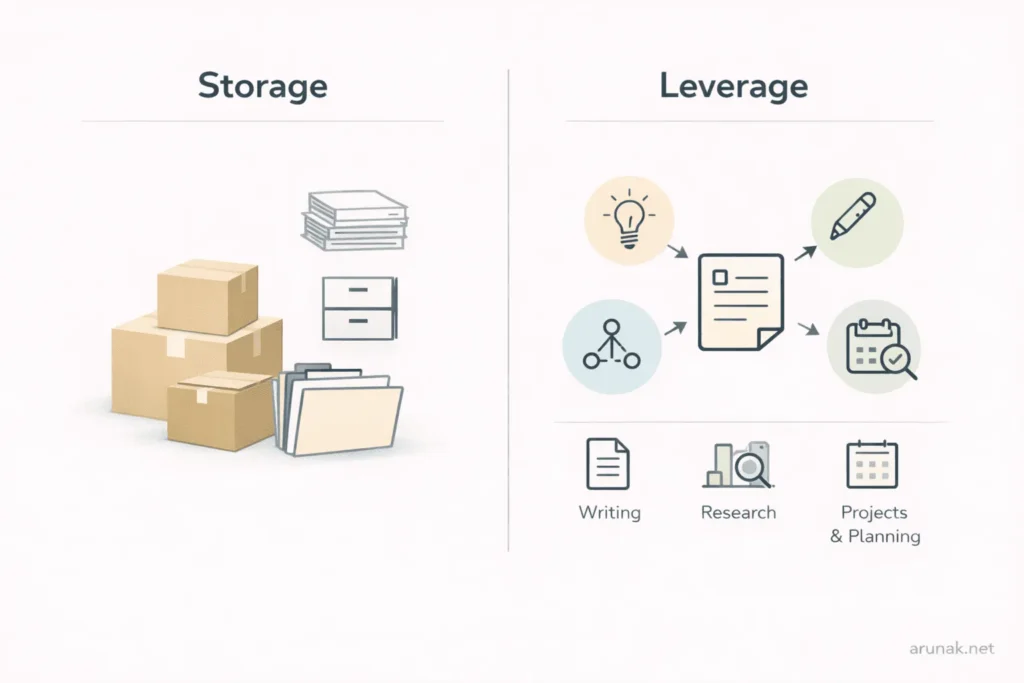
You can have thousands of notes stored in a PKM app and still have very little leverage over them. In fact, I think this is what most people, and I include myself here, experience at some point when using a PKM system the wrong way. They build a respectable warehouse of information, but the warehouse does not help much when real work needs to gain traction.
I made this mistake too, especially earlier on, when I thought more notes automatically meant more clarity. They don’t. What matters is whether the knowledge you accumulate reduces friction when you need it, whether it helps you refine an idea, start a new project, or reconnect with a line of thought that would otherwise have been lost.
On the other hand, a PKM system can do wonders when it stops being a museum of knowledge and starts becoming a dynamic knowledge hub that moves your life forward.
For example, it might help you write a blog post faster because the core argument is already half-formed (like this one, for example), even if you do not fully realize it yet, from ideas you had been collecting and connecting over time.
Or it might help you keep a research project coherent across months without having to start over from the same place again and again.
It might even make tomorrow’s tasks easier because today’s work helped you clarify what matters, capture the next steps, and preserve the context while it was still fresh.
The best systems do this without you even noticing it. They do not just hold information. They carry your life forward.
Fit matters more than features.
This is probably the biggest shift in how I think about PKM systems today.
Most people judge PKM tools by their features. Does it have backlinks? Does it support tags? Can it handle databases? Does it have a graph view? Can it be automated? Can it be customized down to the smallest detail?
Those things have their place, of course. But they matter far less than they seem to be at first.
A personal knowledge management system is only as good as the fit between the tool, the workflow, and the person using it.
That fit is shaped by several things at once:
- the kind of work you do,
- how you think: whether you naturally think in outlines, fragments, visual maps, or long-form writing,
- how you prefer to sort information
- how much structure you want upfront, and
- how much flexibility do you need as your projects evolve?
This is why I would not even start with the how until the why is clear.
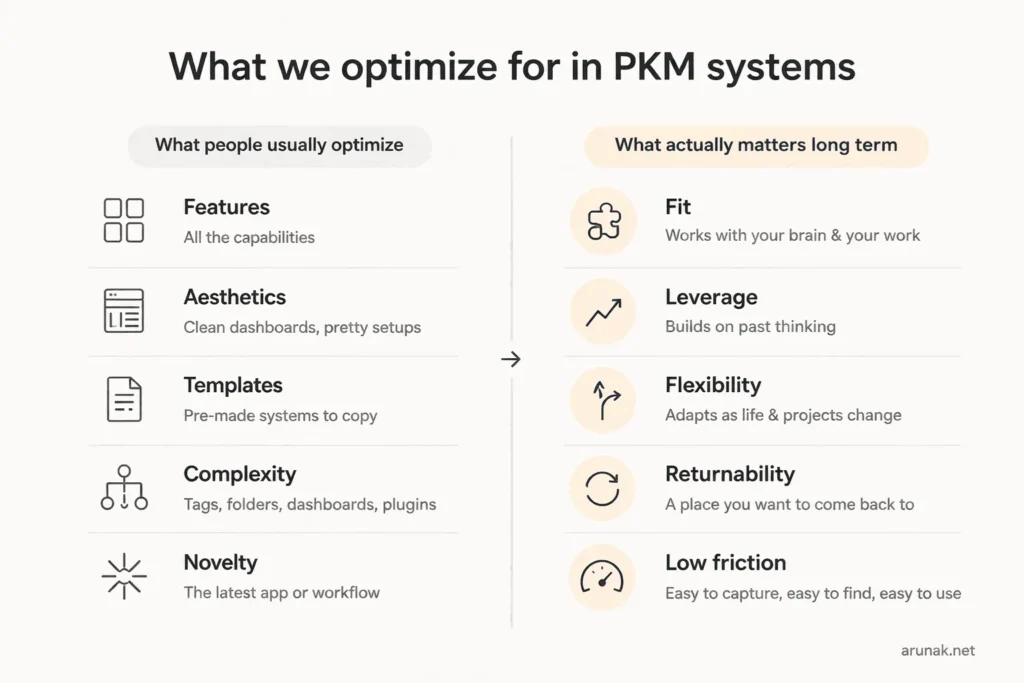
If you do not know what you need the system to do in your actual life, the feature list becomes just a distraction, even a kind of productivity trap. You end up choosing a tool because it looks capable, not because it fits you. And what often follows is that you duplicate someone else’s workflow without understanding whether it matches your own way of thinking.
Then the trouble begins.
The system that works beautifully for a YouTuber, a software engineer, or a productivity enthusiast may not work at all for a writer, researcher, student, or project-heavy generalist. Even within the broad world of PKM, apps and workflows have different natural centers of gravity. Some are better for outlining. Some are better for databases. Some are better for long-form writing. Some are better for reference storage. Some are simply more pleasant places to think.
They are very different from each other.
For example, when I first started using Roam Research as my primary PKM system, I thought I had found the one. It took me another year or so to realize that I am not really a jot-things-down type of person. I need to be able to write in a more free-form way, as in tools like Obsidian.
These sound like minor differences, but they become a big deal in the long run. They determine whether a system feels natural enough to keep using once the novelty wears off.
That is one reason people’s ratings of PKM apps differ so much, and exactly why they should not be treated as universal judgments. They are not always disagreeing about the app itself. More often than not, they are judging it against their own personality.
So when someone asks which PKM system is best, I think the better answer is this: the best system is the one that fits your personality. Not the one with the most features, but the one with the best long-term fit.
The best system is the one that survives real life.
After years of using these tools, this is probably the biggest lesson I have learned. So, it’s taking up the most space in this blog post.
The important question is not which app has the coolest features or which one looks the nicest.
The real question is this: what kind of system is still going to hold its value after years of actual use?
That is the only question I ask now before adding a new workflow, a new layer of structure, or a new app to my PKM system. If the change does not seem likely to hold up under ordinary use, I do not want it.
A long-term PKM system has to survive contact with real life. It has to hold up when your work gets messy, your interests change, your projects multiply, and your attention is no longer fresh enough to maintain some elaborate workflow built for an ideal version of yourself.
And that, to me, is the real test.
If I can come back after a difficult week, open the system, and still know where to continue, then the system is doing something right, that it’s working for you, not the other way around.
Life gets messy. A personal knowledge management system should be flexible enough to absorb that mess without becoming one more thing to manage.
Here are some of the ways I learned to design my PKM system so it holds up in the long run.
Start smaller and stay small until the complexity is demanded.
One of the most important lessons I’ve learned over the years is this: always start small with a PKM tool.
People often begin PKM with oversized ambition. They want the complete system right away. They want folders, tags, dashboards, templates, project pages, reading pipelines, writing workflows, spaced repetition, review systems, and maybe a few elegant visualizations to make it feel…complete.
I understand the temptation. A well-designed system creates the feeling that your life is about to become more coherent, that things are finally going to click.
But there is a problem. Systems built too early are often built for an imagined self. We just do not know enough yet about how we would actually work inside a PKM system.
Borrowed templates, elaborate dashboards, and highly structured workflows are often designed not around the person who exists now—with changing habits, limited energy, and uneven attention—but around the person you hope to become one day. That is an understandable impulse, but in my experience, it is usually so ambitious that the system becomes difficult to sustain in real life.
So the whole thing becomes brittle in the long run.
This is why I think a personal knowledge management system should begin in the form of a small and simple enough structure that survives ordinary, everyday use.
In other words, better to have a modest system that you actually return to than a sophisticated one that collapses under its own maintenance burden.
Whatever system you build should be tailored to you, but that fit is usually discovered, not invented, all at once. It is something that grows over time.
It has to earn its complexity.
That is a much safer path than importing a mature architecture on day one and hoping your life will eventually grow into it.
Early on, search beats architecture.
Another lesson I learned over time is that beginners usually overestimate the importance of architecture.
A few tags, or sometimes none at all, can be enough to get you started. A dedicated place to write and keep information often matters more than elaborate categorization. And in many cases, search gets you farther than structure does, at least in the very beginning.
This is one of the reasons I shifted from Notion to Obsidian. Obsidian’s fast full-text search and local Markdown files made retrieval feel much more direct to me, which mattered more than having a more elaborate structure built up front.
This is one reason daily notes are such a good on-ramp. They lower the threshold for capturing information. They give you a simple place to begin. They let you record what matters today without requiring that every note first has to justify its existence inside some larger taxonomy.
What I came to realize is that thinking too hard about where to put things is one of the easiest ways to create mental fatigue, and that is exactly what an overbuilt structure does.
The beginner instinct is often to design the perfect structure before the system has earned one. The experienced instinct is usually the complete opposite: capture information quickly, give things clear names, and reorganize only when needed.
It’s okay to be messy at first.
This simple workflow has been a game-changer for me. Even today, with a much more layered PKM system, I spend most of my time in my daily note. It reduces the friction of getting started and makes me want to return to the system and do the work, instead of standing at the door thinking about how my notes should be organized.
Mind you, I am not saying structure does not matter. Of course it does. But architecture should usually emerge from repeated use, not from premature enthusiasm.
When you create structure too early, you often end up maintaining categories, templates, and workflows that have not yet proven themselves useful. When you wait a little longer and spend more time using your PKM system instead of decorating it, the real recurring patterns usually reveal themselves. And once they do, the structure you build on top of them is much more likely to last for years.
So yes, search beats architecture at first. Or to say it more carefully, early simplicity often beats early overdesign.
Flexibility is not a luxury; it is the whole point.
One of the best things about a truly flexible PKM system is that it can evolve with you, even when your work becomes much more complex over time.
The best metaphor I can think of is this: a good system should be more like a living tree than a concrete mold. A tree can keep growing, adding new branches and changing shape as conditions change, while still holding together as one thing. A concrete mold only works if your life keeps matching the form it was built for.
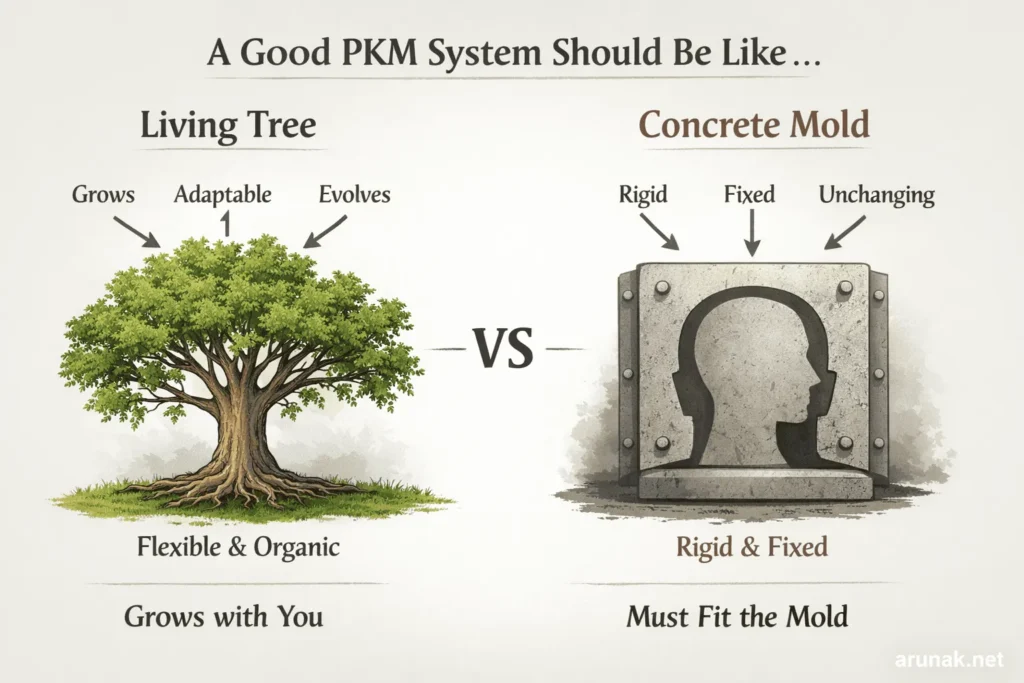
I came to realize over the years that this matters far more than I first thought, and that it becomes exponentially more important as the amount of information inside your PKM system grows.
Over time, the number of projects you are working on does not stay the same. Your responsibilities do not stay the same. And you, as a person, do not stay the same either. The system that felt perfect when all you needed was a reading log may feel completely inadequate a few years later, once you are juggling writing, research, planning, administration, and long-term idea development all at once.
And when that happens, if you are stuck inside a rigid PKM system with thousands of notes that you built your thinking around, that is not an ideal position to be in.
This is where many tools start to show their limits.
You outgrow it, not because it was bad, but because it was never built to bend to your long-term needs.
This is why flexibility matters so much in the long run.
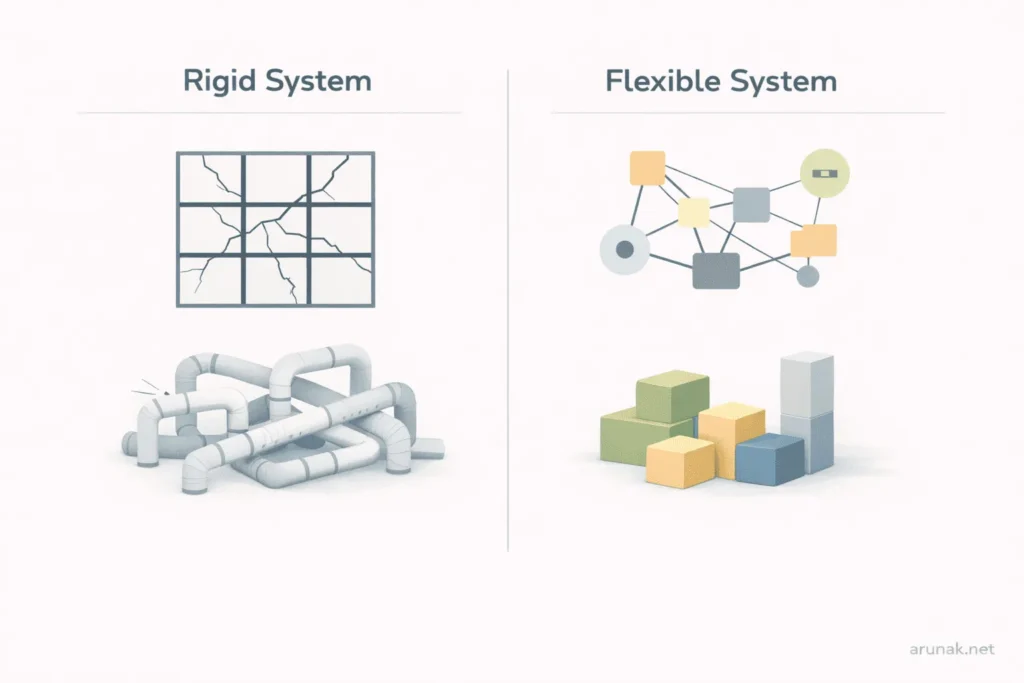
A good personal knowledge management system should let you revise the system itself. It should allow growth without demanding a complete reset every time your needs change. It should let complexity emerge where it is deserved while preserving simplicity where simplicity still works.
A flexible system also helps with shiny object syndrome. Not completely, but to a surprising extent. When I see a new app now, I am less likely to think, I want to switch to this. I am more likely to think, how can I implement this workflow in Obsidian, which is my PKM tool of choice?
The hidden variable is returnability.
There is another factor when it comes to PKM tools that people do not talk about enough.
I would call it returnability.
A good PKM system has to be a place you want to come back to. Not once, but repeatedly, over years on end.
This sounds a little softer than the other criteria, but I think it is one of the most important qualities of a good PKM tool. And in practice, it is one of the hardest to get right.
Some systems are so intriguing on paper, but psychologically too heavy to return to. They ask too much before they give anything back. Over time, this creates mental fatigue every time you open the app. And before you know it, you are back on the market for another PKM tool, wasting time that should have gone into the actual work.
This was a huge problem for me over the years. Once the honeymoon phase of designing, customizing, and reorganizing wore off, I would realize that either the system was too complex, or the app was not a good fit for me, or it simply asked for more maintenance than it was worth.
It took me a good couple of years to understand that the true value of a PKM tool is not the tool by itself, but the long-term relationship you build with it. If I do not like the app in the first place, that almost inevitably means I will not return to it often enough, and eventually, no value gets generated. It becomes just a pile of notes.
This is where likability enters the picture. I do not mean superficial charm. I mean the deeper kind of likability that comes from a system with a simple design, low friction, and a way of working that feels natural to you personally.
That, in my view, is one of the most underrated qualities in all of PKM.
So what makes a PKM tool likable? That, of course, depends on the person. But for me, some of the big ones are speed, including launch time, search speed, and how quickly I can move between notes; customization options, including themes, fonts, custom CSS, and community plugins; the freedom to write in a clean, free-form way; strong local ownership of my files; and the sense that the app can grow with me without becoming harder to live in.
To me, Obsidian does all of this really well.
As a result, I actively type into Obsidian for well over forty hours in some weeks. It has become so likable over the past five years that I sometimes open it just to hang out. But that turns out to matter more than it sounds. Some of the best ideas arrive when you are not forcing them, the way good thoughts often appear in the shower or on a walk. The same thing happens here. I may open Obsidian with no serious plan, and still end up doing something useful, like writing a paragraph, clarifying an idea, or sketching the outline of a post like this one.
None of that is possible unless the app feels good to work in. A system that irritates you, resists you, or imposes too much ceremony will eventually lose, no matter how clever it looked in a YouTube tutorial.
This returnability is so important because long-term value is cumulative. If you return to the app for just an additional 5 minutes a day, that adds up to 1,825 minutes a year, or a little over 30 hours of extra thinking, writing, and continuity.
Big difference!
So when people compare a personal knowledge management system purely in terms of capability, I think they miss a major variable. The system that wins is often the one that keeps inviting re-entry.
Beware the fake productivity trap.
True, PKM tools are really powerful.
But they are also dangerously easy to turn into a side quest.
One of the most toxic trends I see online now is how easily people get pulled into PKM features every day. But adding cool features to a PKM system just for the sake of it creates no value. Most of those features are not even necessary for most of us. Many of them are designed for very specific tasks and very specific kinds of users.
This is the trap of fake productivity.
In fact, if the feeling of being productive is what satisfies us, that may be a sign that we need to reevaluate our goals.
The system starts consuming our time instead of helping us create value for ourselves.
- It can look like endlessly perfecting a setup,
- It can look like refactoring folders and tags instead of thinking about a project that is due this week,
- It can look like collecting notes without reflecting on them,
- or building elegant workflows you will never actually use in the future.
There is, of course, nothing wrong with enjoying systems for their own sake. Some people genuinely like that kind of tinkering, and that is fine. I do too, to some extent.
But at some point, the workshop has to stop expanding, and you have to make something in it.
This is when a PKM system starts becoming useful again.
References for this section: William Jones, Keeping Found Things Found (2007); Sam J. Gilbert, “Outsourcing Memory to External Tools: A Review of Intention Offloading” (2023).
Every PKM tool is built around a specific theme.
- Notion is centered around connected workspaces: documents, databases, projects, dashboards, and structured information.
- Evernote is centered around capture and retrieval: saving information quickly, keeping it organized, and finding it again later.
- Logseq is centered around journals, outlines, and block-based note-taking. It can be used for writing, but it feels more naturally built for jotting, outlining, and linking short units of thought than for long-form prose.
- OneNote is centered around the notebook metaphor: pages, sections, and free-form note spaces that feel closer to a digital binder.
- Obsidian is centered around local Markdown files, linked thinking, and a flexible personal knowledge base that can grow in many directions.
If you go to their website, this theme is positioned as the app’s central value proposition.
Here are some of them.
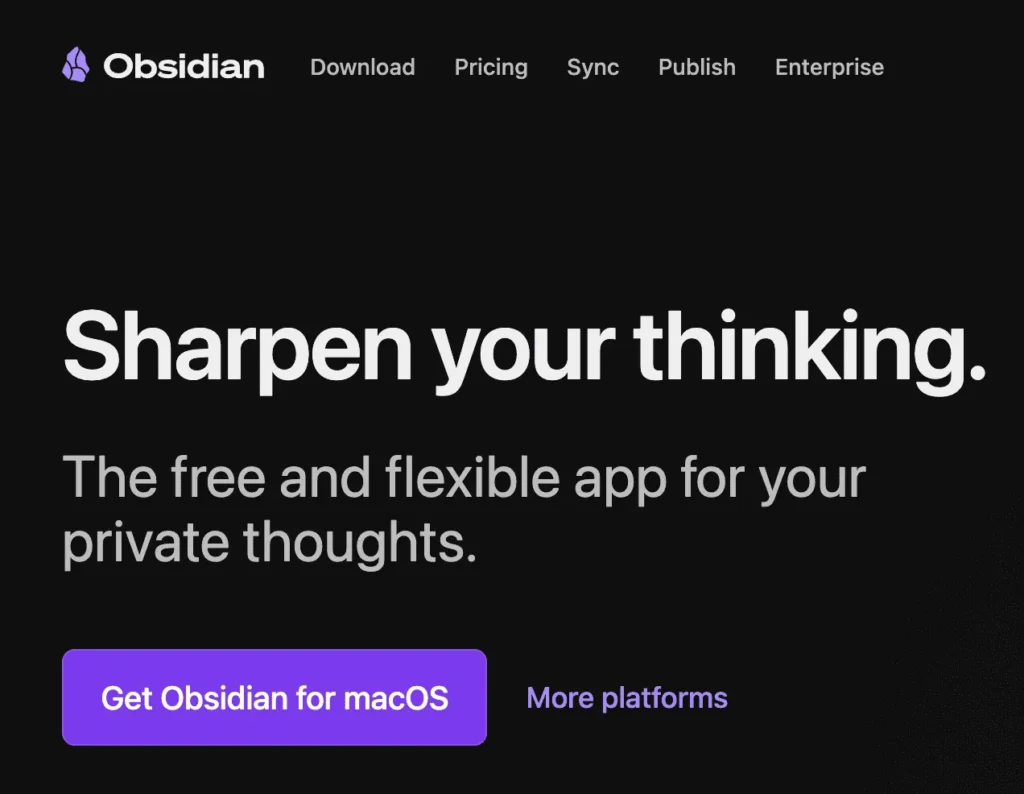
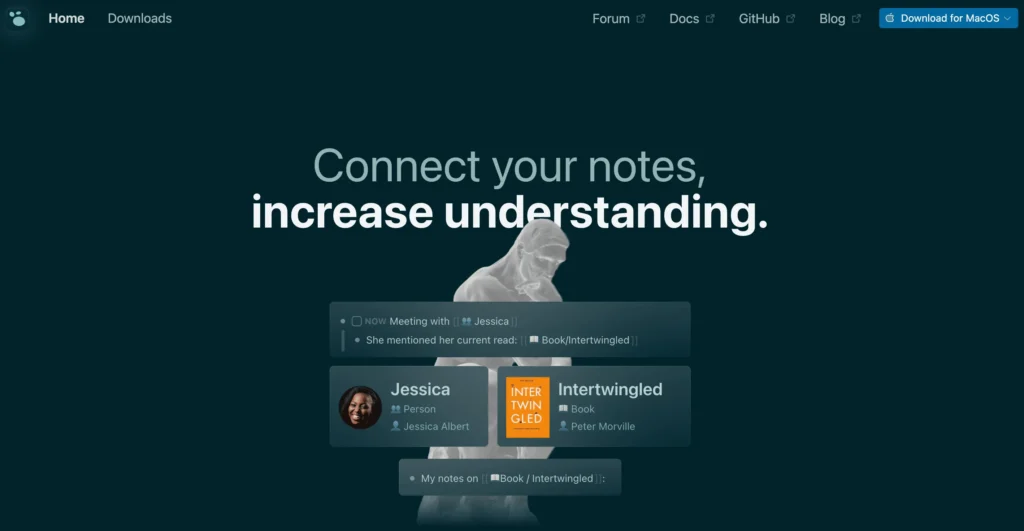
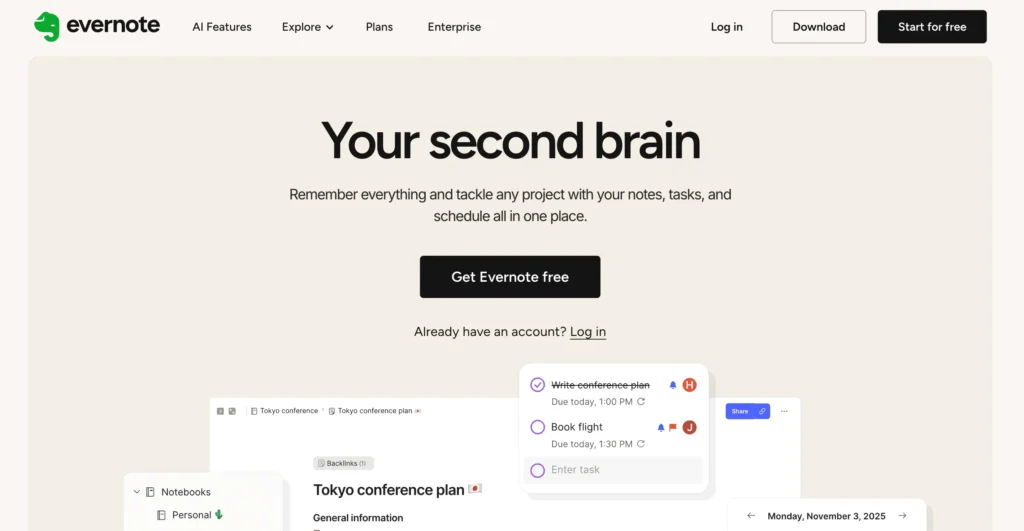
And it’s really important to pay attention to this before committing to a particular PKM tool.
Conclusions
The best PKM system is not the one that can do the most. It is the one that helps you do the work that is specific to you.
- It should allow you to start small enough to survive repetition in the long run.
- It should reduce friction rather than add overhead.
- It should help you retrieve, continue, and build on notes, not just collect them.
- It should be flexible enough to grow with you over the years.
- And it should be likable enough, or returnable enough, that you keep coming back to it over the long term.
Once you start judging PKM systems by those criteria, a lot of the usual conversation around the whole PKM space starts to look much less important. Of course, features still matter, but they drop lower in the hierarchy. What rises instead is fit, adaptability, and actual usefulness.
It took me about five years and about five different PKM apps to make this shift. And I am glad I did.
For the last five years, I have mostly used one app, and that changed my focus dramatically. It helped me stop chasing the next cool PKM tool on the horizon and get back to the work itself.
Because personal knowledge management is not really about managing knowledge in an abstract sense. It is about building a system that lets you offload part of your thinking in a way that creates value over time.
So instead of asking, ” What is the most powerful PKM app?”, I think the better question is this: what kind of personal knowledge management system would I be most comfortable working in for years on end?
What has your own experience with a PKM system taught you, and which of these lessons have you had to learn the hard way?