
One-line takeaway
The camera is an instrument that teaches people how to see without a camera.
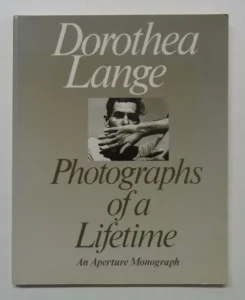
What is Dorothea Lange: Photographs of a Lifetime: An Aperture Monograph about?
This is a survey of Dorothea Lange’s body of work. It’s a powerful example of the meaningful impact a photojournalist can have on the course of human history. It’s quite breathtaking how real, immersive, and tactile her work is.
It’s perfectly clear that she wasn’t out in the field just to record events. “A documentary photograph,” she says, “is not a factual photograph per se; it carries with it another thing, a quality that the artist responds to.”
And her entire body of work seems to reflect this statement. It’s a record of human life, yes, but there’s also this intimate connection that she builds between her subjects and us, the viewers.
Ideas and takeaways
The Power of Midtones
One quite ordinary, but in some ways striking, thing that really struck me about her work was her use of midtones. She didn’t rely on high contrast or dramatic lighting. Instead, her images are filled with rich midtones that add softness and depth to skin, clothing, and the world around her subjects. This, in many ways, makes her subjects feel “more human.”
Her highlights are carefully controlled—never too bright and never washed out—and her shadows are deep but never harsh. You can still see all the fine details, which helps preserve both the emotion and the story behind the subjects.
It seems to me that her philosophy was that she wasn’t interested in making things look impressive just for the sake of it, but simply in stating the “truth.” And she was remarkably effective at doing so.
“Everything is propaganda,” she says, “for what you believe in. I don’t see that it could be otherwise.”
Her tone and tonal choices perfectly reflect this philosophy.