

Why can’t we all just get along?
We hear this question everywhere nowadays: on the news, on social media, and we even ask ourselves this too.
It’s quite a simple question, yes, but the differences between us that create conflicts every day are a bit more complex than we might think.
Understanding these underlying complexities and learning how to respect someone else’s beliefs: this is what this week’s blog post is about.
Why We Disagree, Even When We Have the Facts
Some of the ideas that make sense to us immediately would be considered almost “a crime” by someone else.
It’s surprising how differently, and how strongly, we disagree on some issues.
Take abortion laws, for example. You might hold a stance that’s completely reasonable, even obvious, to you. But to someone else, that same stance is wrong, wrong on so many levels.
Now imagine debating it. You both bring facts, studies, and every piece of evidence you can find. And yet, at some point, the discussion hits a wall. We’ve seen it over and over again. You’ve both said everything that can be said: the science, the logic, the “common sense.” And still, you disagree. Your gut feeling holds on to your own narrative, no matter what.
Research on what psychologists call the “moral mandate effect” shows that moral convictions have a surprisingly strong grip on how we judge the fairness of the process behind an outcome.
These are the gut feelings that murmur in your ear, “No, I’m right about this.”
But on an issue like this, almost half the country will disagree with you.
In a May 2025 poll by Gallup, 51% of U.S. adults said they identified as “pro-choice,” while 43% said they identified as “pro-life.”
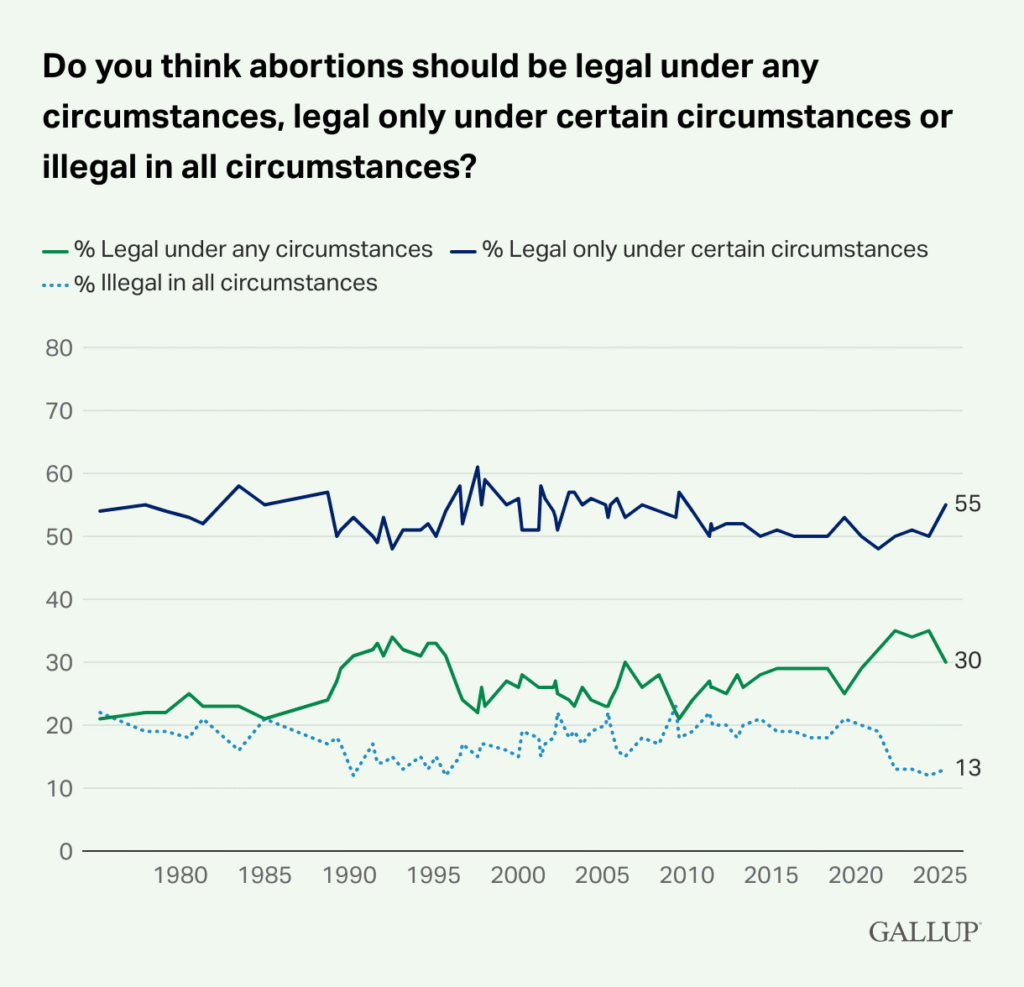
No matter which “camp” you’re in, you’ve got to admit: we can’t simply say that nearly half the people in a country don’t know what they’re talking about. There is something else, something much more complex, that keeps us holding on to a particular narrative, even when we’re all looking at the same facts and evidence.
Facts Don’t Speak for Themselves
In his book A Conflict of Visions, Thomas Sowell points us toward an answer:
Evidence is fact that discriminates between one theory and another. Facts do not “speak for themselves.” They speak for or against competing theories. Facts divorced from theory or visions are mere isolated curiosities. (p. 16)
So if there are conflicting theories, we might think we could simply propose one and test it against the existing ones.
For example, let’s say we have two mathematical equations to solve, and both come from the same system. That means C is a constant, no matter which equation we use. Let’s try it.
The first equation is:
A + B = C
We already know A = 6 and B = 4. Solving it is simple. We all know the answer: C = 10.
Now imagine we can write another equation for the same system:
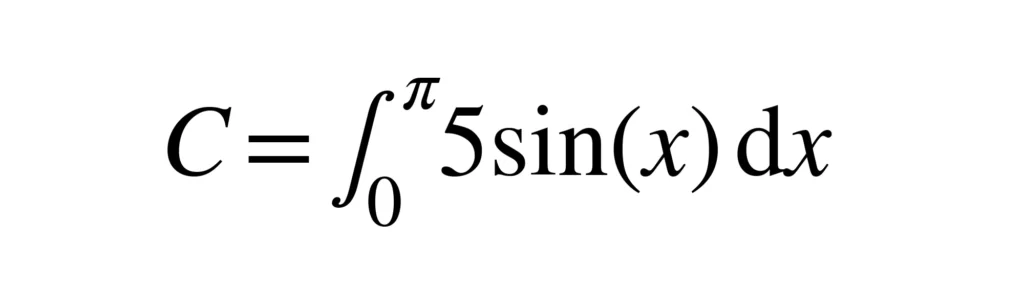
It takes a bit more knowledge than before, but if someone takes the time to work through the already-proven mathematics, we still get the same answer: C = 10. Perfect.
No matter what angle we look at this system from, we can prove that C is always 10. If we could solve all our life problems like this, there would be no arguments, and no conflicts.
But here’s the problem: most of the conflicts we face in daily life aren’t mathematical. They’re philosophical. And there is no single equation that can give us the right answer to a philosophical question.
Sowell argues that we fill these gaps, these “holes” in our knowledge, with visions. The problem is, you can’t simply prove a vision in the same way you prove an equation. You just… have it. It’s a gut feeling.
And that’s why there are, and always will be, conflicts.
Visions fill in the necessarily large gaps in individual knowledge. Thus, for example, an individual may act in one way in some area in which he has great knowledge, but in just the opposite way elsewhere, where he is relying on a vision he has never tested empirically. A doctor may be a conservative on medical issues and a liberal on social and political issues, or vice versa. (p. 17)
What to Do About It?
So the big question is: with all these differences between us, what is the most constructive way to have a civil discussion with one another and “get along”?
One way to think about this comes from another book, The Righteous Mind by Jonathan Haidt.
Haidt also argues that intuitions come first and reasoning second. The metaphor he uses is the elephant and the rider. The rider thinks it’s in control, but what really happens is the rider goes where the elephant wants to go. If we compare our reasoning to the rider and our intuitions to the elephant, the similarity between Sowell and Haidt is quite intriguing.
This means that if we want to change someone’s mind, we need to talk to their elephant, their moral values, before we talk to the rider, their logical reasoning.
If you try to talk only to the rider, they get defensive. And then they will find all the evidence in the world to prove you wrong. Even without good evidence, it’ll be highly unlikely that the discussion will be constructive.
For example, say a liberal and a conservative are arguing about climate regulations. If the liberal says, “The science is clear. Emissions must be reduced. Here are ten graphs showing why you’re wrong,” they are talking to the rider, not the elephant.
In the meantime, the conservative’s elephant, their gut feeling, may be thinking about government overreach, the loss of jobs, and possible threats to traditions and industry. So even before the conservative opens their mouth, they may have already decided that the liberal is wrong. Now the intuitive mind is just trying to find counterevidence to prove it.
However, if the liberal started the debate like this instead: “We all care deeply about keeping our communities strong and independent. That’s exactly why we need American-made clean energy, so we can control our own future, protect jobs, keep our competitive edge in the world.”
Now, both of them are on the same page, even though nothing about the original argument has changed. The conservative’s elephant is calmer, giving the green light to a constructive debate.
And it goes both ways.
It’s also important to note that these are not tricks or ways to outsmart somebody. It’s about understanding, empathy, and the collective well-being of our society.