
In the past five years, I’ve read 261 books. That’s roughly an average of 52 books a year, or one book each week.
But I didn’t just wake up one day and start reading one or two books a week. It sounds good on paper, but with a busy life, it’s hilariously impractical. To get there, I had to build a system, one that took a lot of trial and error over several years.
Like any habit, reading starts with no momentum.
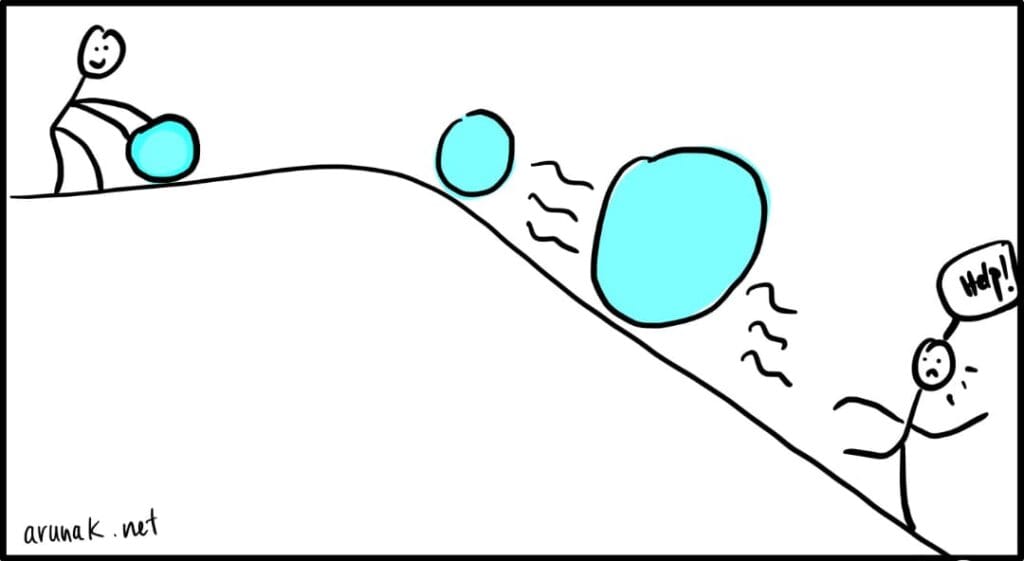
Take a snowball, for example. If you want to build a giant one, you first have to make a small one and start rolling it. But if that first snowball is too soft and fluffy, it’ll crumble before it grows. You’ll have to start over, again and again.
Reading works the same way. If you don’t start with the right system and the right habits, you’ll burn out early and give up. But if you build the right kind of momentum, it will keep rolling. And soon, you won’t be able to stop reading even if you tried.
These are the kinds of problems I welcome into my life!
There’s plenty of great advice out there about how to read more books. Each tip has its own merit, but most of them are just scattered advice. What really works is a well-refined system that not only works over time but also grows with you.
So, in this post, I’m sharing my tested system for creating the habit of reading more, even within a busy life.
Looking back on more than ten years of building my reading habit, here are the five key ingredients that make the best kind of a ‘reading snowball’:
- Make time to read.
- Read what you like.
- Use multiple formats.
- Read more than one book at a time.
- Make yourself accountable (set a target, join Goodreads, etc.).
Table of Contents
Part 1: A Quick Reality Check
That’s a good theory, and I know it works well for me. But does it really align with the real evidence? Does this system work for others?
While looking for reading statistics, I came across a Goodreads blog post that interviewed eight avid readers who read, on average, 198 books per year. In the post, they shared what strategies help them read more.
Here’s a summary of the advice they gave, in the order that helped them to read more books.
| Advice | How Many Times Mentioned |
|---|---|
| Use audiobooks | 4 (Miranda, Jennifer, Kai, Emily) |
| Always carry a book / have a book on you | 3 (Melanie, Jennifer, Chaima) |
| Read what you enjoy / choose books you like | 2 (Jessica, Kai) |
| Don’t force yourself to finish a book you dislike | 2 (Jessica, Chaima) |
| Read before bed / make it part of your routine | 1 (Melanie) |
| Read multiple books concurrently | 2 (Kai, Chaima) |
| Mix up genres / read different types of books | 2 (Sam, Chaima) |
| Join a reading challenge / set a goal | 1 (Chaima) |
| Carve out dedicated reading time | 1 (Chaima) |
| Read during small pockets of time / in between tasks | 2 (Lola, Chaima) |
| Use multiple formats (physical, ebook, audiobook) | 2 (Melanie, Chaima) |
| Minimize TV or other distractions | 1 (Jennifer) |
| Keep reading fun / don’t pressure yourself | 2 (Kai, Chaima) |
When I rearranged this advice into my own system of strategies:
| Category | People Mentioned | Total Mentions |
|---|---|---|
| Make time to read | Miranda, Melanie, Jennifer, Chaima, Lola | 8 |
| Read what you like | Jessica, Kai, Chaima | 6 |
| Use multiple formats | Miranda, Jennifer, Kai, Chaima, Emily, Melanie | 6 |
| Read more than one book at a time | Sam, Chaima, Kai | 4 |
| Make yourself accountable | Chaima | 1 |
Not only did all of their advice fit neatly into these five categories, but it also matched the same order!
So, it’s clear: this system works for anyone.
Alright, let’s get rolling!
Part 2: The system
Start small: Make time to read
Summary
Just like you start a snowball with a handful of snow, you begin your reading habit with just a few minutes a day. Don’t wait for perfect conditions or long stretches of free time. Grab what you can, ten minutes before bed, a short chapter over coffee, and pile it together. This is your first snowball.
Explanation
I know this sounds obvious, but it’s probably the greatest “hack” for reading more books.
Let me explain.
Everything, in one way or another, is a battle against time.
I used to read a lot as a kid, but that habit slowly faded in high school and eventually dropped to zero when I went to university. Not that my passion for reading disappeared, but my time just became increasingly limited. And it got worse every year, from high school through university.
When I was trying to get back into reading in my early twenties, I would carry a book practically everywhere, thinking that if I found some free time, I’d pick it up. But for the longest time, that never happened. At most, I’d glance at the book a handful of times, only to realize my mind wasn’t calm enough to focus anyway.
Then I realized why: reading was “optional” for me at that time. Life was busy, and without a dedicated slot, reading slipped into the category of optional habits, and optional habits never last. Carrying a book everywhere doesn’t help if you haven’t set aside a specific time to read. This is especially true when you’re just getting into the habit of reading more.
So I decided to read every morning for just 30 minutes. That changed everything. Right at the start of the day, I was already “warmed up” to read. Now, whether I have five minutes or an hour later in the day, it’s easy to pick up the book and continue where I left off in the morning. My mind is ready to focus, and the habit begins to snowball.
Once I gained that momentum, carrying books everywhere suddenly became effective. But to create that momentum, you first need to intentionally make a small, calculated effort in the first place.
Consistency is the key.
And when the momentum is set, there comes a point where you can’t even stop reading, even if you wanted to.
Optimization
But picking the right moments to read matters too.
Think about those times when you leave work, still thinking about something that happened during the day, and you find yourself at the front gate of your house with having no idea about most of the turns you took, like you just teleported home. Reading works the same way.
If the book you’re reading requires focus—say, a fact-heavy nonfiction—it’s better not to try reading it while commuting or multitasking. Listening to it as an audiobook while working might let the pages turn, but very little will actually stick in the long run. I remember listening to Ego Is the Enemy by Ryan Holiday while I was in the lab working on experiments. Later that day, when I sat down to write a short review, I realized I had almost no knowledge of the book. Multitasking with nonfiction, especially while doing demanding work, was not a good idea.
Even small things matter. Reading when you’re tired or hungry is a common trap: your eyes see the words, but your brain barely absorbs them. That said, fiction is more forgiving. It’s perfect for commuting, morning walks, or free moments during work shifts.
A good starting point is to set aside a fixed daily reading time, say, 30 minutes. Pick a time and stick with it for a while. If it doesn’t fit, adjust it. Mornings often work best because the mind is clear and open. But if mornings aren’t possible, don’t force it. Find another consistent time, like evenings, that works for you.
Compact it: Read what you like
Summary
Your snowball only holds if the snow sticks; your reading habit only holds if it’s enjoyable. Choose books that genuinely interest you, not what you think you should read. The more pleasure you get from reading, the stronger your reading habit becomes.
Explanation
Now that the most important thing is settled, setting aside a time to read, the obvious next question is: what do I read?
The book you pick should be by choice, not by coincidence.
When I was getting back into the reading habit, I grabbed a couple of books and started reading. I had my time set. One hour every day. Great!
But I couldn’t enjoy it.
Every page felt like a chore, and it got worse with each one. Most of the books I had picked up ended up sitting on my desk, collecting dust for six or seven months, until I realized the problem: I didn’t like what I was reading.
For example, one of the books I had started was The Rise and Fall of the Third Reich by William L. Shirer. I always wanted to read it, but after starting, I realized it could take ten minutes to finish a single page, and the book has 1,245 pages. I had already failed before I even got going.
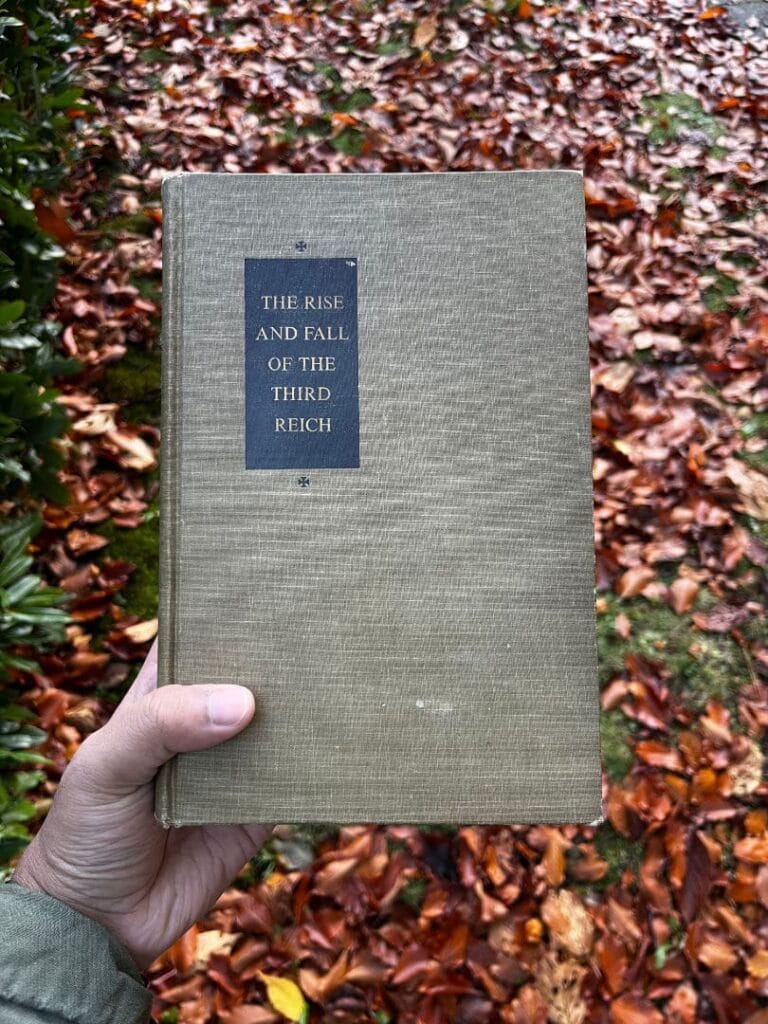
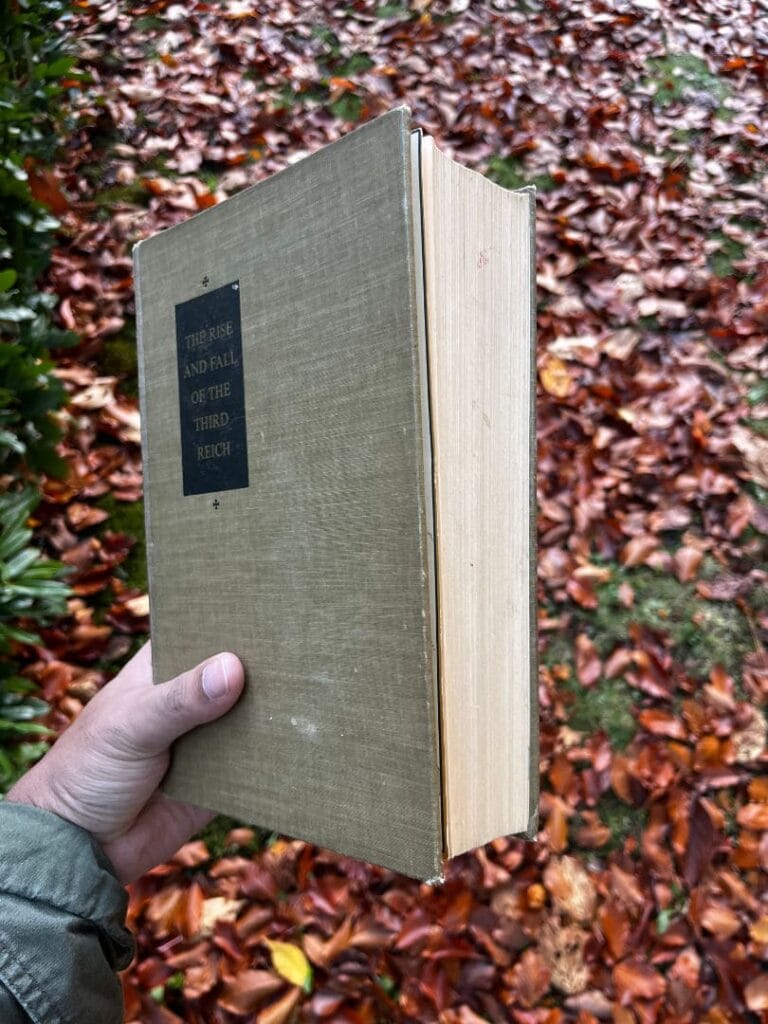
So I let it sit and picked up something I had read more than a dozen times before: A Story About a Real Man by Boris Polevoi. I finished it in two days, then moved on to another historical fiction novel, and another the following week. Before I knew it, I had read four books in two weeks.
That decision, to read only books I genuinely like, is something I still follow to this day. It’s part of the process that helped me read more than 400 books in my twenties.
Optimization
But what if, at some point, I want to learn something and read a challenging book? Sure, I love novels, but I also want to gain knowledge from nonfiction. For someone who has always gravitated toward novels, how do I start enjoying harder books? This was a question I wrestled with when I got back into reading in my twenties.
It took me about five years to really see the answer: it’s always about momentum. Like a snowball, you first have to create movement and then roll it to make it big. And to do that, the small snowball shouldn’t break. You need the right stickiness. Otherwise, it falls apart, and you end up starting over again and again. Eventually, you may give up altogether.
Reading works the same way. You have to keep coming back to it. The only way to do that is by reading something you actually enjoy. If you chase what everyone else is reading, forcing yourself toward books that don’t genuinely interest you, fatigue builds quietly. Soon, even reading itself begins to feel like work, and before long, you give up entirely.
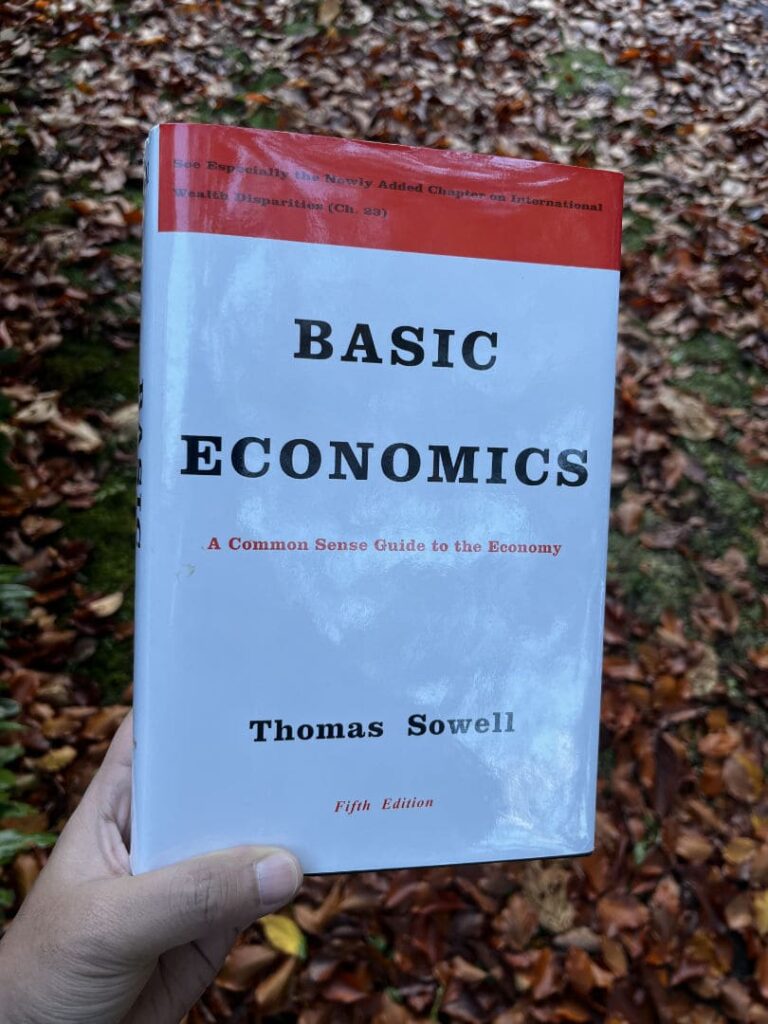
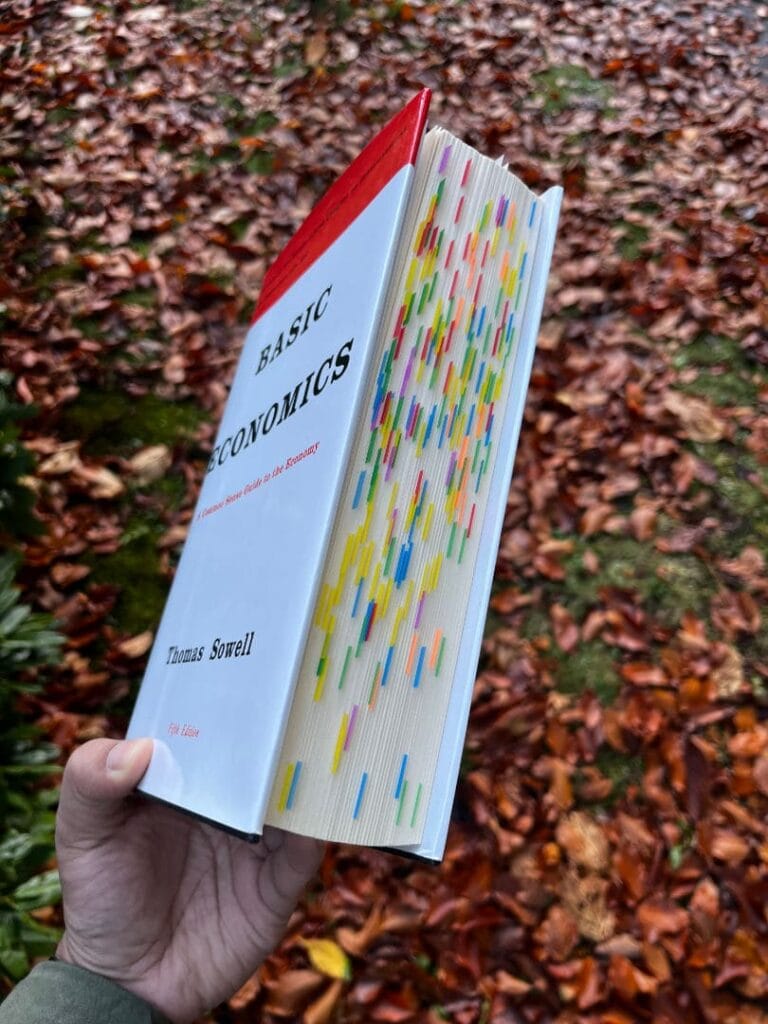
For example, I recently finished Basic Economics by Thomas Sowell. I admire Sowell, but man, does he sometimes write like Shakespeare! This was a hard book and took me a couple of weeks to read. Yet I never missed a day.
Why?
Because, by that time, I had already read countless novels and historical fiction that I truly enjoyed. The snowball was already rolling. It didn’t matter that the book had 700 pages or was dense. It kept moving, and I kept reading every day.
Once you get moving, momentum takes over. Suddenly, what felt impossible—tackling harder books, exploring new topics, or tackling long classics—becomes effortless. The key isn’t forcing yourself to read “serious” stuff right away. It’s building enough speed with what excites you so that nothing feels out of reach later.
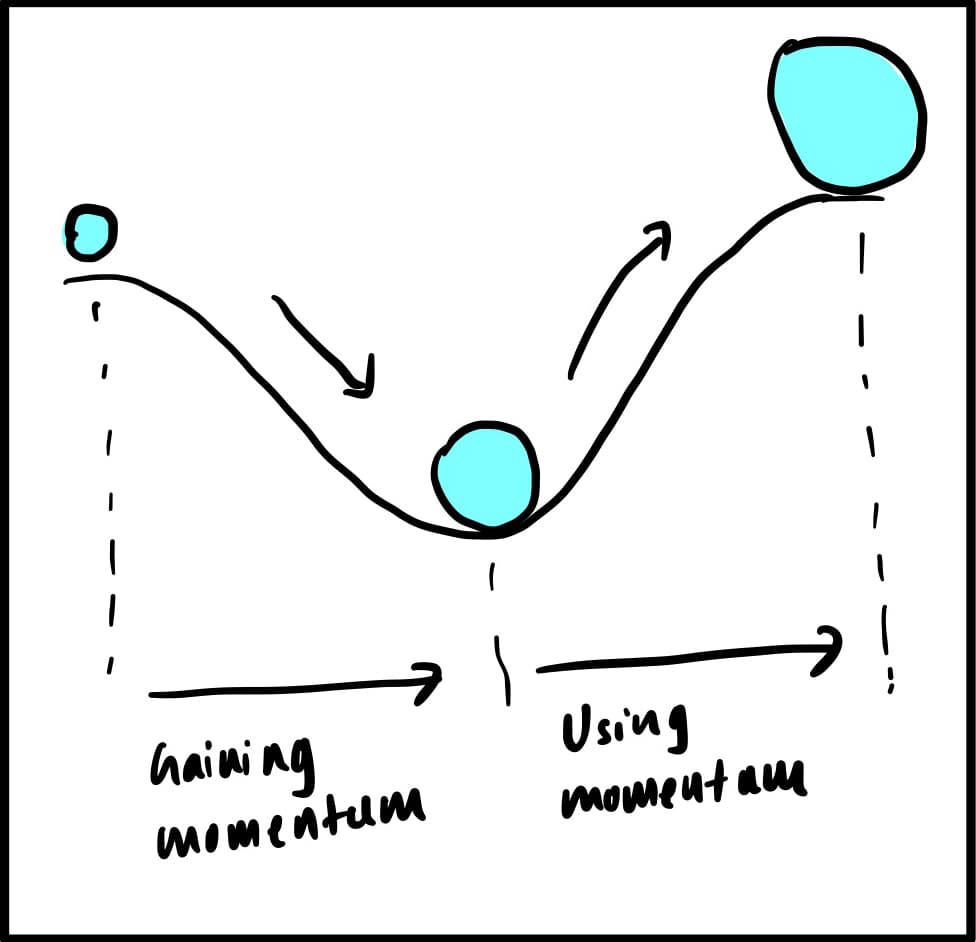
Momentum, not motivation, does the heavy lifting.
So don’t start with a 1,000-page book that takes ten minutes to process each page. Start small. Pick a short book, around a hundred pages, written in clear, simple language, that you can finish in a few days.
Start rolling: Use multiple formats
Summary
Once your snowball’s rolling, let it gather snow from everywhere: eBooks, audiobooks and paperbacks. Each one adds a layer, helping you read on the go. Like snow collecting as it moves, switching formats helps you scoop up bits of time all day long.
Explanation
Now that we have enough momentum, the next step is to keep it going, adding as much “snow” as possible. With busy lives, it’s hard to find time to sit down and read a physical book consistently, let alone read at all.
When I first started reading more, I had the whole setup: the physical book, highlighters, sticky tabs, pens, the works. But this process made me stationary. I could only read at home, and even then, I couldn’t comfortably read before bed while lying down. I needed a way to read anytime, while commuting, waiting to pick someone up, or during a short break after lunch.
Then I remembered my Kindle, which I had bought long ago but hadn’t used in years. It was just collecting dust. I picked it up again and started using it, and it changed everything. I could still highlight and take notes, but reading was no longer stationary. I keep it next to my bed, so if I don’t feel like getting up immediately in the morning, I can read for 20–30 minutes right there. I carry it in my pocket for walks or while waiting in line for coffee.
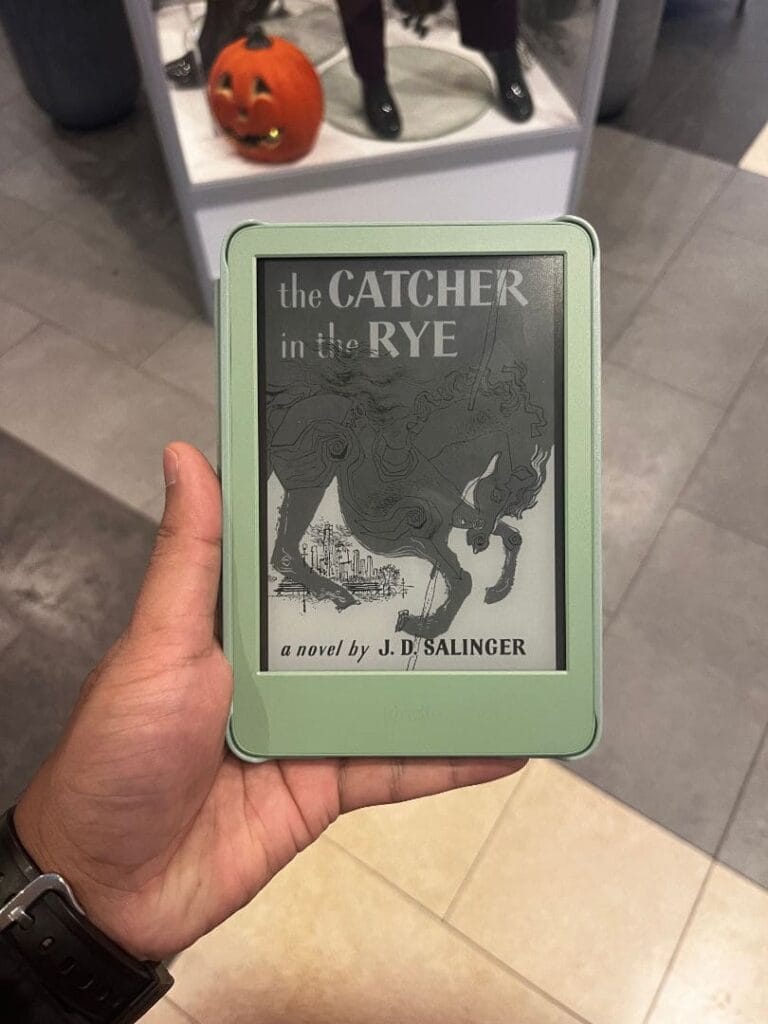
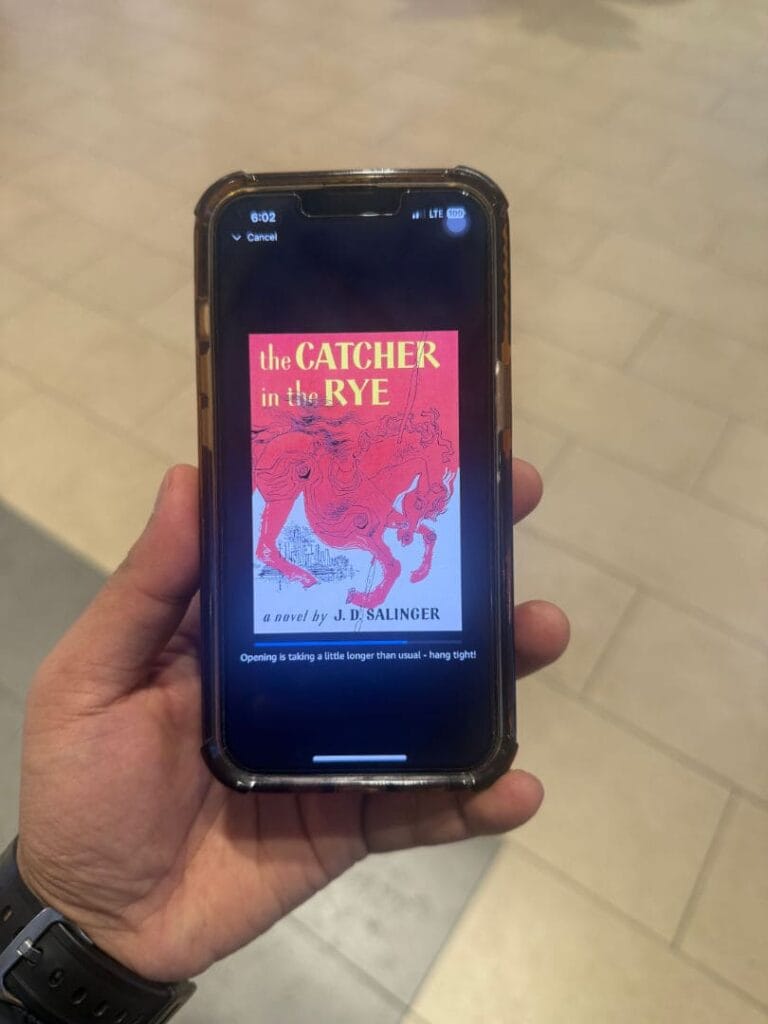
These small pockets of time add up, and sometimes, by the end of the day, I’ve read for two hours without even trying.
Optimization
Of course, there are many other ways to do this. You probably switch between texting, podcasts, and videos throughout the day. Reading can fit into your routine in the same way. Listen to an audiobook on your commute, continue the eBook at lunch, and pick up the printed copy at night.
If you use the Kindle ecosystem, or a similar system like Kobo, you can read on your eReader, phone app, or laptop, making it possible to read anytime, anywhere. Audiobooks are also a great option, but it’s important to use them correctly. Some books require your full attention. If you try to multitask with these types of books, listening while doing something else, you might miss the most important points.
The danger with audiobooks, in particular, is that they keep playing. Unlike a paper book, where you’d naturally pause if you didn’t understand, an audiobook will continue, even if nothing sticks. That said, when used properly, audiobooks are an extremely effective way to read more, especially fiction and lighter nonfiction.
Shape it evenly: Read more than one book at a time
Summary
As the snowball grows, you turn it to keep it balanced. Reading works the same way: mix genres and topics so you don’t get bored or stuck. A novel here, a biography there; it keeps your curiosity alive and your habit ‘well-rounded’.
Explanation
When I was building the habit, I read at both the very start and the very end of the day. Both worked fine at first, but I soon noticed that my mind is in very different states in the morning and evening, even though both feel “peaceful.”
In the morning, the day is just beginning, and the mind is ready for a challenge. In the evening, right before bed, it doesn’t want heavy work, it’s winding down. A tough nonfiction book works well in the morning, but not at night.
I realized that instead of fighting this mental duality, I should adapt my reading habits accordingly. It’s far easier to adjust what you read than to change 300,000 years of biological wiring. With this balance, reading becomes a pleasure, not a chore.
Optimization
But reading too many books at the same time can backfire.
Years ago, I tried juggling five or six books at once. More books, I thought, the better. But keeping up with all that information didn’t work. Most remembering happens unconsciously, and my brain wasn’t happy trying to process six completely different ideas at once.
I eventually settled on three: one nonfiction in the morning, one fiction at night, and a third to pick up whenever I have free time.
Keep it growing: Make yourself accountable
Summary
Eventually, your snowball becomes heavy enough to roll on its own. But to keep it going, you need a little push. Set a goal, track your progress on Goodreads or a similar platform, or share what you’re reading with friends.
Explanation
At this point, the momentum is fully built. The snowball is complete!
But if the goal is to keep it rolling, for years on end, there’s one more crucial step: make yourself accountable. There are many ways to do this: set a yearly reading goal, write reviews, or jot down notes and reflections. All of these become far more effective when shared publicly.
First, it creates a social binding. When others know your goal, you’re more likely to follow through. Second, publishing pushes you to refine and optimize your notes and reviews. It’s not just for you, so you naturally want to do better. And in doing so, you end up reading more thoughtfully and consistently.
This also completes the circle of learning. You take something from a book, process it, and prepare it to communicate effectively to others. In sharing it, you deepen your understanding and give back to the community.
Once the circle is complete, the momentum carries it forward. And just like a snowball, once it starts rolling, you only need a small push for the next roll, and the next. Each roll gets easier, each book flows into the next, and before you know it, the habit stands on its own without much effort.
This is a living, breathing system that can last as long as you want it to.
Optimization
Setting yearly goals and writing reviews: Goodreads has been around for a long time and is free to use. You can create an account, set a yearly reading goal, and track your progress throughout the year. It also helps you discover new books and connect with other readers who share your interests. Also, it allows you to write and share reviews of the books you’ve read. Similar platforms include The StoryGraph and LibraryThing.
Writing reviews: If your main goal is to write and share reviews in a more focused environment, platforms like Medium or Substack are great free options. For more creative freedom, you can buy a domain name and hosting to build your own personal website, your own corner of the internet to reflect, write, and share your thoughts about the books you read.
Part 3: Other posts / practical advice
James Clear: Read 20 pages per day
Here’s why I think this pattern works: 20 pages is small enough that it’s not intimidating. Most people can finish reading 20 pages within 30 minutes. And if you do it first thing in the morning, then the urgencies of the day don’t get in the way.
It’s best to start with a set time, 20 or 30 minutes, which aligns with the most important step in the system above. But once you’ve built enough momentum, go one step further: shift from time to pages.
Here’s why.
Some books are harder to read; dense, complex, or slow-moving. If you only read for 20 minutes and cover five pages, it could take months to finish, and by then, you might lose the thread of the book altogether. That kind of drag builds mental fatigue.
Instead, set a page target. With momentum already on your side, it’s not hard to find five extra minutes here or ten there to reach your daily goal. This way, progress stays visible, the story stays fresh, and the habit stays strong.
Sam Thomas Davis: Quite more often
The problem, though, is, if we struggle to get into a certain book—especially one we feel we “have to” read—we risk doing more than giving up on the book; we risk giving up on reading entirely.
This might sound like the opposite of good advice at first, but it’s actually one of the most important rules for reading more. Many of us, especially if we grew up loving books, feel almost guilty about quitting one halfway through.
But that mindset can hold you back. Some books just aren’t written well, others might be fine but simply don’t click with you, and sometimes a book starts strong but falls apart halfway through.
When you reach that point where you’re forcing yourself to keep going, it’s almost always better to stop, or at least set it aside until you genuinely want to come back to it.
Mollie Reads: Limit your distractions
The truth is, if we wanted to figure out how to make time for reading, the first thing we really should do is chuck our phones out the window.
A busy life is busy for a reason. We have so many things competing for our attention. So if you want to make time to read, you’ll have to take that time from somewhere else. There’s really no other way around it. This is the small compromise you have to make if you want reading to become a real part of your life.
Frequently Asked Questions: How to Read More Books
I don’t have enough free time. How can I fit in reading?
There are two ways to make room for reading: make time and take time.
Make time: If you usually wake up at 7, try getting up at 6:30 and using that extra half hour to read. Or, if you go to bed at 10, start reading in bed before you fall asleep. Small adjustments like these can add up quickly.
Take time: This means borrowing time from other activities. For example, if you have the habit of scrolling through social media right after getting home from work, try replacing that with reading. Or if you usually spend a couple of hours watching TV, take 30 minutes from it for your book.
What if I don’t enjoy the book I’m reading? Should I force myself to finish it?
Reading something you actually enjoy is one of the most important parts of building a reading habit. If you’re not enjoying a book, it’s best to put it down. You might develop an appetite for it later, and if that happens, you can always return to it. But forcing yourself to keep reading something you don’t like only wastes time and drains the joy out of reading.
Does listening to audiobooks count as “reading more books”?
Yes, and some people actually prefer audiobooks over physical books because they make it easier to get through more titles, especially during commutes. But it’s also important to pick the right book to listen to. Some books—especially dense non-fiction or those filled with complex ideas—demand your full attention, and in those cases, an audiobook might not be the best format.
Is it better to read one book at a time or multiple books simultaneously?
Reading a couple of books at the same time can help maintain a balanced reading habit and, in the long run, support reading more overall. But reading two novels at the same time can feel overwhelming for some. The best approach is to mix genres, like pairing a fiction book with a non-fiction one, to balance the mental effort required for each.
How do I choose what to read so I’ll keep going with it?
Pick the book that most interests you. Especially when you’re just building the habit of reading, starting with a book you’ve read before and enjoyed can help create momentum. Later, this momentum can carry you through many other books, including more challenging non-fiction.
What about reading formats(paper, ebook, audio)? Does any format matter more?
Using a mix of formats helps maintain and build reading momentum. It lets you read on the go, adding an extra five or ten minutes to your reading each day. Tools like a Kindle, the Kindle app on your phone, or audiobooks are some of the best ways to make this work.
How do I stay motivated when my reading slows or I get distracted?
Starting small is the best way to build a lasting reading habit. Even reading just a few minutes a day is enough to create momentum over time. For instance, spending 20 minutes each morning, whether it’s five pages or ten, can get anyone back on track, as long as it’s done consistently.
I feel like I should read “important” books. Does that mean I shouldn’t read what I like?
There’s often a gap between what you should read and what you want to read. Closing that gap, and eventually making them one, should be the ultimate goal of reading.
Ideally, we read what we should without any mental fatigue, because we want to read them.
Closing this gap can be difficult at first, especially for someone just getting into the habit of reading. The best way to handle it is to create a reading system that works over time and helps cultivate the reading “itch.” Once that momentum is built, reading becomes a natural part of life, which in turn allows us to tackle anything we want, including the important books we know we should read.
Can technology help me read more books or better use my reading time?
Yes, tools like digital libraries, read-tracking apps, calendar scheduling, audiobook apps, and “Do Not Disturb” phone settings all help reduce friction and make it easier to fit reading into your day.
Is there a “magic number” of books I should aim for each year?
No, what matters most is what you take away from each book and whether you can apply it to your life or help someone else with it.
That said, if you don’t read at all, there’s nothing to learn in the first place!
In other words, there’s a balance between how much you read, especially with everything else going on in your life, and how effectively you can extract insights from the books you read. Both need to grow together, like an upward spiral.
The best way to handle this, especially if you’re just getting into the habit of reading, is to start slow. Once you’ve built momentum, you can increase the number of books you read. But always in step with how much you can retain and apply from each one.
