Snapshot
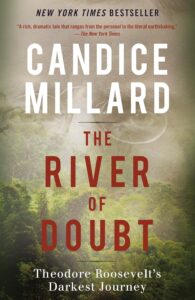
The River of Doubt by Candice Millard tells the incredible true story of one of America’s most celebrated ex-presidents’ final grasp at the glory he once knew.
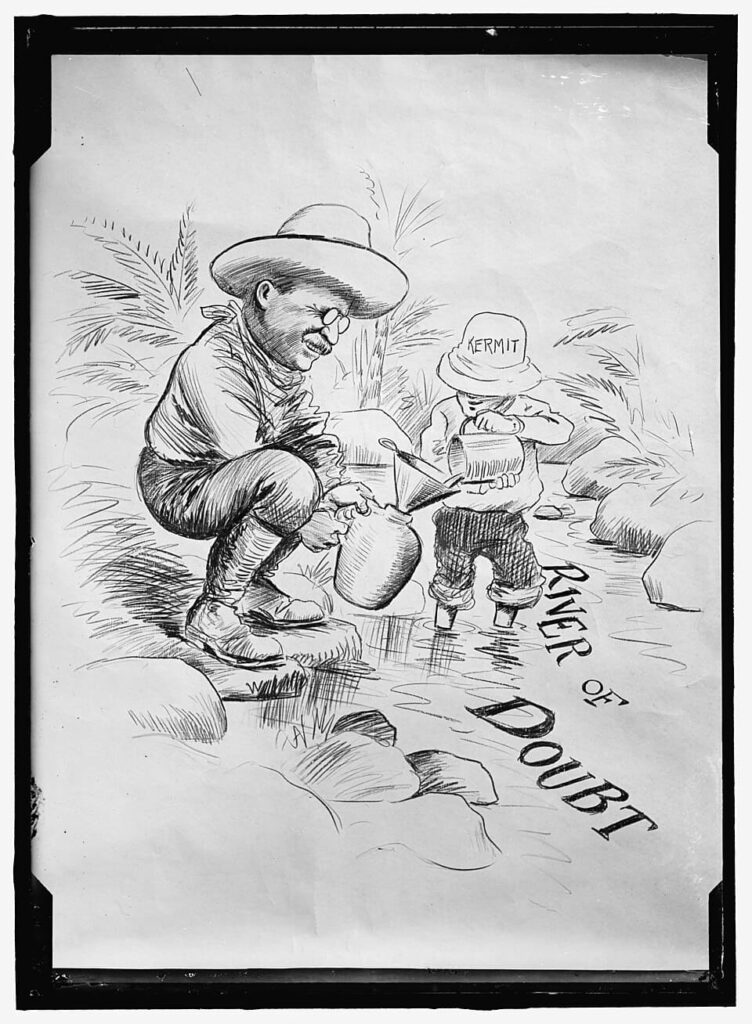
The book covers Theodore Roosevelt’s actual 1913-14 scientific expedition down an unmapped river of the Amazon called the Rio da Dúvida(the River of Doubt).
Roosevelt, along with his son Kermit and Brazilian explorer Cândido Rondon, completed this dangerous journey that nearly cost him his life.
Table of Contents
Summary
Why Roosevelt Went to the Amazon?
After two successful terms as president, from 1901 to 1909, Roosevelt made a bold decision to run again. This time under the Progressive Party.
But the gamble didn’t pay off. He came in second and lost to Woodrow Wilson, who became the 28th president of the United States in 1912.
After eight years at the center of power, the loss hit Roosevelt hard.
During the Spanish-American War, he had been glorified as a courageous colonel of his own regiment—Roosevelt’s Rough Riders. And as president of the United States for nearly eight years, he had been at the apex of power and prestige. Now, for the first time in his life, he was a pariah, and he was painfully aware of it. (Page 24)
Roosevelt was looking for a way to get his mind off his loss, also for a redemption arc, a chance to become a man of action again, instead of fading into the background as just another defeated politician.
The timing couldn’t have been more perfect.
The Brazilian government invited Roosevelt as part of a diplomatic and scientific effort to map unexplored regions. This invitation was a win-win: Roosevelt got to reclaim his legacy as an adventurer, while the Brazilian government gained international recognition for its territorial ambitions and scientific institutions.
The expedition was set to explore an unmapped river so mysterious that its name, at the time, was simply the River of Doubt.
Brazil assigned Cândido Rondon, a well-respected military engineer and seasoned explorer, to lead the journey.
The Expedition Begins
The expedition was staffed with professionals and local guides. Alongside Roosevelt, his son Kermit joined the journey. Rondon served as field commander, planning routes and managing logistics. American naturalists were responsible for collecting zoological specimens. Brazilian soldiers handled navigation and security. And indigenous guides provided the local knowledge much needed for a journey like this.
The original plan was straightforward: collect samples for future scientific experiments, map out a river only partially known at the time, travel at a steady pace with stops for research, and finish the journey within a reasonable timeframe without major incident.
But the unknowns of the river didn’t work in their favor.
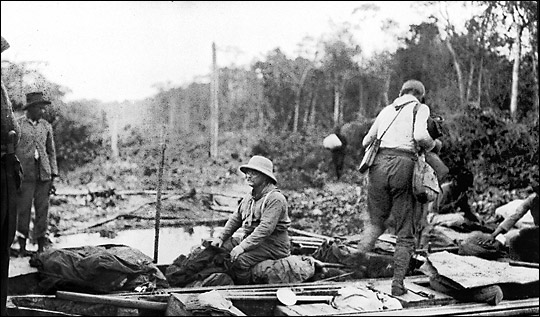
Throughout the entire journey, they were constantly challenged by rapids. They lost several canoes. They had to slow down and repair what they could salvage, which burned through precious time. Because of this, food supplies ran out way earlier than they’d anticipated.
And then came the injuries.
At some point, the mindset of the explorers completely shifted, from expedition to sheer survival.
This world, which he was about to enter for better or worse, was strange and utterly unfamiliar, and while his first glimpse into it was exciting, it was also deeply sobering. No one, not even the inscrutable Rondon, could predict what was around the next bend. (Page 160)
In the rain forest, it seemed that every living thing—from animals to insects to bacteria—was ready to attack, whether in offense or self-preservation. Some of the world’s deadliest serpents were coiled on the forest floor and in the low branches of trees. There were poisonous frogs; lithe, stealthy jaguars; and collared peccaries, wild pigs known to run in packs of more than three hundred animals. Then there were the Indians, who could easily remain invisible to Roosevelt and his men, even if they chose to attack. (Page 166)
More painful to Rondon was the loss of a friend to piranhas in 1904. While crossing a river on a wounded mule, the man, who, like Rondon, had been a top cadet at the Military Academy, was attacked by piranhas drawn to the mule’s blood. By the time his companions found him, there was nothing left on his skeleton but the feet in his boots. (Page 197)
Crisis, Loss, and Survival
The biggest and most frequent threat was malaria and fever, which weakened the entire team, including Roosevelt, who everyone assumed would have a much better tolerance to harsh conditions, given his reputation.
On top of this, Roosevelt’s left leg got severely injured in an accident and became infected. At one point, he completely gave up. He told the rest of the crew to continue the expedition without him, leaving him behind in the forest.
But Kermit, Roosevelt’s son, wouldn’t obey his father’s commands this time. He’d carry him throughout the rest of the journey until they reached civilization again.
Standing next to Roosevelt’s prone, sweat-soaked figure in their dim tent beside the River of Doubt, Kermit met his father’s decision to take his own life with the same quiet strength and determination that the elder Roosevelt had so carefully cultivated and admired in him. This time, however, the result would be different. For the first time in his life, Kermit simply refused to honor his father’s wishes. Whatever it took, whatever the cost, he would not leave without Roosevelt. (Page 331)
A man may be a pleasant companion when you always meet him clad in dry clothes, and certain of substantial meals at regulated intervals, but the same cheery individual may seem a very different person when you are both on half rations, eaten cold, and have been drenched for three days—sleeping from utter exhaustion, cramped and wet.” (Page 299)
Even though Kermit’s decision saved the ex-president’s life, some of the crew weren’t that lucky.
Because of the short supply of food, theft started to happen. One member, frustrated by this, murdered another crew member over stolen rations and then fled into the jungle. Two men were lost just like that.
Another died when canoes were smashed in powerful rapids.
After about 70 days—way above their expected arrival—they saw the first signs of civilization.
The Aftermath of the Expedition
After all the turmoil, loss of life, and suffering, Roosevelt and the team were able to successfully map out an unknown river. Rondon officially renamed it in honor of the ex-president: Rio Roosevelt.
Roosevelt’s leg never fully recovered from the infection, although he was lucky to get the medical attention he needed in time. Otherwise, if the expedition had taken another few days, he would’ve had to amputate.
Despite his injuries, Roosevelt claimed his redemption. He’d conquered an unknown river, a remarkable capstone to his legacy of achievements.
But it wasn’t well received by the American public at first.
The achievement was so massive that people were reluctant to believe it was real, that Roosevelt was telling the truth.
After recovering from the gravest and most immediate effects of his illness, Roosevelt had been eager to tell the story of his expedition’s journey, but the scale of that achievement was so extraordinary that, to his surprise and outrage, he was met not with praise, but with skepticism and disbelief. (Page 398)
But eventually, after other expeditions confirmed the findings and people saw the evidence, they came to realize Roosevelt had been telling the truth all along.
This remarkable feat cemented his image as the embodiment of the “strenuous life.”
Ideas that resonate with me
The book is incredibly well written
This is the first book I’ve read by Candice Millard, and it won’t be my last.
The true story is compelling on its own, but the writing is what really brings up the story to life. Millard is a gifted writer. One thing I noticed about her prose is how similar it is to what Francis-Noël Thomas and Mark Turner discuss in Clear and Simple as the Truth: the “classical style.” She doesn’t draw attention to her writing, so we get to enjoy a vivid story without constantly being reminded that we’re reading a book.
She puts herself outside the story and points to what happens without getting in the way.
The writing is so good that, for someone who takes hundreds of highlights when reading a book, I only took a dozen while reading this one. I was completely hooked from cover to cover that I didn’t even want to pull myself away for a second or two to highlight something.
Speak softly and carry a big stick
Roosevelt was five feet eight inches tall, about average height for an American man in the early twentieth century, weighed more than two hundred pounds, and had a voice that sounded as if he had just taken a sip of helium, but his outsized personality made him unforgettable—and utterly irresistible. He delighted in leaning over the podium as though he were about to snatch his audience up by its collective collar; he talked fast, pounded his fists, waved his arms, and sent a current of electricity through the crowd. (Page 16)
After reading this book, I wondered what Roosevelt actually sounded like.
Candice Millard did a great job explaining his voice, that he spoke relatively fast, and his voice was surprisingly light for someone with such a commanding presence. This aligns perfectly with his famous mantra: “Speak softly and carry a big stick.”
The Cinta Larga
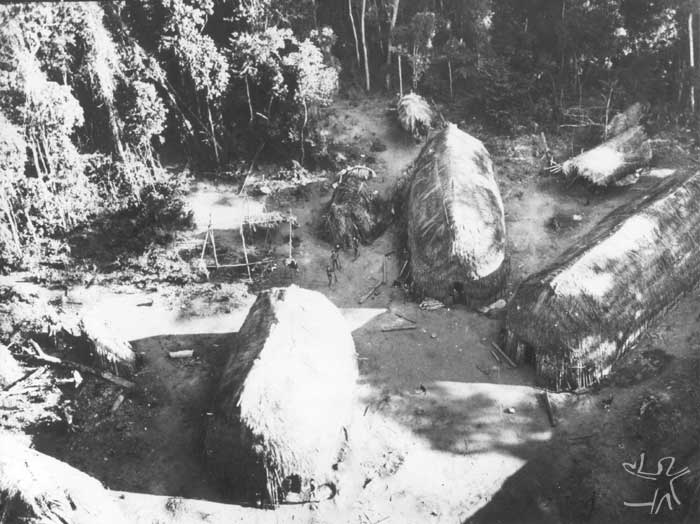
The Cinta Larga are an Indigenous people of Brazil, primarily living in the western part of the Amazon rainforest.
Throughout the expedition, although the crew never saw a member of this tribe, they constantly came across signs of their presence—abandoned camps, freshly cut trails, and marks on trees.
At this time, the outer world knew very little about this tribe. And the things they did know weren’t pleasant. The Cinta Larga had a reputation for being hostile to outsiders.
Even though the crew carried firearms, they wouldn’t stand a chance against the centuries-old hunting techniques of the Cinta Larga.
But for some reason, the tribe let Roosevelt and his crew pass through the forest.
Millard mentions that after Roosevelt’s expedition, however, many crews went down the same river and vanished entirely, probably because the Cinta Larga didn’t welcome more visitors into their territory.
The books Roosevelt read during the adventure
Theodore Roosevelt carried several books and reread them during the journey down the river. Some of them were:
- Utopia – Thomas More, 1516
- The plays of Sophocles – Sophocles, 5th century BCE
- The Decline and Fall of the Roman Empire, Volumes I–VI – Edward Gibbon, 1776–1788
- Meditations – Marcus Aurelius, c. 180 CE
- Enchiridion (The Handbook) – Epictetus, c. 125 CE
Among the books that had made it onto the dugout canoes for their river journey were Thomas More’s Utopia, the plays of Sophocles, the last two volumes of Edward Gibbon’s Decline and Fall of the Roman Empire, and Marcus Aurelius and Epictetus. “These and many others comforted me much,” Roosevelt wrote, “as I read them in head-net and gauntlets, sitting on a log.” (Page 369)
Why is the Amazon rainforest so biologically diverse?
The Amazon forest lies right along the equator. This means the climate conditions have been constant over millions of years. So the entire biological system—plants and animals—has been evolving without any major periodic interruptions.
On top of that, this part of South America has been isolated from the rest of the world for a very long time.
This cycle of isolation and stable conditions helped it become one of the most species-rich regions on earth.
Perhaps the most frequently cited factor in the species richness of the Amazon is the region’s latitude, which has for millions of years produced generally stable temperatures and moist environmental conditions that have favored the uninterrupted development of the jungle and its inhabitants. Another prominent explanation is the repeated isolation and reconnection of the jungle to other continents and habitats over the broad sweep of time. (Page 181)
Why did I pick up this book?
I first heard about this book from Ryan Holiday in a YouTube video.
But on top of that, I’d heard about Roosevelt’s interesting life from many places. It was always in the back of my mind to read about him.
In particular, I heard about him from former American president Barack Obama, who mentioned that Teddy Roosevelt is one of his favorite presidents. In an interview with the president (Timestamp: 7:20), the host, Jerry Seinfeld, asks Obama: “So when you were a kid, did you have a favorite president?”
And Obama answers:
Barack Obama: Teddy Roosevelt is a cool character. In fact, he may be the guy who would be the most fun to hang out with. He just does crazy stuff.
Barack Obama: Teddy Roosevelt would go up to Yellowstone Park for like a month, and nobody knew where he was. Nobody could get in touch with him.
Barack Obama: Can you imagine that?
Jerry: Wait a minute. In office?
Barack Obama: In office. Sounds pretty good to me.
Jerry: Boy, that’s a lot of messages when you get back.
Parts that left a mark on me
The river’s mouth is so vast that the island that rests in the middle of it, Marajó, is nearly the size of Switzerland, and the muddy plume that spills into the Atlantic reaches some hundred miles out into the open sea. (Page 69)
“The forest of the Amazons is not merely trees and shrubs. It is not land. It is another element,” he wrote. “Its inhabitants are arborean; they have been fashioned for life in that medium as fishes to the sea and birds to the air. Its green apparition is persistent, as the sky is and the ocean. In months of travel it is the horizon which the traveler cannot reach.” (Page 367)
IN THE years since the Roosevelt-Rondon Scientific Expedition made its journey, countless battles have been waged in the rain forest that flanks the River of Doubt. Untold millions of creatures have been born and died. They have multiplied, and they have protected, fed, and fought for their offspring. Some species have begun to evolve to become better predators and more elusive prey. Others have succumbed to extinction. To an outsider, this stretch of the Amazon, at least, appears untouched and unchanging, but in the delicately balanced, constantly evolving reality of the tropical rain forest, nothing ever remains the same. (Page 415)
How did the book change the way I think?
It’s at rock bottom that we get to find our true selves, not at the summit.
Who should read it
Read this if you: mostly enjoy novels but are open to learning about interesting historical events, are interested in narrative nonfiction that reads like a novel, or want to read something that has it all: politics, adventure, and fascinating historical facts.
Coffee chat
Summarize The River of Doubt by Candice Millard in 3 sentences
The River of Doubt by Candice Millard tells the incredible true story of one of America’s most celebrated ex-presidents and his final grasp at the glory he once knew.
The book covers Theodore Roosevelt’s actual 1913-14 scientific expedition down an uncharted tributary of the Amazon called the Rio da Dúvida (the River of Doubt).
Roosevelt, along with his son Kermit and Brazilian explorer Cândido Rondon, completed this dangerous journey that nearly cost Roosevelt his life.
Is The River of Doubt a true story?
Yes, The River of Doubt is a true story.
The book covers Theodore Roosevelt’s actual 1913-14 scientific expedition down an uncharted river in the Amazon rainforest called the Rio da Dúvida (the River of Doubt). Roosevelt, along with his son Kermit and Brazilian explorer Cândido Rondon, completed this dangerous journey that nearly cost Roosevelt his life.
The river was later renamed the Roosevelt River in his honor.
How long is The River of Doubt book?
The ebook is 418 pages long and takes about 8 hours to read. The pace can vary depending on how fast you read.
That said, Candice Millard’s writing style is engaging and quite enjoyable to read. This is one of those books you’ll never have to force yourself to finish.
What happened to Theodore Roosevelt on the River of Doubt?
Roosevelt had a prior injury in his left leg from an accident. It got worse when he cut his leg after his canoe overturned in the River of Doubt.
Because the whole crew was far from civilization, there was no way to get him the proper medical attention he needed at the time. Because of this, the wound got severely infected.
On top of his leg injury, he continuously suffered from malaria and high fevers. At the peak of this turmoil, he was so weak that he asked his crew to leave him to die in the forest. He didn’t want to slow down the others and put them in harm’s way as well.
However, Kermit Roosevelt, his oldest son, wouldn’t give up. He rescued his father and got him medical attention right in the nick of time.
Even though he got to save his leg, Roosevelt never fully recovered from this ordeal and died five years later in 1919.
Who died on the River of Doubt expedition?
Three men died during the expedition. One drowned in the rapids. Roosevelt’s son Kermit was also caught in this accident and nearly drowned. But by sheer luck, a current brought him back to the surface.
Another Brazilian was murdered by a porter named Julio over an argument about stealing food. It was the murderer himself who’d been caught stealing.
After this, Julio fled into the forest. The rest of the crew was too exhausted and weak to pursue him. So they abandoned him in the forest, and he was never found.
Sixteen men returned from the expedition.
Explain the main themes and lessons from The River of Doubt by Candice Millard
The book revolves around several major themes, the central one being Roosevelt’s journey as a path to redemption after his political defeat.
Other themes include resilience in the face of loss, leadership under extreme pressure and hardship (including the different leadership styles of Roosevelt and Rondon, especially when deciding what actions to take after the murder of a crew member), and teamwork and survival.
What makes The River of Doubt by Candice Millard worth reading compared to other Theodore Roosevelt biographies?
The River of Doubt stands out because it focuses on a lesser-known chapter—evidently, the final chapter—of Roosevelt’s life that most biographies treat lightly or skip entirely.
With everything happening around him during the journey—the injuries, the infections, the starvation, the deaths, the constant threat of indigenous attack—Candice Millard shows Roosevelt’s character, his resilience, his determination, not necessarily through his political achievements but through his raw struggle to survive.
This isn’t something a biographer can capture because they’re focusing on his life as a whole and therefore miss the opportunity to zoom in on one defining ordeal.
How did the River of Doubt expedition impact Theodore Roosevelt’s life and health after 1914?
The adventure in the Amazon impacted him both socially and physically.
Although he gained renewed respect from the public after exploring an unknown river in the Amazon under such harsh conditions, he never physically recovered from the injuries he sustained during the journey.
He lost over 55 pounds during the expedition and suffered from recurring malaria and infections for the rest of his life, which he called his “old Brazilian trouble.” The ordeal took years off his life, and historians believe it contributed to his death in 1919 at age 60.
What leadership lessons can be learned from Theodore Roosevelt and Candido Rondon during the River of Doubt expedition?
Roosevelt and Rondon, although both were clearly strong leaders, had different leadership styles.
Rondon brought his scientific methodology and respect for indigenous peoples, while Roosevelt openly and willingly shared the hardships with the crew.
At the peak of the turmoil, a murder took place among the crew. This is where I saw the clear difference between Roosevelt’s and Rondon’s leadership styles.
Rondon, obviously disgusted by the events that unfolded, yet chose to stay with the textbook strategy, to restrain. He argued that they didn’t have to take a life for a life. But Roosevelt’s instincts were different.
Eventually, the crew decided not to hunt him down and left the murderer to the forest.
How accurate is Candice Millard’s portrayal of the expedition, and what sources did she use for The River of Doubt?
The River of Doubt is a meticulously researched and highly accurate representation of Roosevelt’s journey through an unmapped river in the Amazon rainforest.
To write the book, she used never-before-seen diaries, Roosevelt’s own memoir Through the Brazilian Wilderness, other crew members’ journals, and archival materials.
Millard even traveled to the Amazon to meet descendants of the indigenous Cinta Larga tribes who lived in the territories the expedition passed through.
Her background as a former National Geographic writer and editor gave her expertise in nature writing and scientific accuracy.
