
Waking up in the morning is hard enough on its own.
But waking up to go to a job that you hate?…that’s just not fair.
The good news is, though, if you love what you do, you’ll jump out of bed to go to work every day.
That’s the dream!
And there are many who have ended up in careers like that.
Dana White, the UFC’s president and CEO, once said, “I love my life so much that I hate to go to sleep.”
We all crave such a fulfilling career.
But right now, you might not have hit your stride yet. You may find your current job frustrating or, at the very best, just “so-so”.
So you’re looking for a career that you’d care about, a career that you’d be excited to get out of bed for.
But where to start? you might wonder.
Start with your interests
One of the easier starting points is to turn to your interests.
- What do you like to do in your free time?
- What kind of work do you enjoy so much that you lose track of time?
- What kind of work gets more exciting the more you do it?
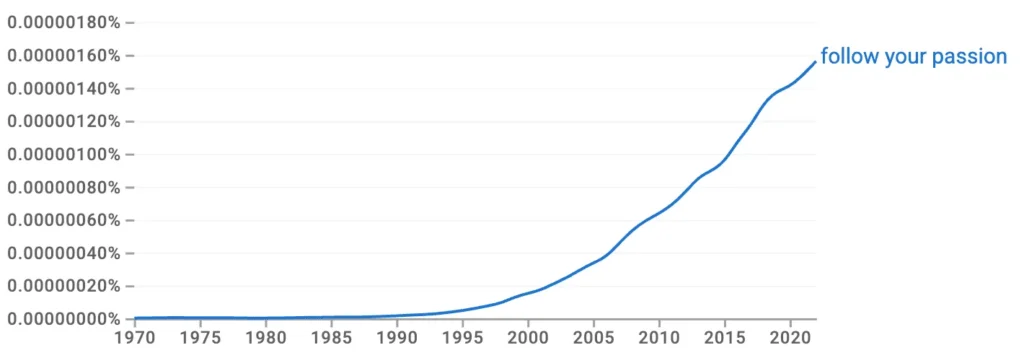
The answers to these kinds of questions are your first clues to finding something that you truly love to do, something you’re passionate about. And most people are on the right track. “follow your passion” has drawn more search interest over time, and it’s continuing to go up.
Why passion is important for getting good at your craft
Why is it important to be passionate about what you do?
Can’t you just … work hard, find success, and develop a passion for whatever you do afterwards?
The research tells a more complicated story. Even people at the top of their field aren’t exempt from being burned out.1
There’s no guarantee that you’ll come to love what you do just because you’re good at it.
Also, it is hard to get good at something in the first place if you have little interest in what you’re doing. For example, let’s say that you’re a passionate budding photographer, a street photographer in particular. And you aspire to be one of the best in your field. So you promise yourself that, whatever it takes, you’ll go out to shoot five times a week. An ambitious goal, this, considering that you’ll also need time to socialize with other photographers, do paid work, and connect with your loved ones. But you’re passionate enough to make it work. So you stick with this schedule.

A couple of months go by, and you start to hit a few bumps in the road. The messiness of real life creeps in. You may need more time for client work, your legs are killing you from all that walking around town trying to capture the perfect moment, and worst of all, you’re coming home with barely anything good.
It’s at this point that passion is capable of making a huge difference in anyone’s career trajectory. If you’re passionate enough about what you do, you’ll take these setbacks in stride because the lousy results don’t bother you as much. You love the process of doing it. But if you had no real interest in doing this and you only started snapping away because all your friends were into it, this is where you’d start to lose steam. You’d skip a day. And then it would become a week. And the next thing you know, you’ve given it up altogether.
This is the risk of having too little passion to keep you going in a new pursuit. Because these kinds of setbacks are common for anyone starting out in a new career. If you fold under pressure like this, you’ll struggle to get any good at what you do. Because you’re less willing to go that extra mile, the ones who do, the passionate ones, will have more chances to pull ahead and win the game.
Seen this way, being passionate about what you do helps you build a career in two ways:
- First, it gives you the drive to put in the hours and practise your craft through the hard times.
- Second, because you’re getting regular, focused practice in, you’ll get better at what you’re doing over time, so you’ll want to build on that progress and practise even more.
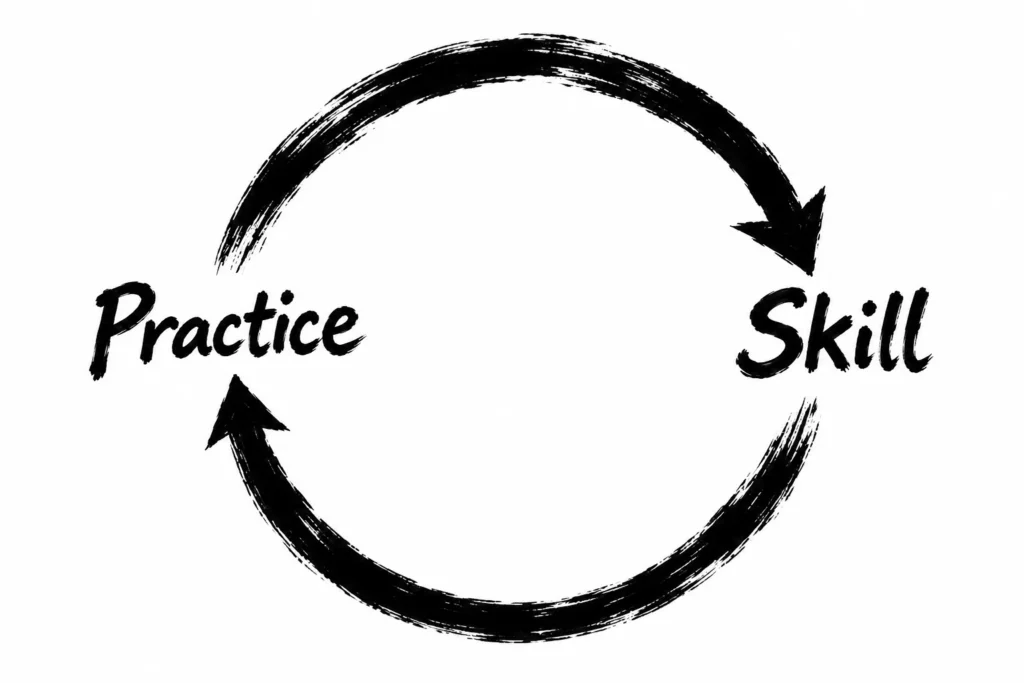
And it creates a self-reinforcing loop of practice and skill, all fuelled by passion.
Why passion is not enough
However, the momentum you build through passion will be short-lived if you lose sight of the large scale of things. A full-time average career adds up to roughly 80,000 working hours. It’s more like a marathon than a sprint—a long, winding journey. The fulfilment you get from such an enduring career ultimately hinges on both financial viability and a sense of contribution.
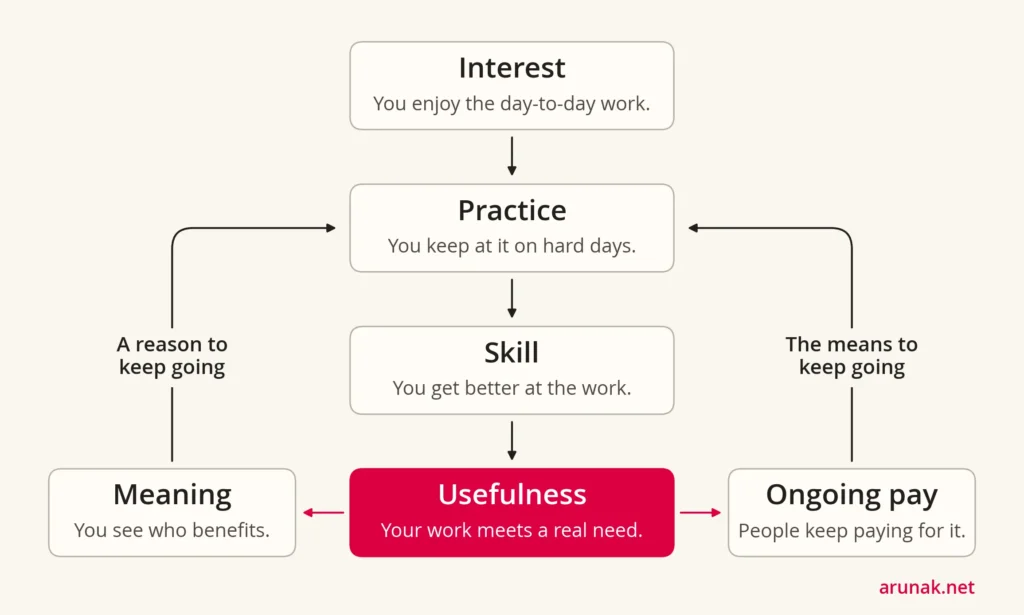
If passion is the only thing keeping that momentum going, you will run out of steam when there’s no money coming in and no sign that anyone appreciates your work. True, passion could help jump-start a fulfilling career, but what helps keep it going for the long haul is usefulness. Here’s how it works out in the long run:
- First, if other people don’t see value in the work you’ve chosen, it will be hard for you to find any meaning in whatever you’re doing. You have fewer people to share your work with. Fulfilment comes in part from finding meaning in what you do. This means that even if you’re really passionate about what you do, you may find it less fulfilling over time if you can’t see who it helps.
- Second, if the work doesn’t bring in enough money to support you, sooner or later it will become a financial burden. Even if you’re really passionate about it, you may eventually have to give it up as a career.
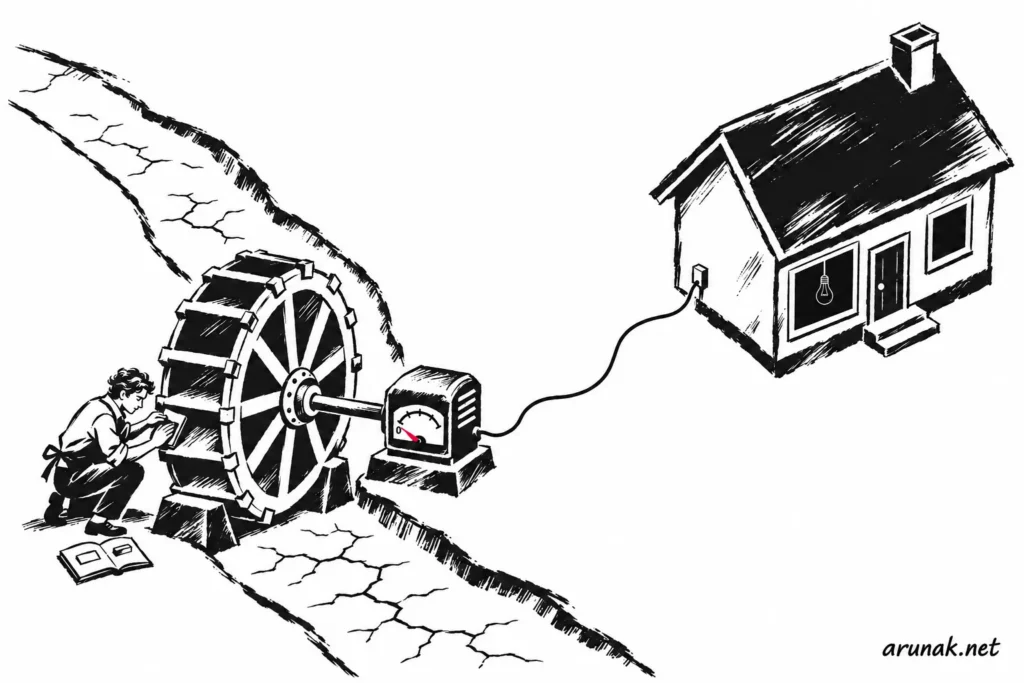
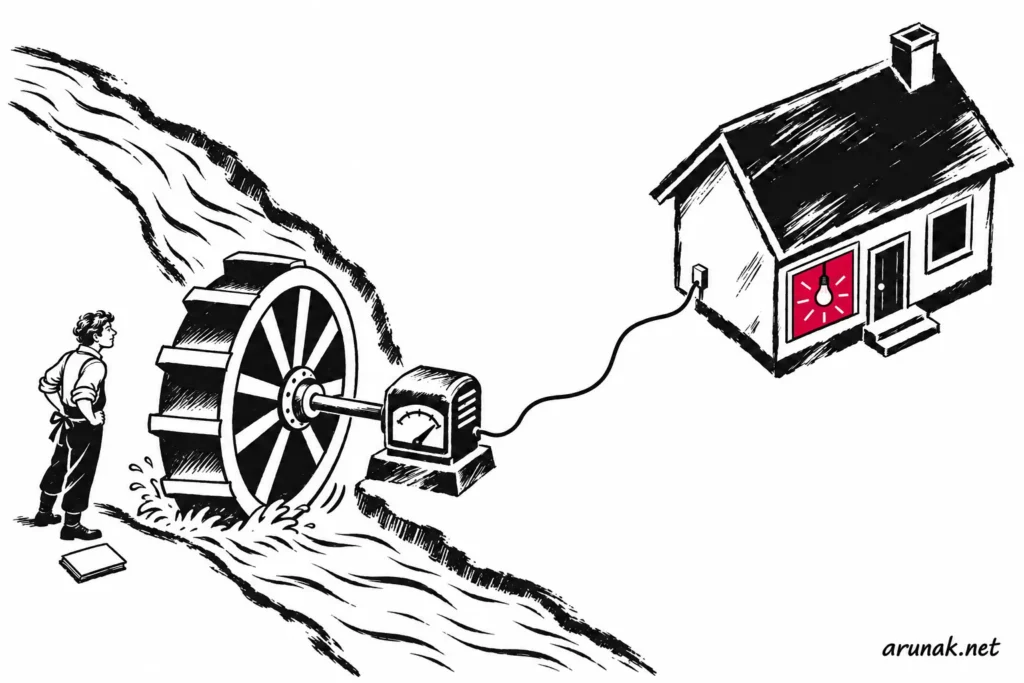
It’s like trying to turn a waterwheel by hand. You may be passionate enough to build the most efficient waterwheel in the world, but without a steady flow of water, you won’t keep the lights on. It is built to be turned by a current. In a career, this current is pretty much equivalent to an audience, a group of people who find your work valuable.
Usefulness trumps passion any given day. For example, let’s say someone is less passionate than you are about doing the same kind of work, but they pay close attention to what people need and steer their work towards meeting those needs. If they keep at this practice for enough time, they will probably end up more successful than you in the long run. Because their waterwheel is running. So, they can see how it performs and make it more efficient over time, earning more money and finding more meaning in the work along the way.
As Austin Kleon, author of “Steal Like an Artist”, points out:
If you want to get noticed, you have to notice. Look at the world you want to be a part of, and first figure out how you can be helpful to the people in that world—maybe that’s by being a fan, or a patron, or a curator, or maybe it’s by contributing your own art or writing. But first ask what you want to do and what the world wants or needs—the narrow overlap between the two will be where you make your living.
Conclusions
We all crave fulfilment in our careers.
And when we don’t find it, it’s all the more tempting to jump ship and find something that we’re passionate about doing.
But even though being passionate about something helps you find a fulfilling career, it takes something else to make that fulfilment last for decades on end: usefulness.
Because if you’re going to stick with something for the long haul, it needs to be both financially viable and meaningful.
Doing work that other people find valuable gives you a way to achieve both.
Passion does not guarantee usefulness.
The secret to a long and fulfilling career, then, is to find work that makes you want to get out of bed in the morning and that makes someone else glad that you did.
- De Oliveira, G. S., Jr., Ahmad, S., Stock, M. C., Harter, R. L., Almeida, M. D., Fitzgerald, P. C., & McCarthy, R. J. (2011). High incidence of burnout in academic chairpersons of anesthesiology: Should we be taking better care of our leaders? Anesthesiology, 114(1), 181–193. PubMed · Journal article ↩︎