One-line takeaway
When nature strips away the naval hierarchy of the British warship Wager, the boundary between the battle for survival and the battle for authority becomes a moving target.
At a glance
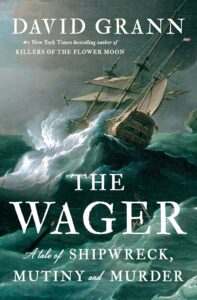
The Wager by David Grann follows the 1741 wreck of HMS Wager during Britain’s naval campaign against Spain and the brutal survival that follows on a remote island off the Patagonian coast.
When survivors return home by different routes, at different times, they each have a very different story to tell.
That sparks a whole other fight over blame, authority, and who gets to define the official version of what happened.
The battle for survival turns into a battle for justice.
Table of Contents
What is the book about?
A wartime gamble leaves Britain on the edge of the map
It was 1740, and the War of Jenkins’ Ear, a conflict between Britain and Spain over trade routes and colonies in the Americas, was raging at full force.
The British, looking for any edge they could find, decided to send a squadron of warships into the Pacific with a high-stakes goal: harass Spanish power and intercept Spanish treasure shipping.
But the greatest threat to this mission had less to do with Spanish forces and more to do with the Pacific Ocean itself.
The squadron was commanded by Commodore George Anson and sailed with big objectives but razor-thin margins: a long route around Cape Horn, fragile logistics, and almost no room for delay, storms, or disease.
Six warships departed Portsmouth in September 1740, with Anson commanding the flagship Centurion. Among them was the HMS Wager, a smaller man-of-war carrying 250 men.

The sea turns the mission into a survival problem
What Anson didn’t anticipate was that the voyage would be defined by a passage called Cape Horn, the southernmost tip of South America, where the Atlantic and Pacific oceans collide.
It’s one of the most dangerous stretches of water in the world, known for sudden storms, massive waves, and unpredictable winds that arrive without warning. In the 18th century, square-rigged ships like those in Anson’s fleet were slow to maneuver and nearly impossible to control in such conditions. Sailors feared Cape Horn the way climbers fear Everest.
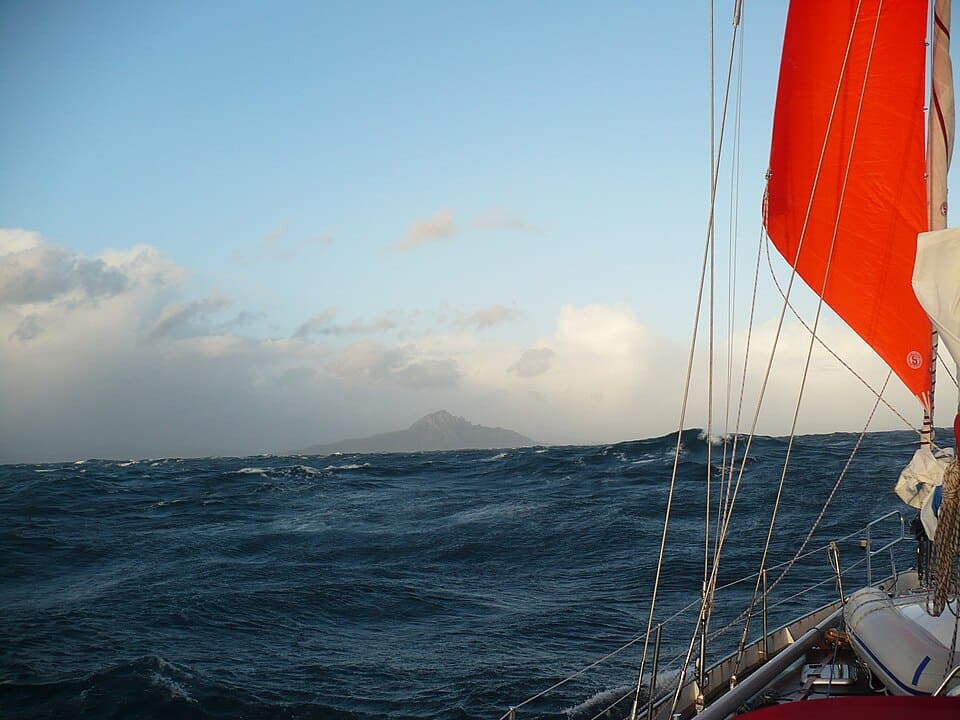
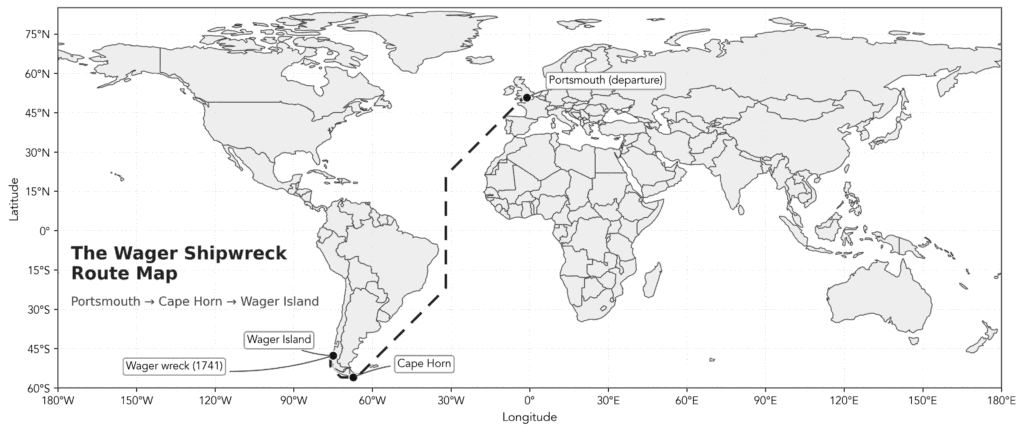
After the squadron set sail from Portsmouth on 18 September 1740, the attempt to round Cape Horn quickly turned into a battle against the storms. The ships began to separate. One of them, HMS Wager, got separated from the pack near Cape Horn and wrecked off the coast of present-day Chile in May 1741. The naval mission was over. What followed was a survival crisis.
The Centurion was the first to disappear in the murk. After Bulkeley spotted its flickering lights on the night of April 19, he wrote in his account, “This was the last time I ever saw the Commodore.” He discerned the other ships in the distance, but they, too, were soon “gone,” the sound of their booming guns smothered by the wind. The Wager was alone at sea, left to its own destiny (p. 88).
Now that the ship was wrecked and the crew had lost contact with the rest of the squadron, their priorities shifted fast. Surviving came first. Getting help came second.
Reading this part of the story reminded me of Lord of the Flies by William Golding, precisely because of sentences like this:
Some of the men claimed that they had not only heard the growling but had glimpsed a “very large beast.” Perhaps it was merely a figment of their imaginations—as their minds, like their bodies, unraveled from hunger. Or perhaps, as Byron and many of the seamen now believed, a beast was out there, stalking them (p. 111).
Captain of the Wager, David Cheap, realized that scurvy and hunger were going to become the defining threats of this ordeal, so he steadily tried to tighten the discipline of the crew. It wasn’t well-received.
As that tension set in, authority began slipping away from Captain Cheap. The ranks still stood, but now they had to compete with fear, exhaustion, and the scarcity of food.
Shipwreck forces a new hierarchy on land
And then the tension finally broke. Whatever authority Captain Cheap had held began to collapse under its own weight.
Henry Cozens, a midshipman aboard the Wager, made a direct challenge to Cheap’s authority. What followed turned ugly fast. Cheap shot him in the face. Cozens, wounded, died slowly over the following days.
The shooting split everything open. It created a fracture in the crew that eventually separated into two distinct camps: one loyal to Cheap, and another rallying behind John Bulkeley, the ship’s gunner, who had the confidence of most of the men and a plan to get them home alive.
Without Commodore Anson to guide them, Bulkeley wrote, “things began to have a new face.” There was a “general disorder and confusion among the people, who were now no longer implicitly obedient.” (p. 109).
Byron watched as the outpost, briefly united over building the ark, now split into two rival forces. On one side were Cheap and his small but loyal cadre. On the other were Bulkeley and his legions of partisans (p. 152).
Cheap could count on one hand the number of his men who had not defied him: the purser, Harvey; the surgeon, Elliot; the marine lieutenant, Hamilton; and the steward, Peter Plastow. And there was one other name, perhaps the most significant, missing from the document: Lieutenant Baynes. Cheap still had on his side the second-highest-ranking naval officer on the island. The top chain of command remained aligned (p. 154).
Now stranded on that desolate island for about five months, on October 13, 1741, Bulkeley’s party finally boarded the makeshift schooner they had built from the wreck, named the Speedwell, and set sail south through the Strait of Magellan toward Brazil.
The journey was brutal. Of the 81 men who departed, only 29 survived to reach the Rio Grande. Then, eventually, England.
On January 28, 1742, the boat was blown toward the shore, and Bulkeley perceived a tableau of strange shapes. Was it another mirage? He looked again. The shapes, he was sure, were wooden structures—houses—and they were situated on the edge of a major river. It had to be the port of Rio Grande on the southern border of Brazil (p. 197).
Captain Cheap’s party, on the other hand, took a different path. Left behind on Wager Island with a small group of loyalists, Cheap refused to give up. Guided by indigenous Chonos people, he made his way north to a Spanish settlement in Chile, where he was held as a prisoner of war. Most of his men died along the way. Cheap and just a handful of survivors were eventually released and returned to England in 1745, two years after Bulkeley’s party.
The reckoning shifts from the ocean to the courtroom
Surviving was one thing. Justifying what they did to stay alive was another.
Because Bulkeley reached England first, the Admiralty heard his version of events before anyone else. He didn’t waste the advantage. He and the ship’s carpenter, John Cummins, published their journals as a book, accusing Cheap of being an incompetent and murderous commander who had no business leading men.
David Cheap made his way to London as well. He was nearly fifty, and during his long time in captivity, he had seemingly kept revisiting every disastrous incident, every cruel snub. Now he discovered that John Bulkeley had accused him—in a book, no less—of being an incompetent and murderous commander, a charge that could end not only his military career but his life (p. 228).
Cheap laid out his own version, backed by the men who had stayed with him through captivity. The conflict over what happened on that island, who had the right to command, who had the right to leave, who had the right to shoot, moved from a desolate stretch of Chilean coast into a courtroom.
The court-martial was set for 15 April 1746 aboard HMS Prince George at Spithead. The survival story had finally become a legal battle, and both sides had everything at stake.
Key ideas & takeaways
Commodore Anson’s Mission
After reading all of this, I found myself thinking about where Anson fit in the bigger picture, what he was actually doing out there while the Wager was falling apart.
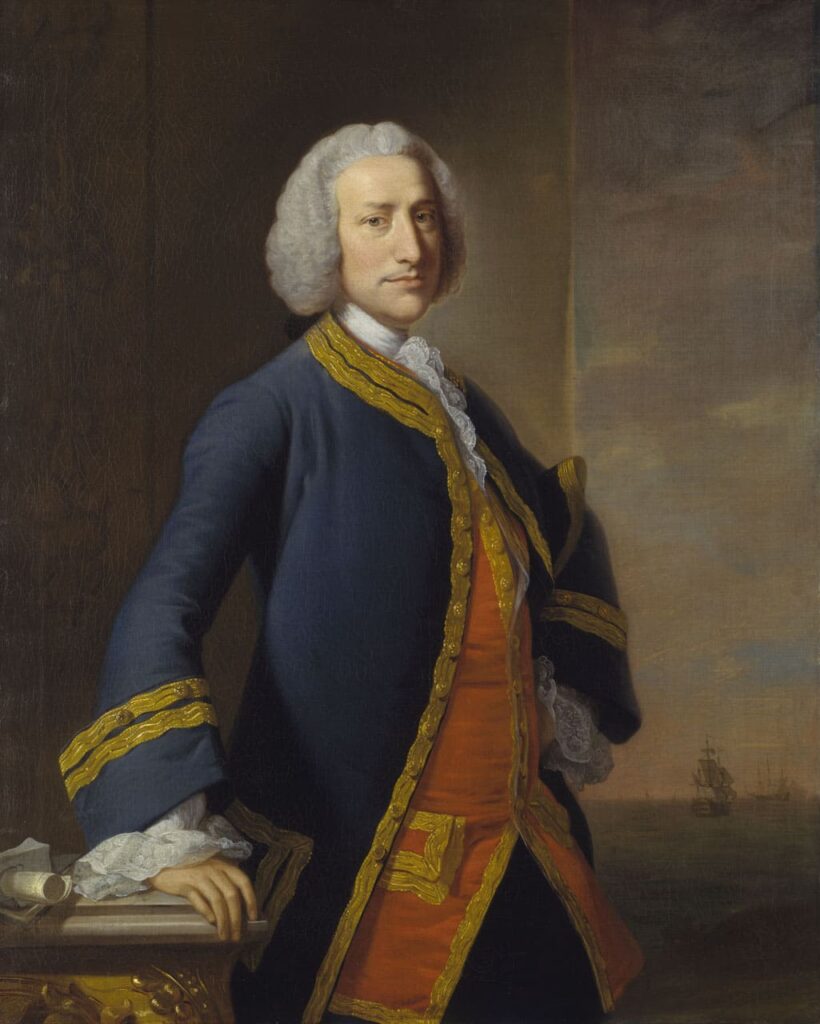
The Wager and her crew were just one piece of a much larger operation. Even though their expedition ended in disaster, that disaster was playing out on the edges of something far more ambitious.
Anson’s flagship, HMS Centurion, was a different ship entirely. She carried 60 guns and a crew of 400 men, almost twice the guns and nearly three times the crew of the Wager. She was built for serious war, not supply runs. And she survived Cape Horn. Centurion pressed on, eventually managing to carry out the original mission.
The whole point of the voyage was to hit the Spanish where it hurt: their Pacific wealth routes. The treasure galleons that moved silver and gold from the colonies back to Spain were the financial backbone of the empire.
Even with all his losses, Anson finally caught a break. On June 20, 1743, HMS Centurion captured the Spanish treasure galleon Nuestra Señora de Covadonga. The haul became a national sensation when Anson returned to England as a hero.
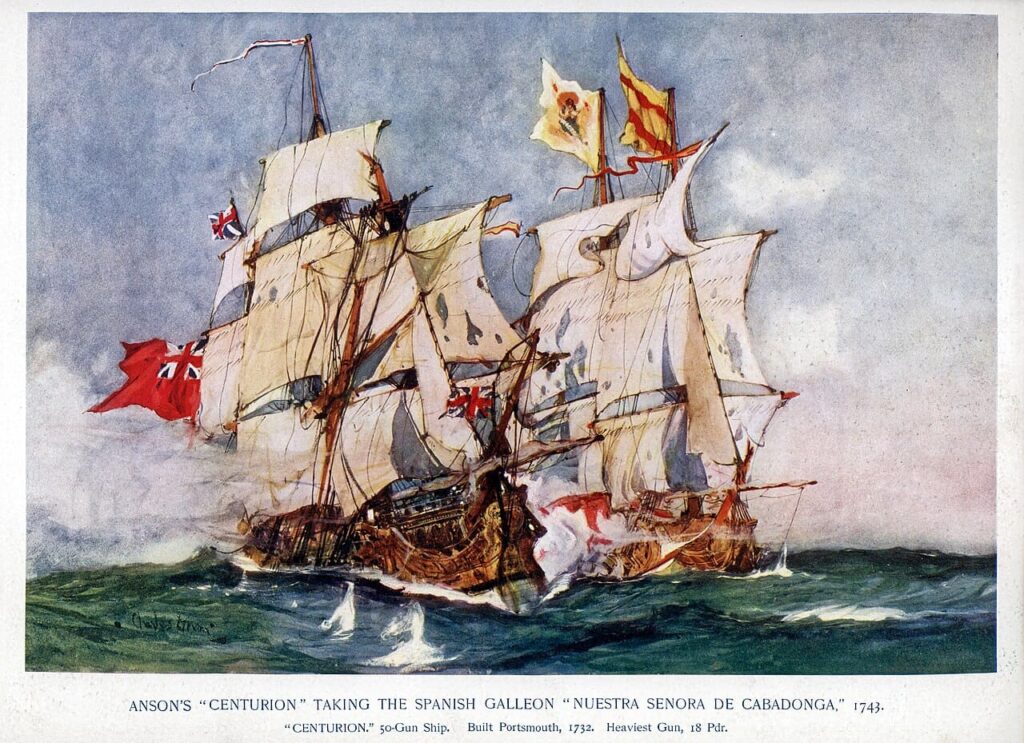
David Grann gives a tactile description of the battle between the two vessels:
The guns rattled and roared, the breeches strained, and the decks shook. The men’s ears ached from the murderous ringing, and their faces were powder blackened. “Nothing was to be seen but fire and smoke, nor heard but the thunder of the cannon, which was fired so quick that it made one continued sound,” Millechamp noted (p. 217).
After a hard-fought battle, Anson’s men boarded the galleon. And then they hit the jackpot:
The men opened a bag but found only cheese. When a man pressed his hand deep into the soft fatty substance, though, he felt something hard: treasure. The party examined a large porcelain vase—it was filled with gold dust. Other bags were stuffed with silver coins, tens of thousands of them—no, hundreds of thousands of them! And the chests abounded with more silver, including handwrought bowls and bells and at least a ton of virgin silver. Everywhere the party discerned more riches. Jewels and money were tucked under floorboards, and in the false bottoms of sea chests. Spain’s colonial plunder was now Britain’s. It was the largest treasure ever seized by a British naval commander—the equivalent today of nearly $ 80 million. Anson and his party had captured the greatest prize of all the oceans (p. 220).
The Notoriety of Cape Horn
This story, and the book, exist because of Cape Horn, a freak of nature, a convergence of tremendous force that broke the Wager apart.
And the Wager is not the only victim. It’s estimated that Cape Horn has claimed around 800 shipwrecks and over 20,000 lives across history.

Reading this, the immediate question that went through my head was: why? Why does Cape Horn carry this almost mythical reputation as a ship slayer?
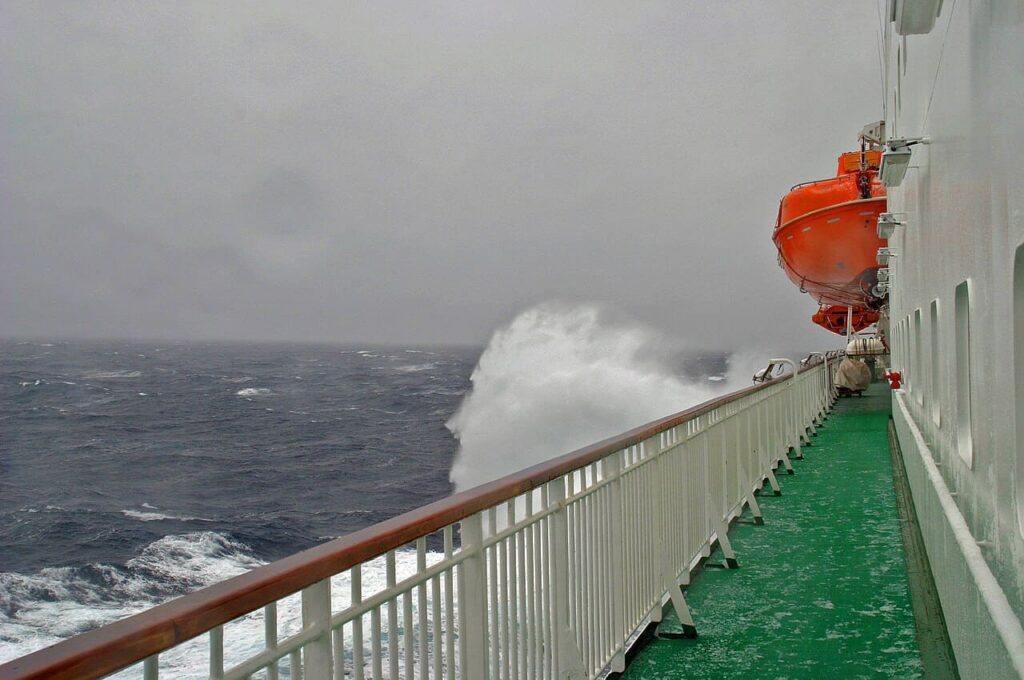
“Below forty degrees latitude, there is no law,” a sailors’ adage went. “Below fifty degrees, there is no God.” And Byron and the rest of the crew were now in the Furious Fifties. The wind in these parts, he noted, blows with “such violence that nothing can withstand it, and the sea runs so high that it works and tears a ship to pieces.” It was, he concluded, “the most disagreeable sailing in the world.” (p. 73).
It turns out there are a series of conditions that make Cape Horn a ship graveyard.
The westerly winds at those latitudes are winds that circle Antarctica with no land to slow them down, so they blow hard and constantly, building over thousands of miles of open ocean. Those winds then create large, fast-moving swells, which are long rolling waves that travel across the ocean surface, and when they meet the strong eastward-flowing Antarctic Circumpolar Current and hit the shallower water around the tip of South America, the waves get steeper and more chaotic.
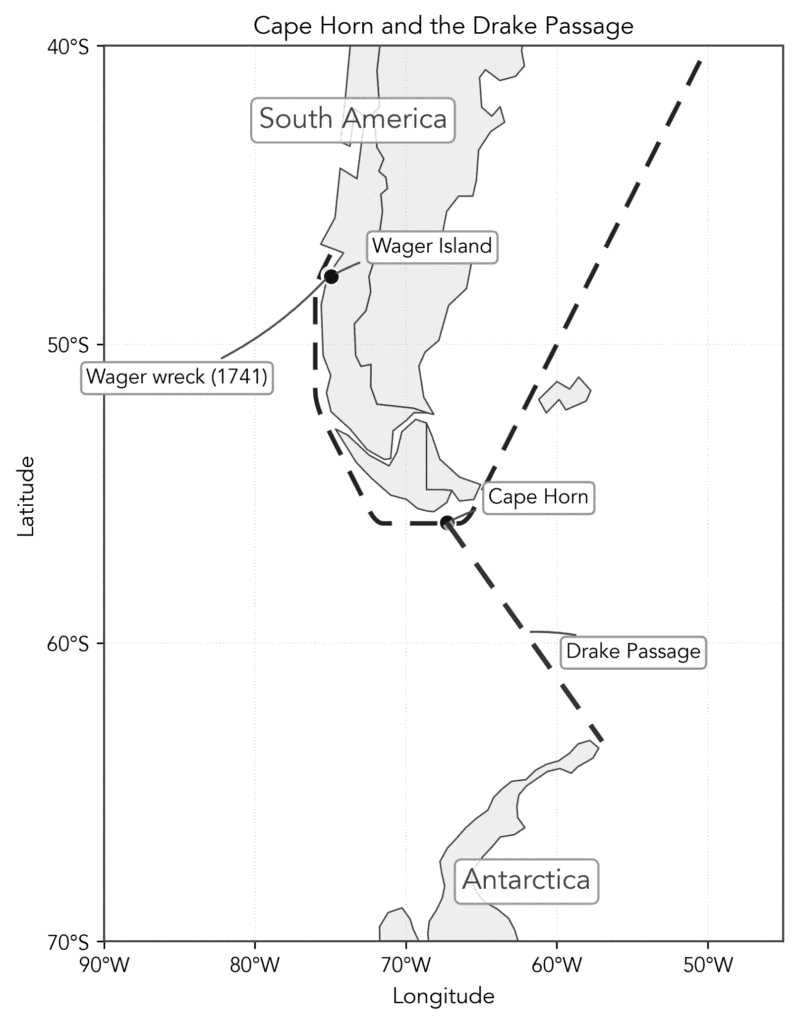
The geography makes it worse. The Drake Passage, the gap between South America and Antarctica, funnels all that wind and sea state through a narrow corridor with nowhere to go. Together, that combination means heavy weather is almost constant, and the chances of a ship surviving a bad storm drop really quickly. In the age of sail, with no weather forecasting and no engine to fight back against the current, rounding Cape Horn wasn’t a challenge; it was a gamble.
The Wager and Lord of the Flies
The more I think about this story as a whole, the more I see the deep connections between The Wager and Lord of the Flies.
The resemblance is uncanny.
In both stories, a group of people is stranded on a remote island after a disaster at sea. In Lord of the Flies, it’s a plane crash that leaves a group of British schoolboys completely on their own. In The Wager, it’s the shipwreck. Different era, different people, but same story.
In both cases, authority starts to crack under the weight of the new circumstances. The scarcity of food, the exhaustion, the fear of dying; all of it slowly eats away at the structure that held things together. Then people divide into rival groups and choose their own leaders.
And in both cases, they start seeing a beast.
In Lord of the Flies, the littluns are the first to report it. One of them insists he saw something in the woods at night, something big, something that came for him in the dark. Simon, the most clear-eyed of the boys, tries to name what’s really happening: “Maybe there is a beast… maybe it’s only us.”
The same thing happens in The Wager.
Some of the men claimed that they had not only heard the growling but had glimpsed a “very large beast.” Perhaps it was merely a figment of their imaginations—as their minds, like their bodies, unraveled from hunger. Or perhaps, as Byron and many of the seamen now believed, a beast was out there, stalking them (p. 111).
One is a story of fiction, and the other is based on true events. But what both of them are actually about is the same thing: what happens to people when civilization is stripped away, when the rules no longer hold, and when survival becomes the only law.
The Alternative: The Panama Canal
After hundreds of shipwrecks and thousands of lives lost to Cape Horn, there was a desperate need for another way through.
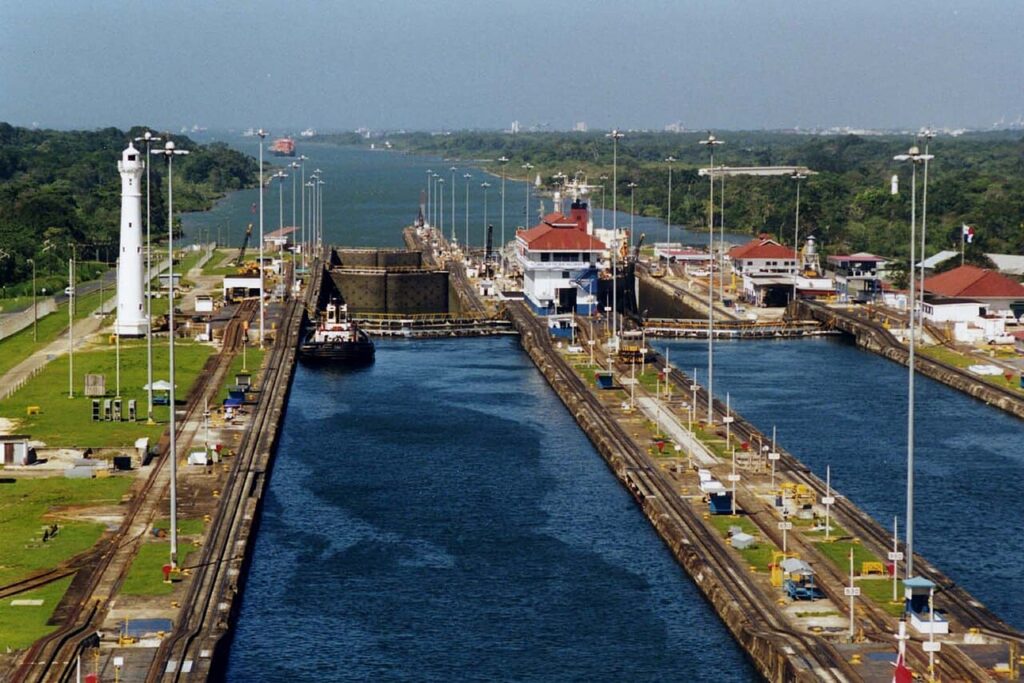
The Panama Canal opened on August 15, 1914. And it didn’t just solve one problem; it solved two.
First, ships no longer had to gamble weeks and their lives, running the bottom of South America just to move between the Atlantic and Pacific. Second, it cut nearly 8,000 miles off the Cape Horn route.
The Panama Canal made it all possible: faster voyages, lower costs, fewer ships exposed to Cape Horn’s brutal weather, and a world where rounding the Horn stopped being a routine of global trade and became the exception.
Why I picked up this book?
I was watching one of David Grann’s interviews where he was talking about this book. At some point, he got so excited about a scene that he just brought it to life right there on the spot, pulling the interviewer and me straight into the story.
And it made me want to find that scene myself in the book.
He says (timestamp – 1:15:00):
…it’s the smallest moments that speak to me or may speak to. I’ll give you one example.
On Wager Island, which depicts the captain and the gunner in this titanic struggle between two egos, two formidable figures battling it out both for power and survival, and one is about to leave the other to likely die on the island.
And I’m reading the journal, and before the captain gets left on the island and the gunner is about to leave him, what do they do? They reach out, and they shake hands.
And I just thought, “Holy smokes.” I never ever…I just never would have thought that would have been the act, and that was the act. There was a moment of just…and then they will go back to hating each other. But in that moment, they both know what is at stake for each of themselves, how hard it’s going to be to survive, and they basically just wish each other well for one flickering moment.
Favourite highlights
“Whosoever commands the seas commands the trade of the world; whosoever commands the trade of the world commands the riches of the world.” (p. 15)
“I don’t know one situation in life that requires so accomplished an education as the sea officer…. He should be a man of letters and languages, a mathematician, and an accomplished gentleman.” (p. 34).
The summit overlooking their village—the one that Byron had climbed—was dubbed Mount Misery, and the largest mountain later became known as Mount Anson. And they named their new home after their old one: Wager Island (p. 121).
Despite the gunner’s stoicism, he complained that surely no one “ever met with such weather as we have,” noting that conditions “are so extremely severe that a man will pause some time whether he shall stay in his tent and starve, or go out in quest of food.” (p. 132).
Near Mount Misery, where the castaways built their outpost, a few stalks of celery still sprout, and you can forage for scattered limpets like those the men survived on. And a short way inland, partially buried in an icy stream, are several rotted wooden planks that, hundreds of years ago, washed up onto the island. About five yards long and hammered with treenails, these boards are from the skeletal frame of an eighteenth-century hull—His Majesty’s Ship the Wager. Nothing else remains of the ferocious struggle that once took place there, or of the ravaging dreams of empires (p. 257).
Should you read it?
Read this if you:
- Are into narrative non-fiction books that read like novels
- Want an accurately reported true story that gives answers to what actually happened on the Wager, and why survivors each have their own version of events
- Are curious how extreme scarcity, illness, and isolation can completely upend discipline, loyalty, and leadership in a closed group
- Like narrative history that stays grounded in primary sources: diaries, logs, testimony, and official records
- Want to understand how empires fought over wealth and power, and about the ordinary lives caught in the middle of it
Coffee chat
Can you give me the summary for ” Wager ” by David Grann?
It’s the true story of the British warship HMS Wager, sent on a wartime mission against Spain, that wrecks off the coast of Patagonia in southern South America.
The survivors make it to shore, stranded on a desolate island. The scarcity of food and the collapse of authority divided them into two groups: one led by the captain, David Cheap, and the other by the ship’s gunner, John Bulkeley, who convinced most of the crew that leaving was their only chance of survival.
When they eventually reached London, each group told a completely different version of what happened, with accusations of mutiny, murder, and brutality flying in both directions.
That tension, survival first and truth second, is the core theme of the book.
What is the wager really about, and why is the wager everywhere right now?
It’s a shipwreck story, but it’s also about how people bend the truth when their lives and reputations are on the line.
It got a big mainstream boost because it broke out beyond history readers into general audiences. It’s widely discussed, and it’s been attached to major adaptation news.
Is the wager a true story, or is it basically historical fiction?
Yes, The Wager by David Grann is a true story. The HMS Wager wrecked off the coast of Chilean Patagonia on May 14, 1741.
This is a narrative non-fiction book, so it reads like a novel, but it’s built on surviving sources like journals, logbooks, and court materials. Grann reconstructs scenes the way narrative non-fiction does, but he’s working from real evidence, not invented plot.
And the sourcing matters for this kind of book quite a lot, because multiple witnesses recorded different versions of what happened, which is the whole point of the story. If you want “reads like a novel” pacing but real history underneath it, this is a book that delivers both.
What’s the wager ending, and how does the wager wrap up without giving away everything?
The ending is less about a final answer and more about what happens when the survivors return, and the story becomes a public and legal fight.
The book builds toward the court-martial and the clash of competing narratives. The truth gets shaped by power, credibility, and what the court chooses to accept.
In other words, the battle for survival ends at some point. Then the battle for justice begins.
I’m about to start The Wager. Can you give me a spoiler-free overview of the main players and why they end up at war with each other?
The core cast is the ship’s leadership and a few crew members who survive the wreck.
They’re trapped together under extreme scarcity of food, and authority gets contested fast. New loyalties form, new social ranks emerge, and eventually the crew fractures into two.
They reach London at different times, by different routes, each with their own version of what happened. That leads to a very public legal battle over who told the truth and who should face the consequences.
In The Wager, what actually causes the wreck, and what are the biggest survival problems once they’re stranded?
The main reason for the wreck is the brutal conditions of the sea, especially around Cape Horn, where storms arrive without warning, and the waves can easily tear a ship apart.
After they’re stranded, the problems are basic but brutal: food, supplies, and illness. “Survive the island” turns into “survive each other” pretty quickly.
