One-line takeaway
An ancient fossil site in the Canadian Rockies leaves behind a humbling message: life did not have to end with us, yet somehow, it did.
At a glance
Once upon a time, near the eastern border of British Columbia, lies the home to some grubby little creatures. And here we are, almost 530 million years later, greeting them with awe, because they are the “Oldest Ones,” and they are trying to tell us something.
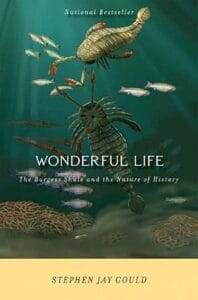
Wonderful Life by Stephen Jay Gould is about the Burgess Shale, a fossil site in the Canadian Rockies that preserved some of the strangest creatures in the history of life. Through these Cambrian fossils, Gould tells a broader story about evolution itself, arguing that life is shaped not only by natural selection, but also by chance, contingency, and a long trail of vanished possibilities.
The book is about ancient animals, yes, but also about a more unsettling idea: if the history of life were rewound, the world might have turned out very differently, and we, Homo sapiens, might not have been here at all in that version of history. In this review, I follow that idea from the fossils themselves to the deeper question it leaves behind.
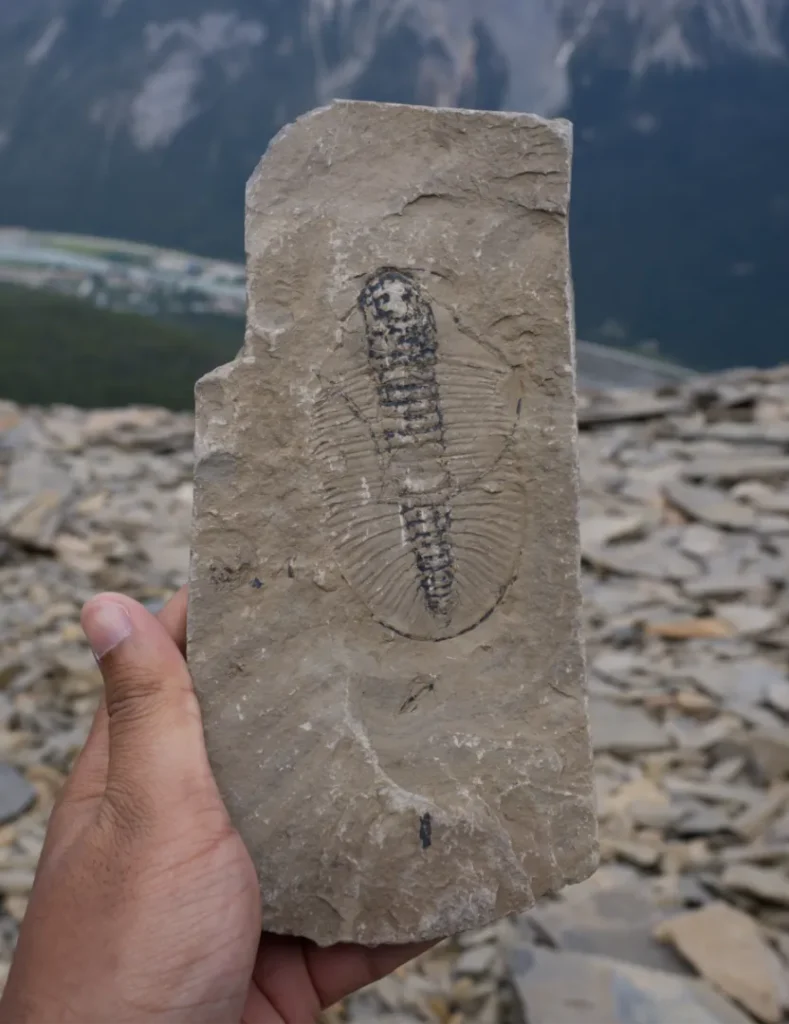
Table of Contents
Summary and review
Hiking to History
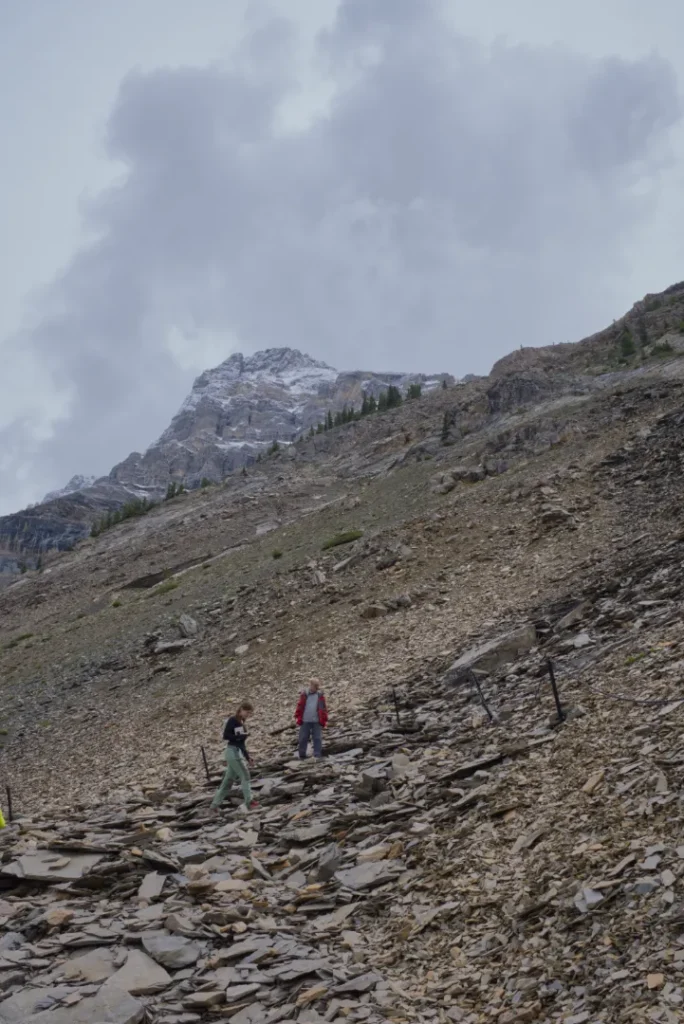
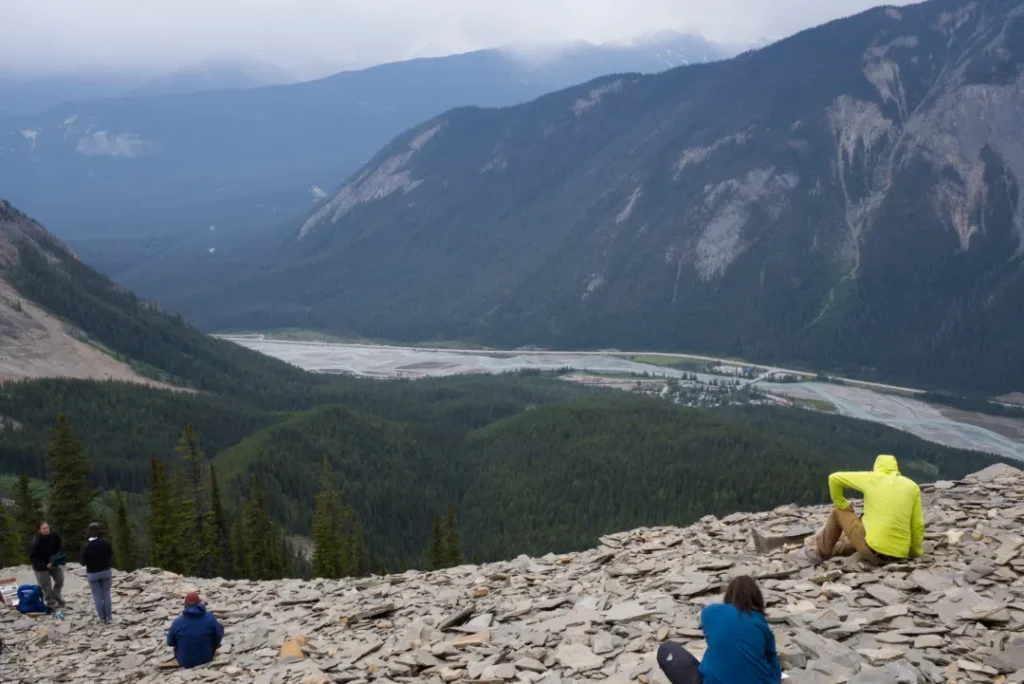
On a calm, sunny day in the middle of summer, I was hiking up a steep trail above the small town of Field, British Columbia.
The trail was so steep that the guide had to stop us every five minutes and show us fossil samples, the same kinds we were going to discover on our own in a couple of hours, just to keep us motivated.
My lungs were burning, my boots were covered in dust, but somehow, I felt surprisingly content.
This was an adventure that had been sitting at the back of my mind for about two years, ever since I read Stephen Jay Gould’s A Wonderful Life.
And today, I was walking toward the evidence itself.
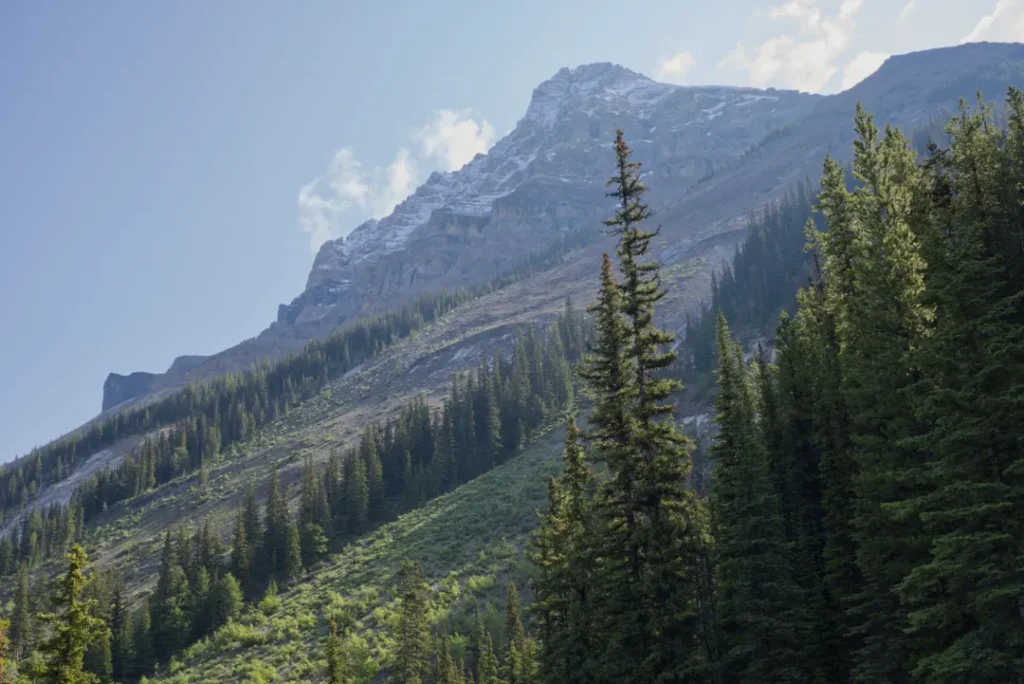
The trail leads to one of the most scientifically significant fossil sites in the world: the Burgess Shale.
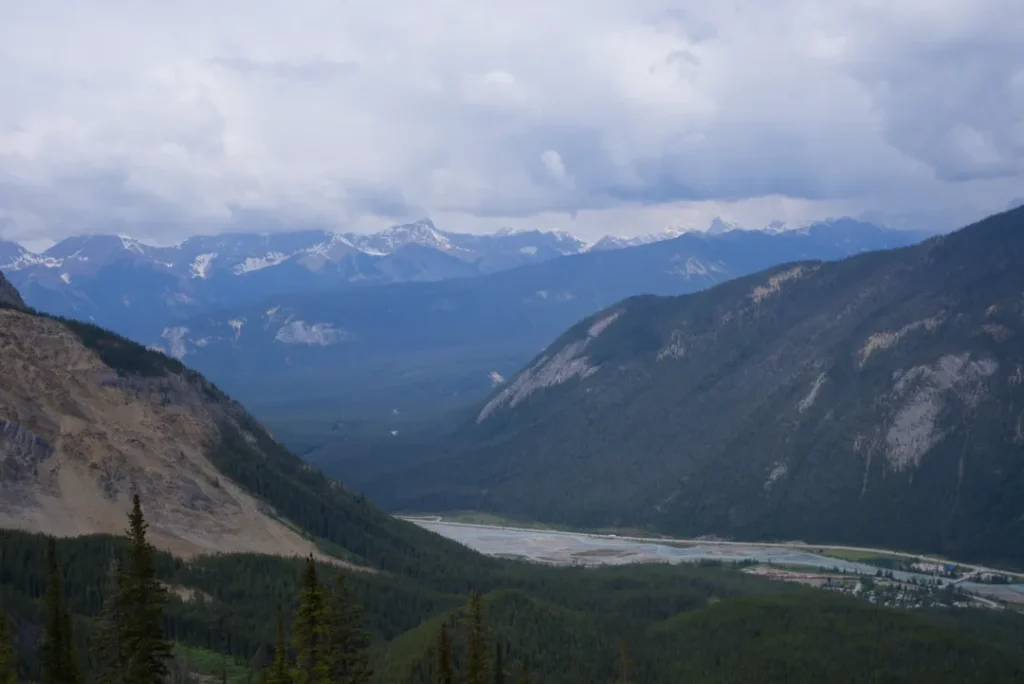
I had read about these fossils, and I had seen them before, but standing there, surrounded by the vast Canadian Rockies and knowing that beneath my feet lay the remains of creatures from more than 500 million years ago, was a completely different experience.
What a time to be alive!
You can just hike for six hours and end up holding a piece of deep history in your hand.
The more I think about the Burgess Shale, the more it feels like a meditation on time, chance, and the sheer randomness of our existence.
Gould’s enthusiasm, his philosophical tangents, and his vivid way of telling the story all clicked into place once I got to hold one of those fossils in my own hands.
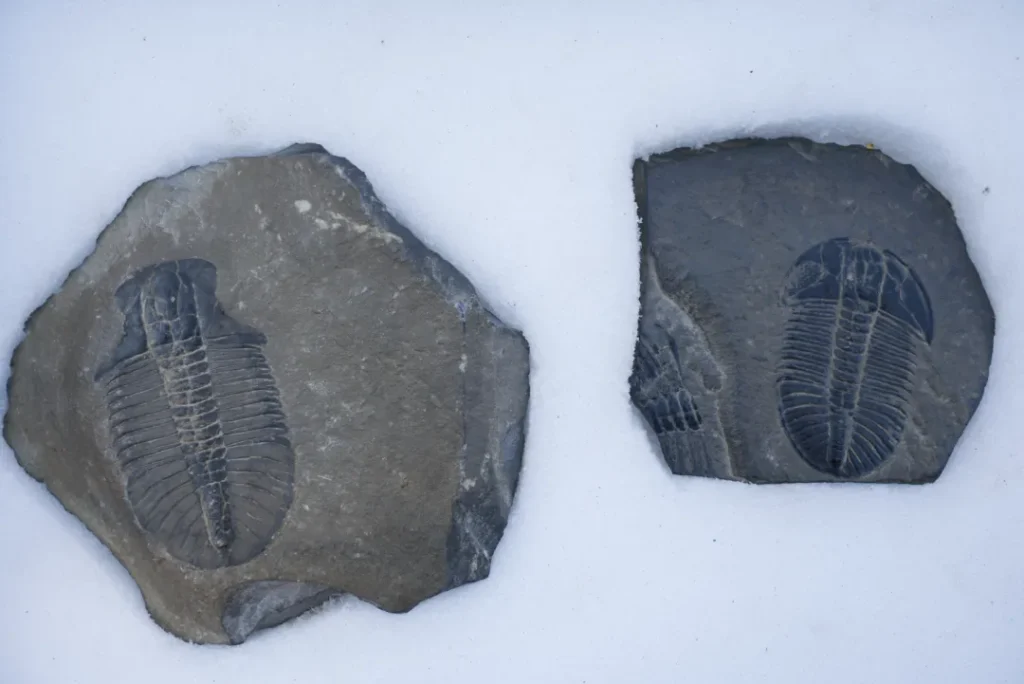
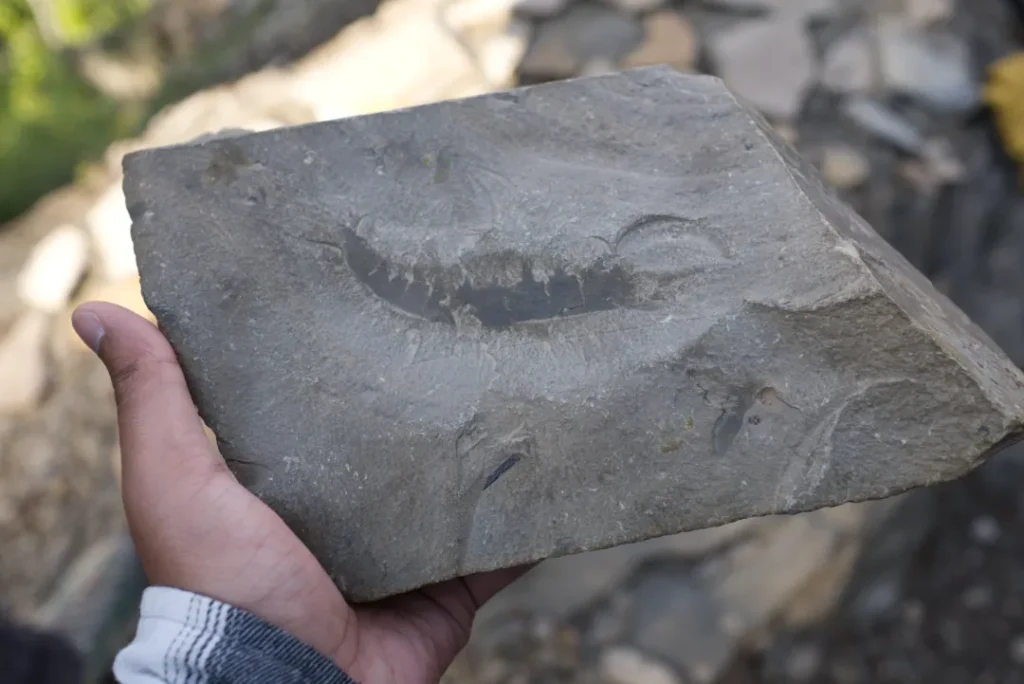
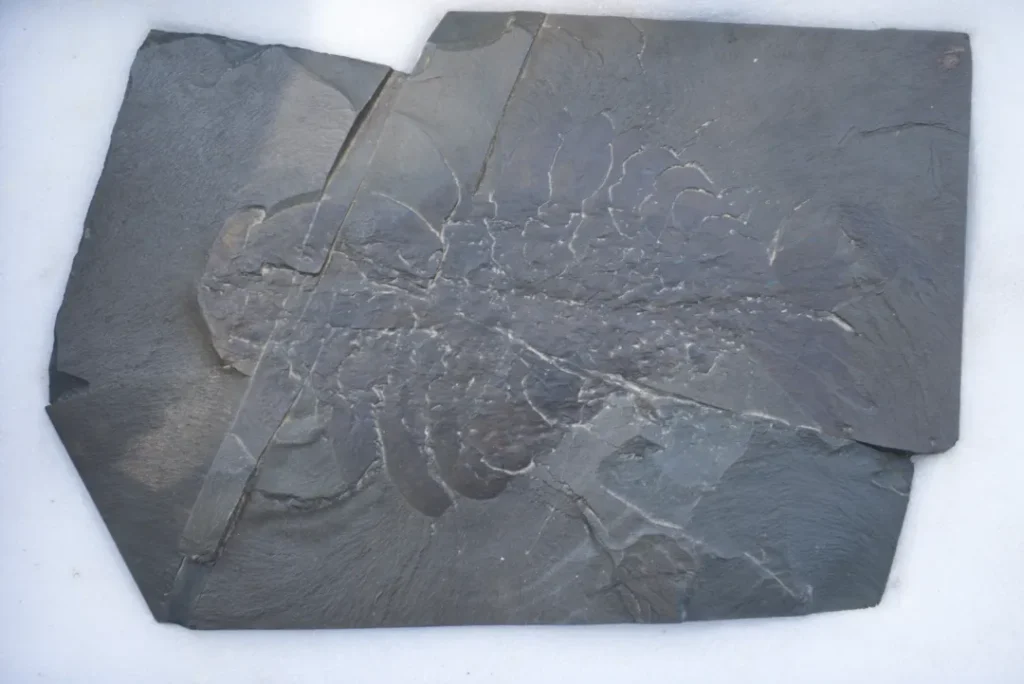
A Story Like No Other
Wonderful Life tells the story of the Burgess Shale and the strange Cambrian creatures whose fossils were preserved in the Canadian Rockies for more than 500 million years.
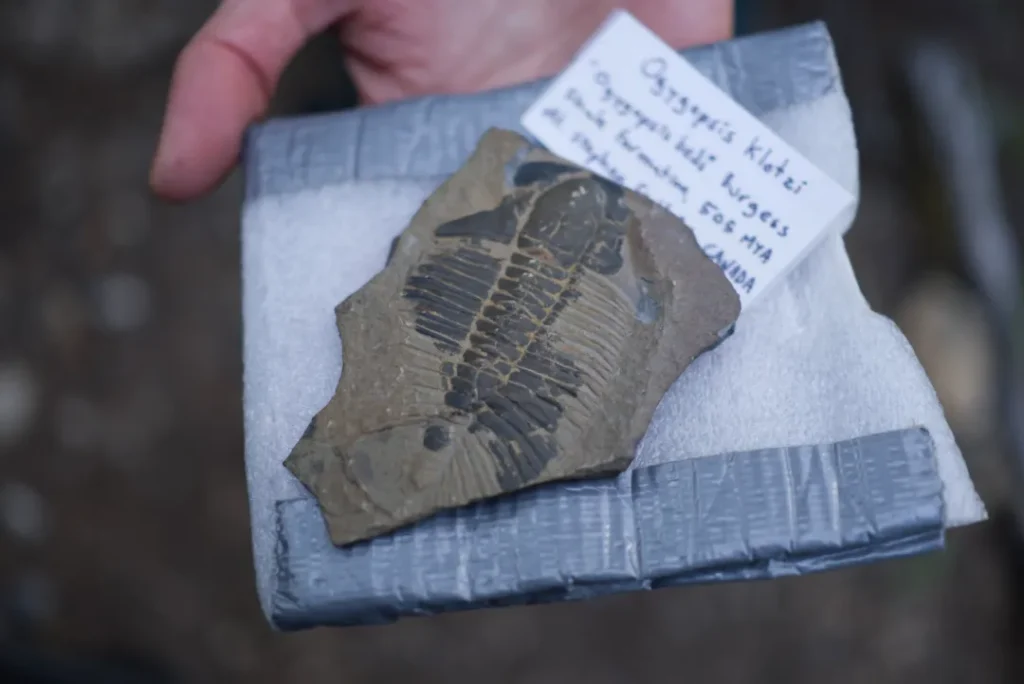
The Burgess Shale, tucked away in Yoho National Park, British Columbia, holds dozens of bizarre, soft-bodied creatures from around 508 million years ago.
They date back to the Cambrian Explosion, the strange and important stretch of deep time when animal life suddenly diversified in ways that still feel almost unbelievable. This was the period when many of the major body plans of animal life first showed up in the fossil record. It is often called the “Big Bang” of biology, and once you start looking at the Burgess creatures, it’s easy to see why.
To put that in perspective, this was even long before the dinosaurs. In fact, these animals lived about 442 million years before the dinosaurs disappeared around 66 million years ago.
And the way these fossils formed and got preserved is almost miraculous.
When we hear the word fossils, what usually comes to mind are big dinosaur bones, hard skeletons turned to stone over millions of years. But the remarkable part is that the Burgess Shale creatures were soft-bodied. They had no bones or shells. So it is both surprising and accidental that we get to know our most distant ancestors at all.
One day, a mudslide, probably from an underwater avalanche, swept these little animals off the seafloor and buried them in a very short period of time. That mud sealed them off from oxygen and scavengers, and that made all the difference. Instead of rotting away, their bodies were preserved in stunning detail, with gills, guts, and even tiny hairs.
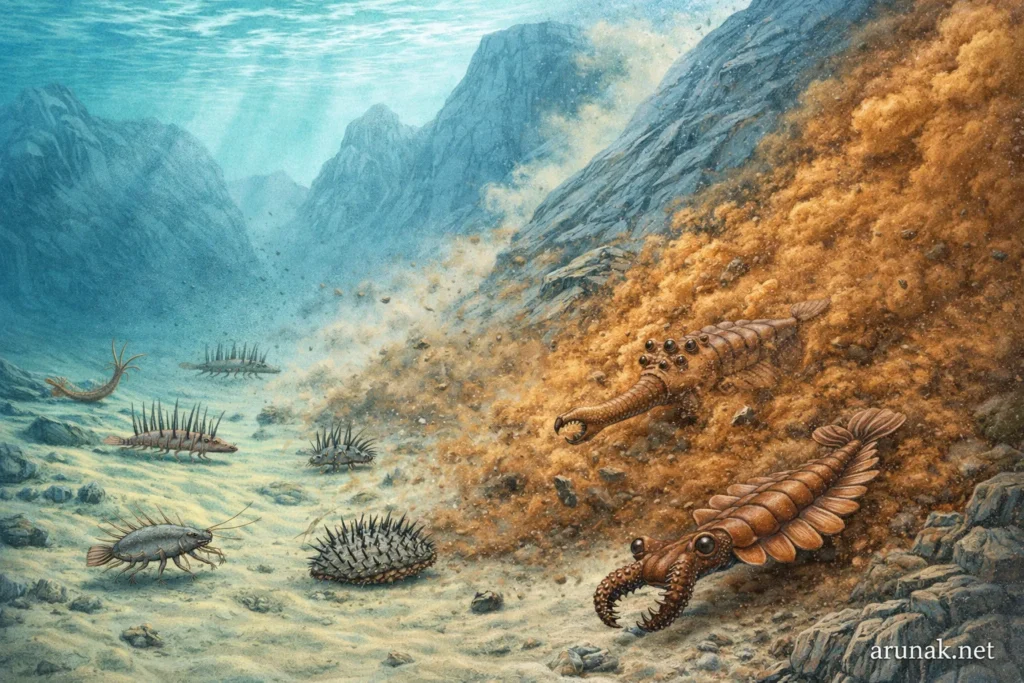
This coincidence made all the difference. If these creatures had simply died and stayed exposed on the seafloor, oxygen, scavengers, and decay would have erased them almost completely. We would not be talking about them now. We would not know that this strange little world had ever existed.
So while dinosaur fossils usually give us ancient skeletons, Burgess Shale fossils give us something far rarer: the delicate blueprints of life, preserved in astonishing detail.
As Gould explains, these animals had to be swept away and buried really quickly, in the right place, under the right conditions. This is precisely why they lasted for so long.
The Cast of Strange Characters
The species found in the Burgess Shale are just as bizarre and fascinating as the event that preserved them.
Gould introduces us to a cast of evolutionary oddballs, creatures so strange they would feel more at home in a sci-fi novel than in Earth’s fossil record.
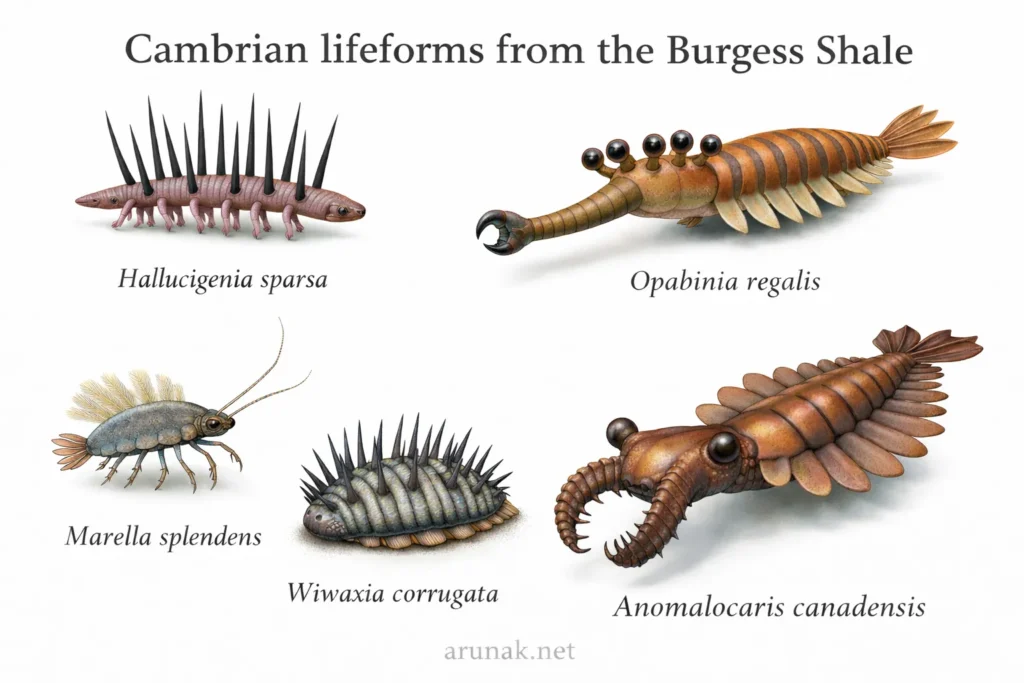
- Hallucigenia had spines on one side and legs on the other, and for years it was famously reconstructed upside down.
- Opabinia had five eyes and a claw-tipped, vacuum-like trunk.
- Marella, the most common fossil in the Burgess Shale, had delicate limbs and feathery gills.
- Wiwaxia looked almost slug-like, but with armoured scales and spines.
- Anomalocaris was a large predator with grasping appendages and a circular mouth lined with teeth.
Each of these species feels like an evolutionary experiment. The lineages of some of these creatures seem to have vanished completely, disappearing without a trace.
They remind us that life on Earth is far less linear and far more fragile than we might like to think.
Contingency, Not Destiny
Beyond the fact that these species are unimaginably distant from us, the major branches that led to modern animals were also taking shape during the Cambrian Explosion. Before this burst, life was simpler and less diverse. So the creatures from the Burgess Shale really are the oldest ones.
Gould walks us through the site’s discovery, the early fossil interpretations, and, most importantly, the radical reinterpretations from the 1970s and 1980s that showed just how strange and diverse these creatures really were.
But all of that leads Gould to a much larger idea about evolution itself.
At the heart of Wonderful Life lies this radical but compelling idea: evolution is not a steady climb toward complexity or perfection. It is more like a branching bush.
It is messy, sprawling, and full of dead ends.
Most of those branches never made it past the Cambrian.
Gould argues that the creatures of the Burgess Shale reveal a much wider variety of body plans than anyone expected. Some forms were so strange that early paleontologists tried to squeeze them into familiar boxes, assuming they were just crude ancestors of today’s animals.
But later studies showed that many of these creatures were not early versions of anything.
They were just nature’s evolutionary experiments, with no modern descendants.
And that changes everything.
Because it suggests that life did not march predictably toward us, toward Homo sapiens, the supposed pinnacle of evolution.
Instead, our existence is just one lucky outcome among countless possibilities.
In other words, these creatures were not evolving toward something. They just were.
Gould’s key point is that evolution is not only about survival of the fittest. It is also about contingency, about who happened to survive when history could easily have gone another way.
Some lineages made it through. Many others did not.
Looking back, it is tempting to treat the survivors as inevitable. Gould’s whole argument is that they were not.

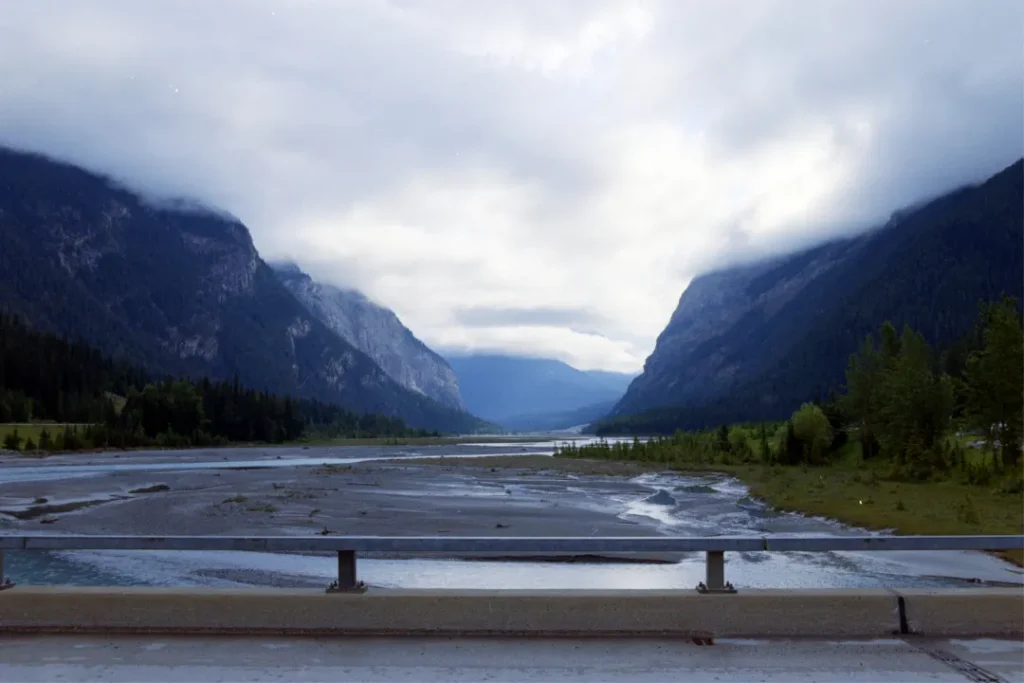
That said, the Burgess Shale, and so this book, do not overturn Darwin’s theory of natural selection. But they do challenge a more comforting version of evolution, the version that imagines a steady march toward complexity, perfection, or us.
Modern biology has since made sense of some of this strangeness, using fossil discoveries, phylogenetics, and developmental biology to place several of these Cambrian forms more carefully within the broader story of animal evolution. But that does not make Burgess Shale any less mysterious.
Thanks to rapid burial and exceptionally rare preservation, we can see this evolutionary scene in stunning detail. It forces us to see life’s history not as a smooth arc, but as a fragile, chaotic experiment, full of false starts and lucky breaks.
And here is one of the most compelling ideas that stayed with me from the book: if you could rewind the tape of life and play it again, the outcome might be totally different. Maybe even no humans.
And that leaves behind the question Gould wants us to sit with: What if chance had played out differently?
What if we were not the result?
The Final Star: Pikaia
And if all of that still feels a bit abstract, Gould saves one small creature for the end to make the whole idea impossible to miss.
“Saving the best for last,” Gould says.
It was the final fossil studied by Simon Conway Morris, and the last one mentioned in Wonderful Life. And it is easy to see why.
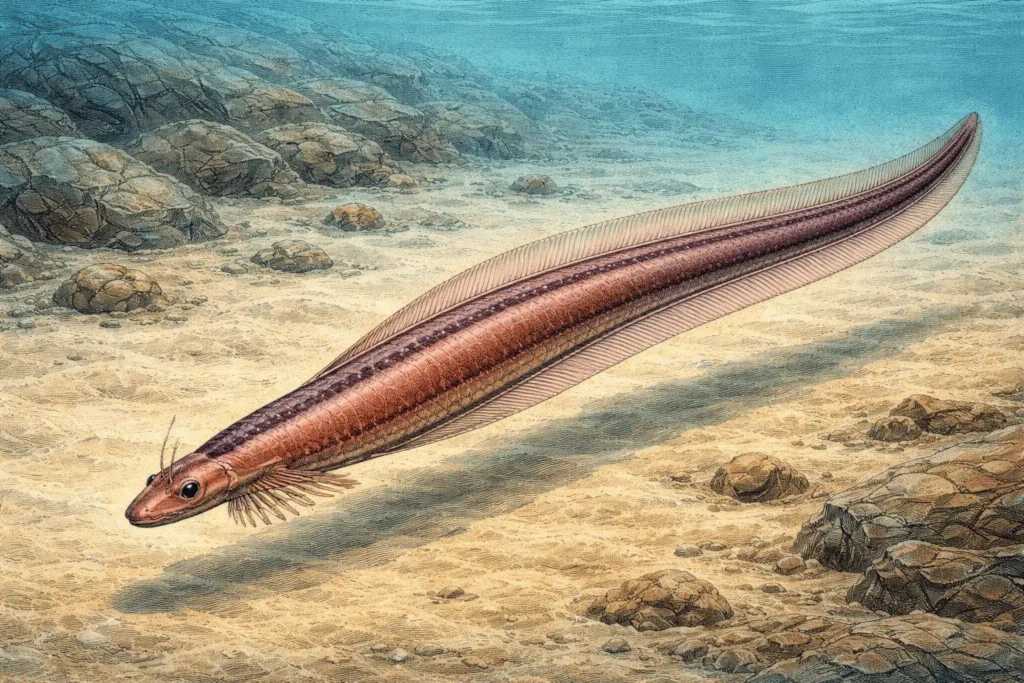
Because Pikaia might be the most important character in this whole story of chance.
At first, Pikaia was misclassified as a worm, a humble annelid. Later work, however, showed that it was something far more important. Pikaia is an early chordate, or at least very close to the base of the chordate line.
These are the animals with a notochord, a flexible rod that would later, in our own lineage, become the backbone.
This is a big deal in evolution.
When Gould wrote the book, Pikaia carried special weight as one of the earliest known chordate fossils. Other early chordate-like fossils have since been found, but Pikaia still holds its symbolic force, a fragile thread running from the Cambrian seafloor all the way to us.
Because all vertebrates—fish, sharks, dinosaurs, horses, dogs, chimpanzees, and humans—share that fundamental chordate design.
Pikaia is one of the first known creatures to have it.
But here is the twist.
Pikaia was not dominant or common. It had no obvious sign of future greatness over the other bizarre Burgess Shale animals. And this is exactly the point Gould was attempting to make all along.
There was no grand victory. No “fittest” narrative.
Pikaia just… made it.
And we, the Homo sapiens, are its legacy.
Gould, the Storyteller
As unique as these creatures are, Gould’s writing style is just as distinctive. Even after reading just a few pages, I got the sense that his approach was a bit radical for a nonfiction book, but in the best way possible.
Gould isn’t a minimalist. He’s exuberant, curious, and unafraid of long, fascinating detours into history, philosophy, or personal reflection.
He is generous with his knowledge, and I could not get enough of it.
Reading Wonderful Life felt like chatting with a brilliant friend who is eager to share everything he knows.
His passion shines on every page, and his metaphors stay with you long after you’ve put the book down.
He writes about evolution not as a cold, mechanical process, but as a dynamic, unpredictable story.
It’s not a light read, of course, but it rewards your attention with insight after insight, never once losing its respect for the reader’s intelligence, even in the highly technical sections.
