

Writing is not easy. It’s actually pretty complicated.
Learning from the experiences of the “pros” in the field makes the writing process a little bit easier. They can show us how to balance the rules of language with what actually works in the real world.
Following in their footsteps until you’re comfortable writing in your own voice, and then writing something only you could have written, is a much more grounded path to mastering the craft.
Here are some lessons from the masters of writing.
The War of Art by Steven Pressfield
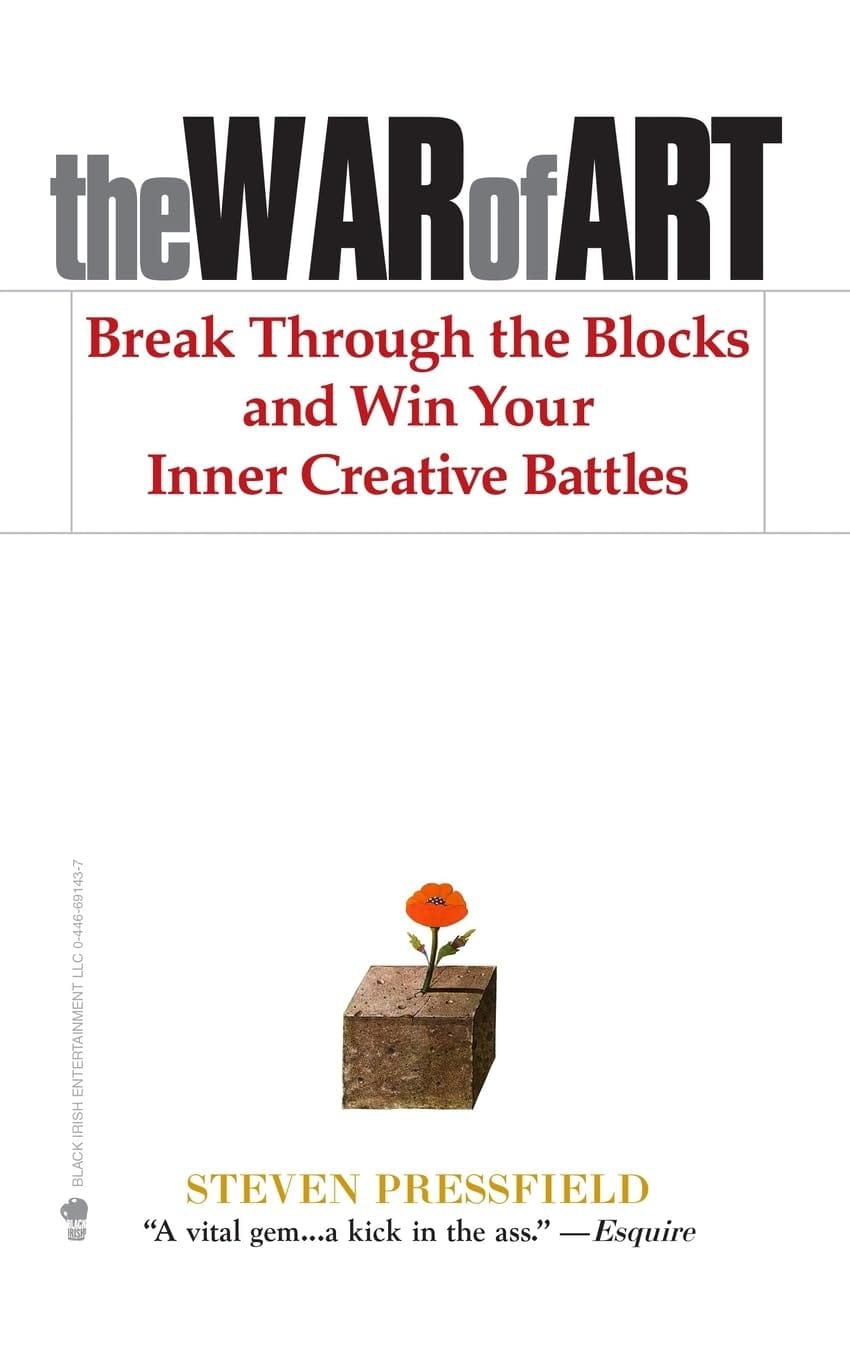
I first heard about this book from Ryan Holiday, who mentioned that he rereads it before every book project. This is the best book I’ve read that purposefully expands on the term “just do it.”
The book is divided into three parts: (1) Resistance: Defining the Enemy, (2) Combating Resistance: Turning Pro, and (3) Beyond Resistance: The Higher Realm.
Pressfield introduces the idea of “Resistance” to define anything preventing us from doing “the work.”
The second part of the book focuses on how to combat Resistance. What I liked was the approach and tone Pressfield chose for this section.
“The artist must be like a marine”, he says, “He has to know how to be miserable. He has to love being miserable. He has to take pride in being more miserable than any soldier, sailor, or jet jockey. Because this is war, baby. And war is hell”.
The third part of the book is more philosophical. In the first couple of pages, most of the momentum from the second section nearly comes to an end.
But then, over the next 10–20 pages, he flawlessly connects all the ideas from the first and second sections.
This is an excellent book for anyone starting any kind of project and looking for that extra bit of momentum to push themselves forward.
Nobody Wants to Read Your Sh*t by Steven Pressfield
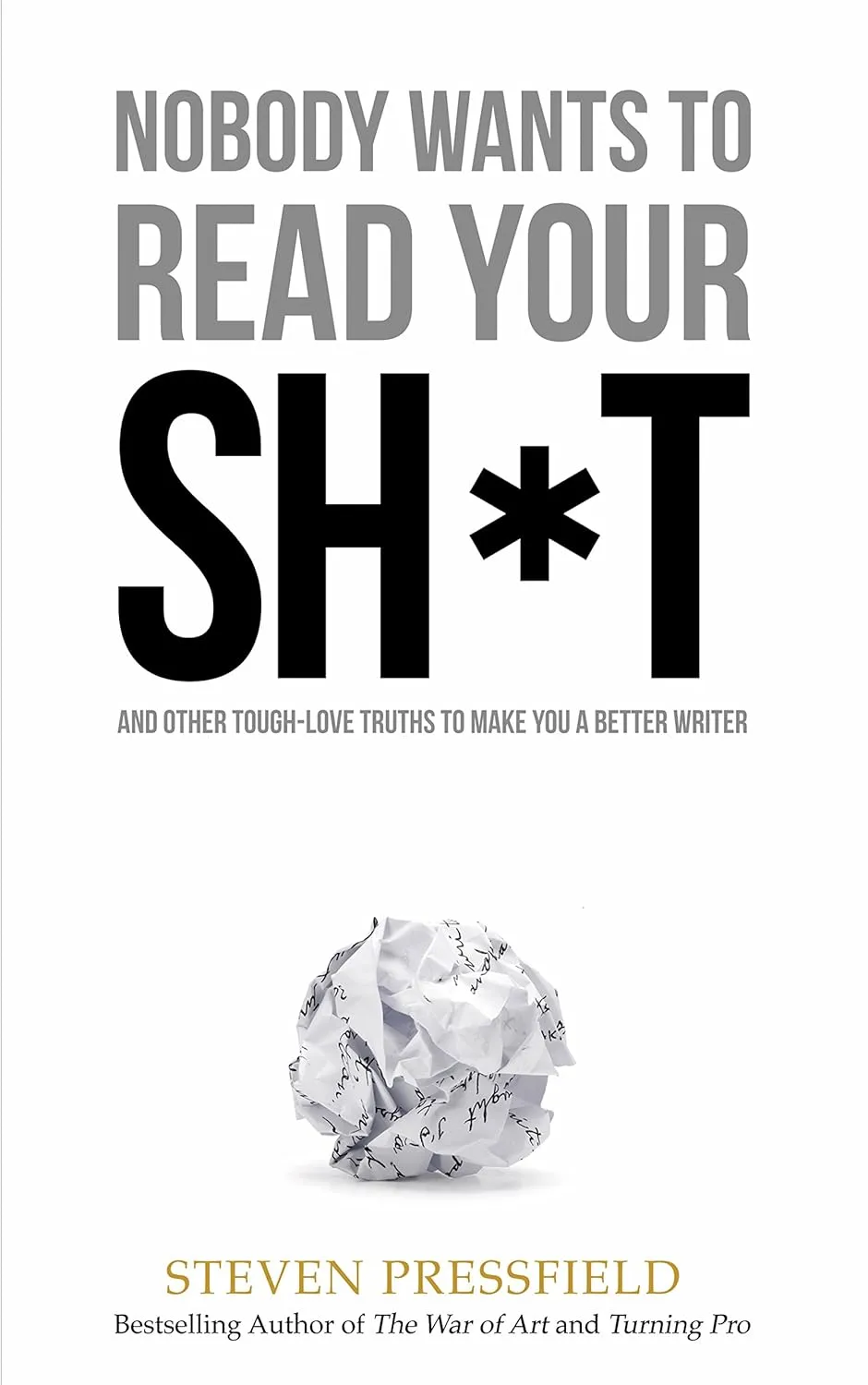
Immediately after reading The War of Art, I picked up Pressfield’s other book on writing: Nobody Wants to Read Your Sh*t.
This is also an excellent little book.
As a former copywriter, he keeps all the lessons in the book to the absolute minimum.
No fat. No filler.
Why do I like reading Pressfield this much?
Because he didn’t publish his first novel until he was 51, after writing and honing his craft for 27 years.
What’s even more interesting is that the knowledge he accumulated about writing did not come from a single domain. He made a living in five completely different fields of writing: advertising, screenwriting, fiction, nonfiction, and self-help.
He’s also been a schoolteacher, tractor-trailer driver, offshore oil-rig worker, and migrant fruit picker, and once even rewrote a pornographic film.
You don’t really learn an art or a craft in school. In the real world, the process is more like an apprenticeship, multiple apprenticeships under multiple masters. It happens on the street and it happens in the studio. It happens in bed. It happens sober and it happens stoned. It happens getting up early and it happens staying up late.
So this is an all-in-one book that gives you the depth, but also the breadth, of writing.
Some of the lessons are:
- Every piece of writing should be about something.
- There are three acts to every successful story.
- Every non-story is a story, including nonfiction.
Clear and Simple as the Truth by Francis-Noël Thomas and Mark Turner
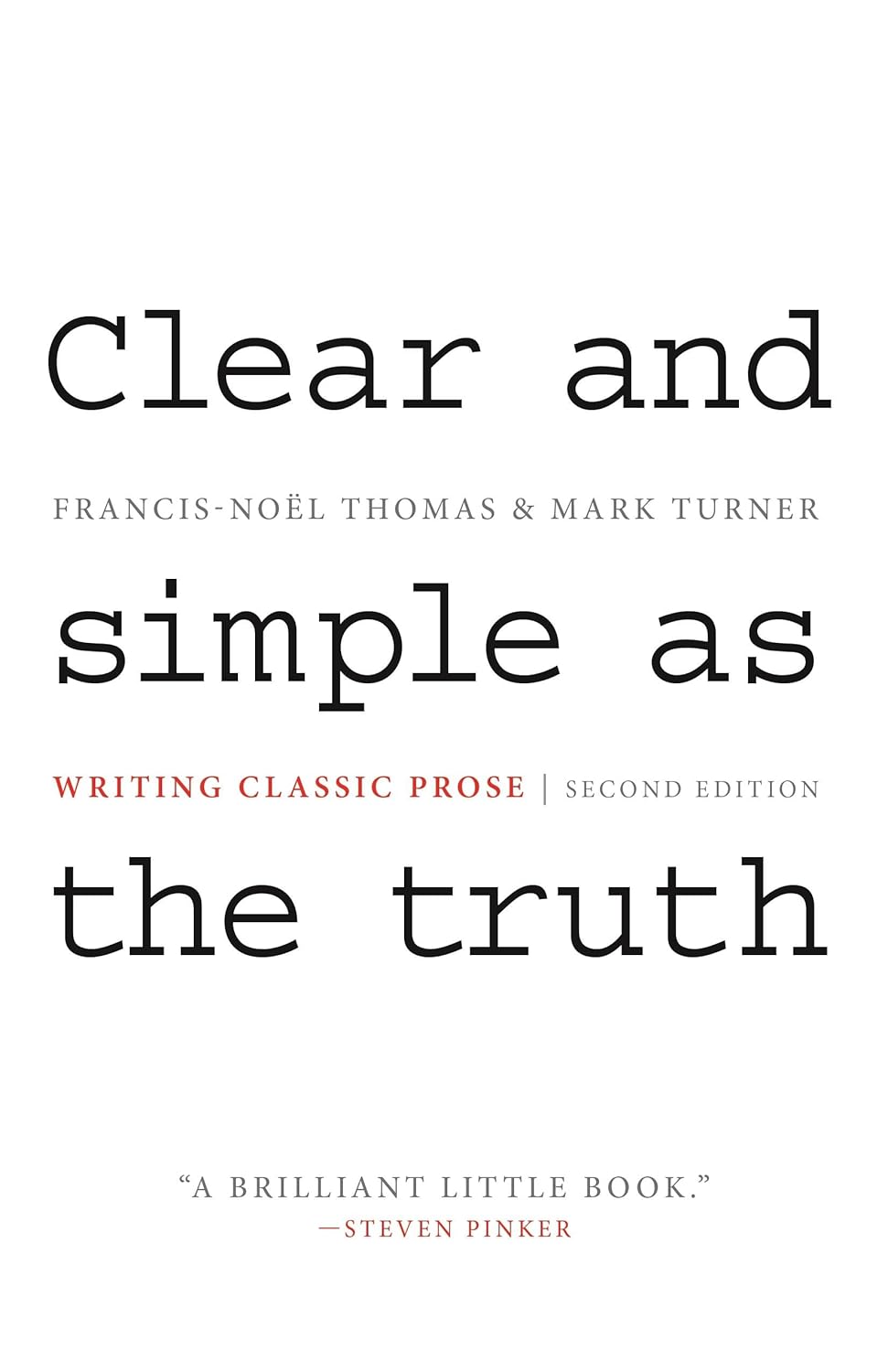
I first heard about this book in one of Steven Pinker’s talks on writing (his own book is mentioned next in this list).
This book introduces an attitude toward writing, though it can be applied to almost any interaction in life, spoken or written.
The authors begin with a question: Why, even with so many writing programs, is the quality of prose not getting better?
For the authors, this suggests that good prose does not come simply from stronger verbal skills, such as grammar or a good vocabulary. Instead, the authors argue, writing is an intellectual activity. Learning how to think matters more than focusing on grammar alone.
The solution is a writing style that the authors call the classic style.
Classic style is, in its own view, clear and simple as the truth. It adopts the stance that its purpose is presentation; its motive, disinterested truth. A successful presentation consists of aligning language with truth, and the test of this alignment is clarity and simplicity. The idea that presentation is successful when language is aligned with truth implies that truth can be known; truth needs no argument but only accurate presentation; the reader is competent to recognize truth; the symmetry between writer and reader allows the presentation to follow the model of conversation; a natural language is sufficient to express truth; and the writer knows the truth before he puts it into language.
The Sense of Style by Steven Pinker
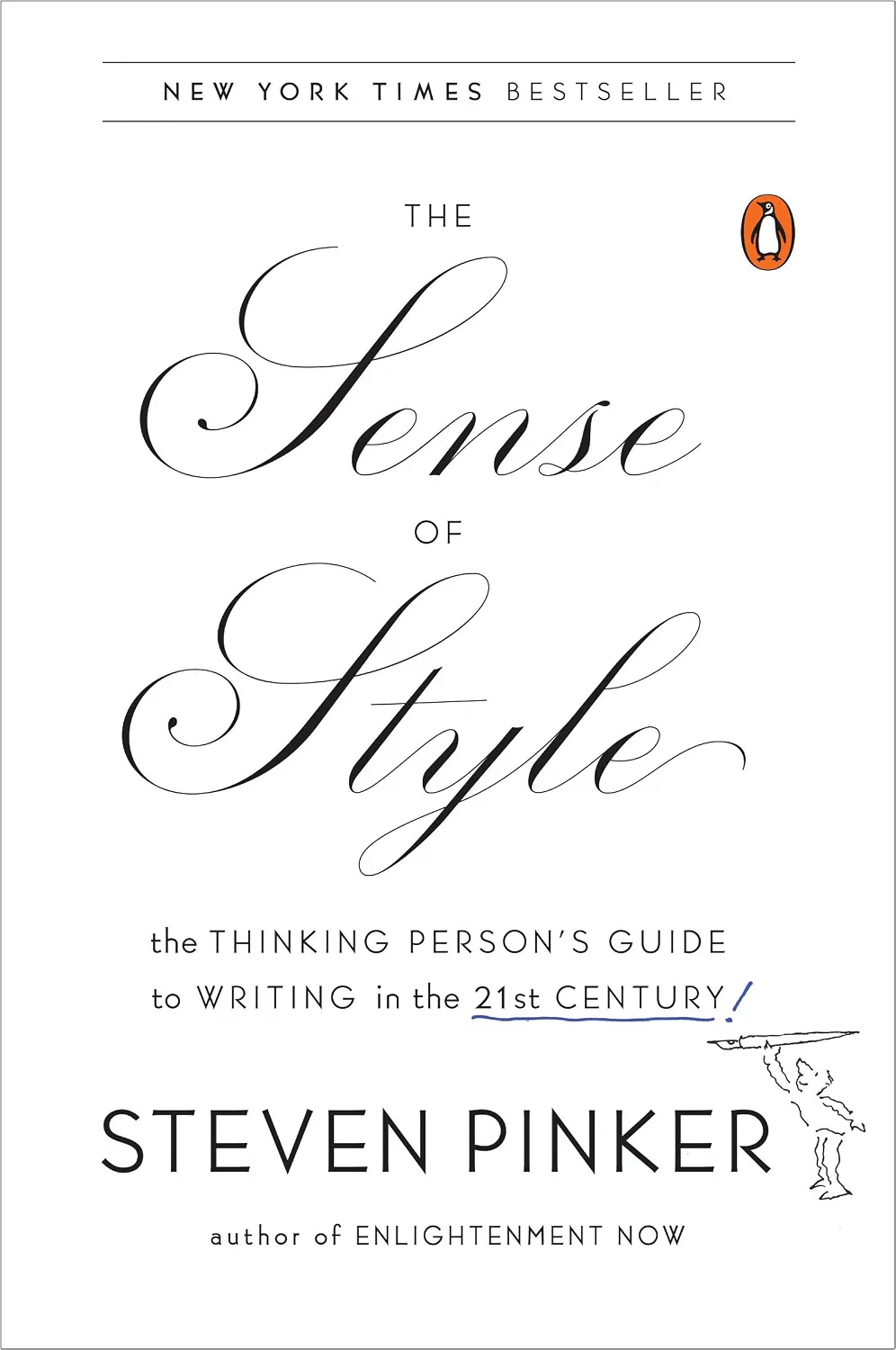
Steven Pinker is one of the few public intellectuals who approach writing through cognitive science.
His talks on writing, especially The Sense of Style at Google and Linguistics, Style and Writing in the 21st Century at the Royal Institution, are quite intriguing. They led me to read this book.
The book discusses several pieces of great writing and analyzes them to show why they work.
In Chapter 2, “A Window onto the World,” Pinker also praises classic style and gives a shoutout to Francis-Noël Thomas and Mark Turner:
The literary scholars Francis-Noël Thomas and Mark Turner have singled out one model of prose as an aspiration for writers today. They call it classic style and explain it in a wonderful little book called Clear and Simple as the Truth.
Lessons from the book:
- Learn good writing by studying good writing.
- Have a clear writing style: treat writing as a window onto the world, and do not get in the way.
- Be wary of the curse of knowledge: once you learn something, it’s quite hard to remember what it was like not to know it. When it comes to writing, this often creates jargon, purple prose, and missing logical steps that the writer assumes the reader can fill in on their own.
- Write with verbs: use strong verbs and avoid abstract nouns. Strong verbs are effective communication tools.
- Use the passive voice, but with caution: sometimes, the passive voice is the correct way to convey a message, but one has to be careful not to overdo it.
- Respect the reader’s capacity to understand new material: the writer has had more time to think and work through the material than the reader has. So, when writing, it’s important to keep it clear, provide the necessary context, and not make the reader assume things.
- Clarity should be applied at every level: the sentences may be written with great care. Clean and simple. But collectively, they should carry this clarity into the paragraph level too.
Working by Robert A. Caro
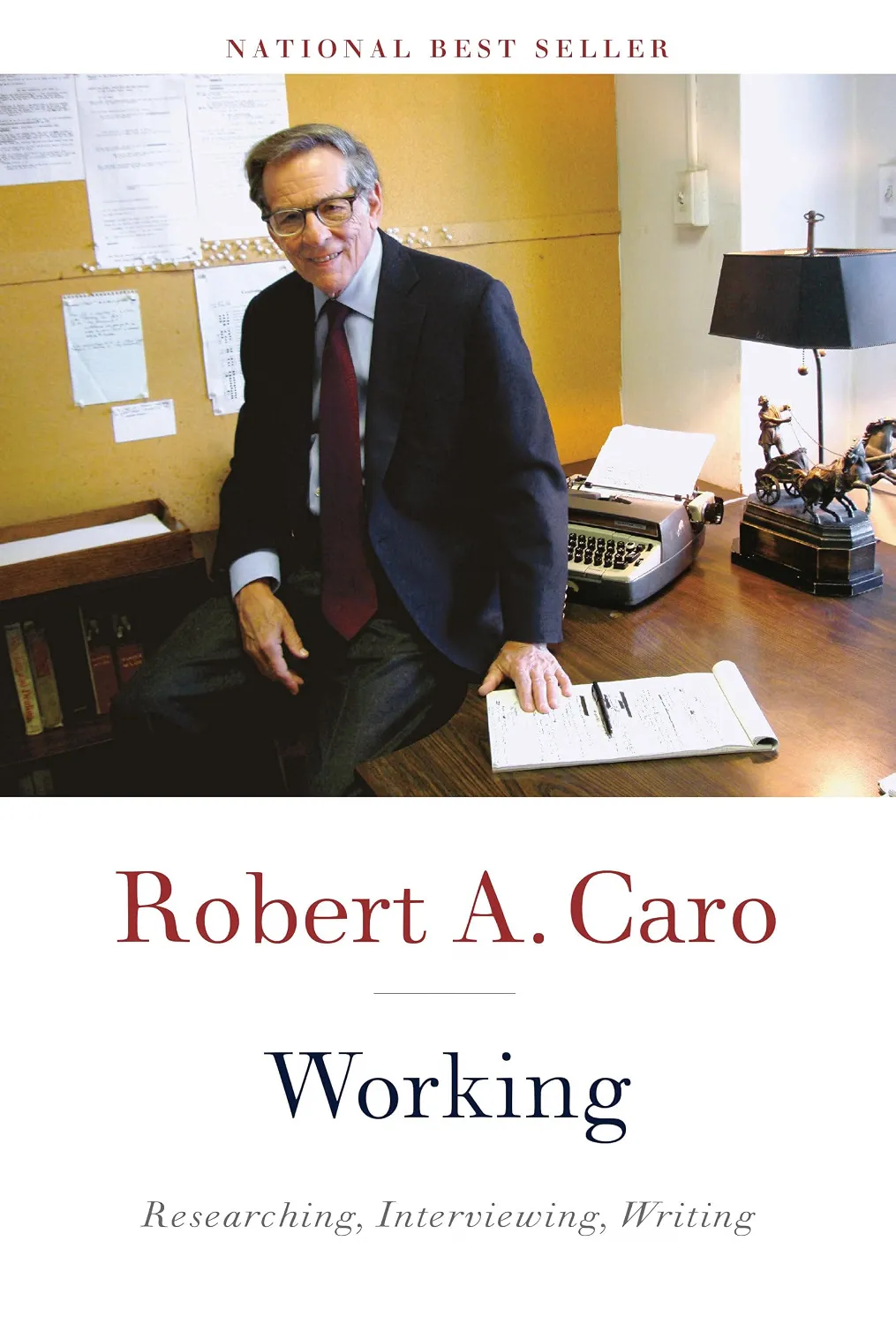
This last book is not focused on writing alone. As the subtitle suggests, it’s about much of what comes before sitting down to write: research.
Robert Caro, one of the best living biographers, walks us through his process: how he dedicates himself to writing a book, interviews people, creates and stores notes over decades, and finally organizes the material into a manuscript.
Caro’s dedication to research is second to none. For his second major biographical project, The Years of Lyndon Johnson, Caro even moved to the edge of the Texas Hill Country for parts of three years when he realized that he did not really understand the people in the place where Lyndon Johnson grew up. Living there eventually helped people open up to him and speak freely about Johnson’s early years.
The details in his books are so precise and vivid that you feel like you’re reading a novel. For example, in his Pulitzer Prize-winning book The Power Broker, which runs to more than 1,200 pages, he writes:
Bella and Emanuel Moses were at their summer lodge at Camp Madison. Every morning a Madison House social worker delivered a New York Times to their door. When he handed it to them on the morning after the verdict, and they leafed through it—all the trial stories were on the inside pages now—and learned of the $ 22,000 judgment against their son, they groaned, and Bella Moses said, “Oh, he never earned a dollar in his life and now we’ll have to pay this.” The social worker recalls: “It was just assumed that they would pay it. They always paid all his debts.” (p. 214).
Caro wrote this book nearly half a century after this happened, yet he describes it as if he were there in person to witness the scene. Making the task even harder, Moses had already instructed his close associates not to speak with Caro while he was writing the book.
How did Caro know exactly what Bella Moses said?
Caro drew a series of concentric circles around Moses and began with the people in the outermost circles, tracking down Moses’s former employees. One of them was Israel Ben Scheiber, the social worker who delivered The New York Times to Bella and Emanuel Moses that morning. Scheiber was standing there when Bella said it, and he remembered her words.
To write that one sentence, Caro had to go through attendance rolls, employment records, and phone books, then finally interview the right person.
These stories go on to show that though writing is hard, the research behind it can be even harder at times.
On the bright side, having books like this available to us helps us understand “what it takes” to create a truly influential piece of writing.
