
Being patient and taking things slow are not the type of qualities we appreciate in today’s fast-moving world.
We’re all driven by the pressure to generate outputs.
But rushing things to completion isn’t a good strategy if you want to create something exceptional.
How to take things slow, be mindful about your career goals, and create exceptional outcomes: that’s what this week’s newsletter is about.
The late 90s were such an unpredictable time for the American tech industry. It was the time when people who got their hands on personal computers started to realize there’s this new thing called the “internet”.
And right at this time, the dot-com boom took off.
The resulting upheaval was like a tectonic shift. The tech giants started to merge small companies to build new ground. In the process, some companies got crushed. People were laid off en masse.
Andy Weir, a software engineer at America Online (AOL), was among this unfortunate bunch. But this was not the end of the world for him. His severance package and stock investments gave him about three years’ worth of financial security. Now having the money and the extra time, instead of applying for a new job right away, Andy Weir decided to do something he’d never tried before: write a book. As he had been a comic and science fiction fan all his life, this is something that he always wanted to do, but didn’t have time to do. This layoff was the silver lining that he was looking for.
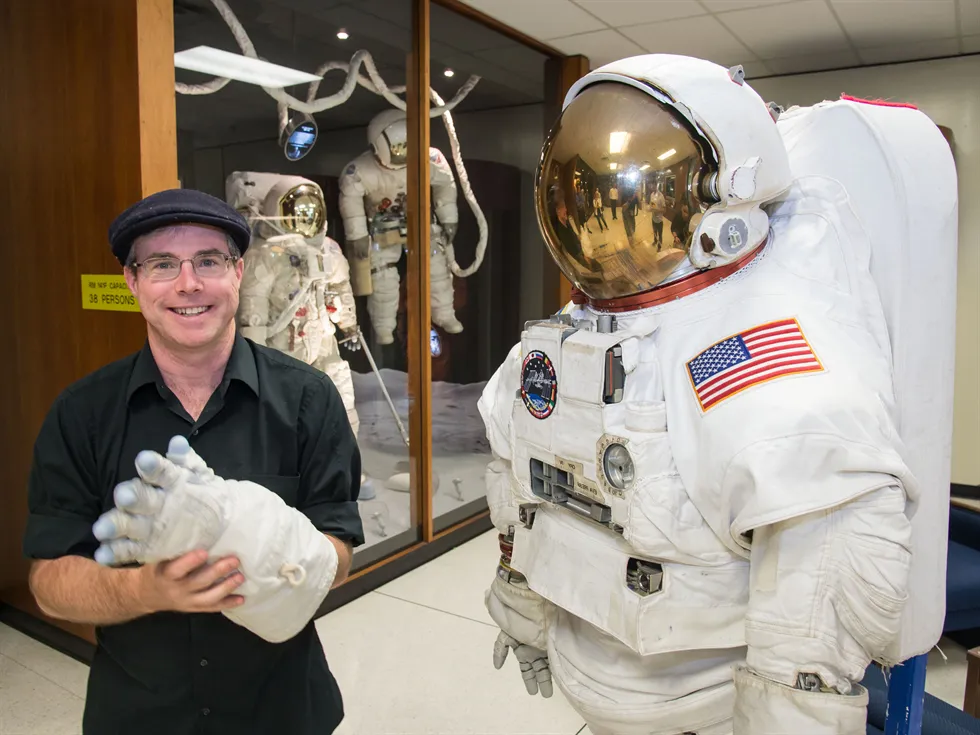
So he made a plan to finally get it done. He gave himself three years, with the hope that he’d be able to publish it right after. Things seemed to go according to the plan.
Well…almost according to the plan.
He finished the novel in time, but there was one big problem.
Not a single publisher was interested in it.
“I just couldn’t get any traction,” he recalls in an interview. “No one was interested. The nice agents were the ones who sent me rejection letters.”
His dream to get published slowly started to fade away, and so did the money he had saved for this venture. After finally coming to terms with this bitter reality, at the end of the third year, Andy Weir went back to his corporate job as a software engineer.
The novel, which he named “Theft of Pride”, would never get published.

Like Andy Weir, we all tend to plan things through and rush towards an output when taking on a new venture.
In fact, it is extremely hard not to do so.
We are constantly being rushed to generate outputs every day.
Everything is promised for outputs, and nothing is promised until you deliver them.
- As an office worker, you’re not going to get promoted for all the late nights, skipped lunches, and weekends spent at your desk, but for the clients you brought in and the projects you delivered on time.
- If you’re a photographer, an artist, or anyone who runs a creative business, now you have to put as much time—or even more time—into creating social media content as you’d put into actual work.
You just have to make sure that the algorithm would not “punish” you for not being relevant.1
The worst part is, deadlines and time pressure have become so commonplace in our culture that we now tend to believe that rushing to the finish line is a proxy for being creative.
But in reality, it’s quite the opposite.
It diminishes it.
This is exactly where Andy Weir found himself. His first priority was to set up a deadline, and work towards an output. Even if he is an exceptional writer, these guardrails held him back from creating something exceptional.
This is a great example of the fact that you can’t just rush exceptional work. Instead, it needs incubation. It demands that you wander around, slow down, and be patient. Research on creative thinking shows that taking breaks during a project to let your ideas incubate, intermittently focusing on something less demanding on the side, or even getting a good night’s sleep gives you a significant creativity boost.2
But the benefits of incubation have their limits too. You can’t just wander around avoiding the work for so long and expect good results. Taking things slow is important, yes, but you also have to be steady.
Cal Newport, a computer science professor and the author of Slow Productivity, explains how to sustain this creative momentum through three simple principles:
- Do fewer things,
- work at a natural pace, and
- obsess over quality.
These principles help us stand out.
And they will eventually break through any corporate barrier or a social media algorithm.
Because in a world where people are rushing to create average outcomes, it is the ones who take their time to generate exceptional ones who get truly appreciated.

And that’s exactly the mentality shift Andy Weir adopted going back to his day job as a software engineer: be patient. Instead of trying to push deadlines, he just started writing: comics, short stories, and serials, the kind of science fiction that he grew up admiring. And instead of trying to find publishers for his work, he decided to publish it online on his website.
He never forced anyone to subscribe to read his work.
“Everything I posted was for free,” he recalled later in an interview. “There wasn’t even a registration on my site.”
But the enthusiasm with which he wrote his stories naturally attracted a crowd. Over about ten years, he’d gathered around 3,000 regular readers on his mailing list. Among the stories he shared was a new novel.
He named it The Martian.
This time, he’d publish the chapters of it as he was writing, getting feedback from his fans along the way. Once the novel was finished, the people who read it chapter by chapter wanted a more convenient way to read the entire book. So they asked him for an ebook. He made one available for free on his website.
But some readers then asked him to put it on Amazon so they could download it straight to their Kindles. So Weir uploaded the ebook and set the price at the lowest Amazon would allow at the time: 99 cents. Out of appreciation for his work, many of his readers started buying the ebook even though they’d already read it. This purchase spike created a sudden boost in Amazon’s sales ranking, and the book rocketed to Amazon’s science-fiction bestseller charts.
More and more people started reading it.
And before long, within four days of each other, he landed both a publishing deal and a movie deal. The movie adaptation would go on to earn more than $630 million worldwide and receive seven Oscar nominations. By 2017, a novel that started as just a hobby project had sold over five million copies worldwide, become a No. 1 New York Times bestseller and had been published in forty languages.3

After the massive success of The Martian, Weir eventually left his job to write full-time, and went on to publish two more bestselling novels: Artemis and Project Hail Mary.
In an interview for Writer’s Digest, Andy Weir reflected on his slow and steady process:
“It takes a lot of time and effort to get good enough at writing … and you just need to accept that.”
- Patreon’s State of Create 2025 report found that, among 1,007 US creators surveyed, 75% said platforms punish them for not constantly publishing, while 78% said burnout affects their motivation to create. ↩︎
- Sio and Ormerod (2009), Does incubation enhance problem solving? A meta-analytic review, Baird et al. (2012), Inspired by distraction: Mind wandering facilitates creative incubation, Wagner et al. (2004), Sleep inspires insight. ↩︎
- CBS News, 2 December 2017 (over five million copies sold), Penguin Random House, 9 May 2017 (No. 1 bestseller status and publication in forty languages). ↩︎