
I talk a lot about finding our strengths and building a meaningful life in this publication. But mostly, I gravitate towards “career change”.
I recently came across a story that shines a light into the dusty corners of that idea.
Sometimes, we’re already in a role that fits us well. We just don’t realise it yet.
How to make full use of your skills, recognise their unique use cases, and thrive where you already are: that’s what this week’s newsletter is about.
The story phase
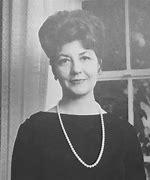
Bette Nesmith Graham, an executive secretary at Texas Bank & Trust, found herself facing a problem she had never anticipated coming her way.
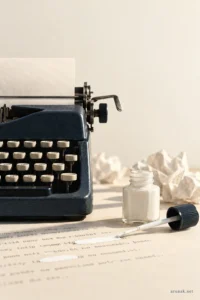
In 1954, her office had introduced electric typewriters: the ultimate productivity booster at the time. They were much faster and more efficient than the old manual typewriters. But this speed created a brand-new problem for Bette. Having typed on manual typewriters for so long, she struggled to adjust to the sensitive keys on this new machine.
She began making so many mistakes.
“My fingers would hang heavy on the sensitive keyboard and the first thing I’d know, I’d have a mistake with a deposit of carbon which I simply couldn’t erase,” she said in an interview.
The only solution she could see was to learn to type differently. But after typing the same way for so long, and with her busy schedule, this was not a possibility for her either.
To make matters worse, as a divorced mother, she depended entirely on her salary to keep the family going. She couldn’t afford to lose her job.
She was trapped.
She realised there was no way to move forward but to resolve this herself. So she tried to look at the problem from a different angle. A little bit of pondering guided her mind towards something she’d always done.
Alongside her secretarial work, she also painted in her free time and took on art jobs to help support herself and her son.1
As a novice oil painter, she’d make mistakes while painting, much as she did when typing on the new electric typewriters. But unlike in typing, she had a pretty good solution for dealing with those mistakes. She’d paint over the mistaken strokes.
This was something many painters did, and it was fairly common in the art world.
What if, Bette Nesmith asked herself, she could apply this to typing?
She could use some white paint, and whenever she made a mistake, she could just paint over it and type again.
So she started experimenting with it. After some tweaks, she came up with a good-enough paint mixture that dried quickly. Then she started applying this new technique at work.
Soon after, other secretaries at her workplace wanted to use her mixture.2 She recalls in a later interview:
“I began to realize that there was a great need for it; I ordered bottles and made my own labels.”
She named her product “Mistake Out” and later changed it to “Liquid Paper”.
By the late 1960s, Liquid Paper was selling around a million bottles a year and had moved into its own plant. By 1975, it was producing 25 million bottles a year, and its products were being sold in 31 countries.
Years later, she explained her original ambition behind Liquid Paper:
“I was just trying to be a better secretary.”
The structure phase
When I first heard this story, I was struck by Bette Nesmith Graham’s optimism, her belief that she could work things out with what she already had.
But optimism is often hard-earned. It doesn’t always come naturally to us. When things get hard, we tend to look elsewhere for solutions, complaining about what we don’t have.
“If I had more experience, more qualifications, or better equipment, I could overcome this,” we tell ourselves.
It was only when Bette stopped worrying about her typing mistakes and started looking for a way forward that she began to connect the dots between painting and typing.
This brings to mind a concept from psychology: “functional fixedness”.3 It describes our tendency to see an object only through its intended purpose. Once we fix our minds on what something is for, it becomes really hard to recognize the possibilities outside its conventional use.
So instead of giving up when we hit a dead end, sometimes the most sensible thing to do is sit back, relax, and open our minds to possibilities we’ve missed along the way.
Sometimes, we already have what we need; we’re just not flexible enough to recognise it.
The interface
So the next time you hit a dead end, here are some questions to help you find a way forward:
- Have I already solved a similar problem somewhere else?
- What do people usually ask me for help with?
- Given the time I have, can I solve this problem on my own? (We often overlook the fact that some problems are bigger than us, and the only sensible way forward is asking for help.)
After Liquid Paper’s huge success, Bette Nesmith Graham invested in a brand-new working environment where her employees could develop what she called their “full usefulness”. She helped design buildings with park areas, fine arts and a library so people from different disciplines can meet and learn from each other.4
She always used to say, “Bloom where you are planted.”
- Her mother, Christine Duval, had taught her oil painting. Christine was an artist and businesswoman who ran a knitting shop. Andrew R. Chow, The New York Times. ↩︎
- Texas Women: Interviews and Images by Patricia Lasher and Beverly Bentley. ↩︎
- See Karl Duncker’s On Problem-Solving (1945), published in Psychological Monographs, 58(5), i–113. ↩︎
- Texas Women: Interviews and Images by Patricia Lasher and Beverly Bentley. ↩︎