
Uncertainty is a certainty in life.
Sometimes, we will have to accept a job without knowing whether we’ll still enjoy it five years from now. Or we have to make a major financial decision without knowing how it’ll affect our life in a few years down the road. Or we may have to move to a whole new city, or even a new country, and start a new life with no indication that things will work out in the future.
What’s the alternative to making such hard, ambiguous decisions? Wait it out until the dust settles? Would that be any better?
Starting out with a workable plan, learning on the go, and embracing the uncertainties as they come: that’s what this week’s newsletter is about.
The Story Phase
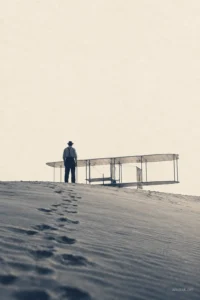
It was 27 July 1901, a breezy day at Kill Devil Hills, North Carolina. The wind swept across the dunes at about 13 miles an hour. For two brothers trying to get their glider off the ground, this was of much importance.
Their glider, with two wide wings stacked one above the other, took to the air, pitched downward, and landed just a few yards away. After several more attempts, they managed a glide of just over 300 feet.
But that’s about it.
Wilbur and Orville Wright knew something was wrong. But they couldn’t work out why.
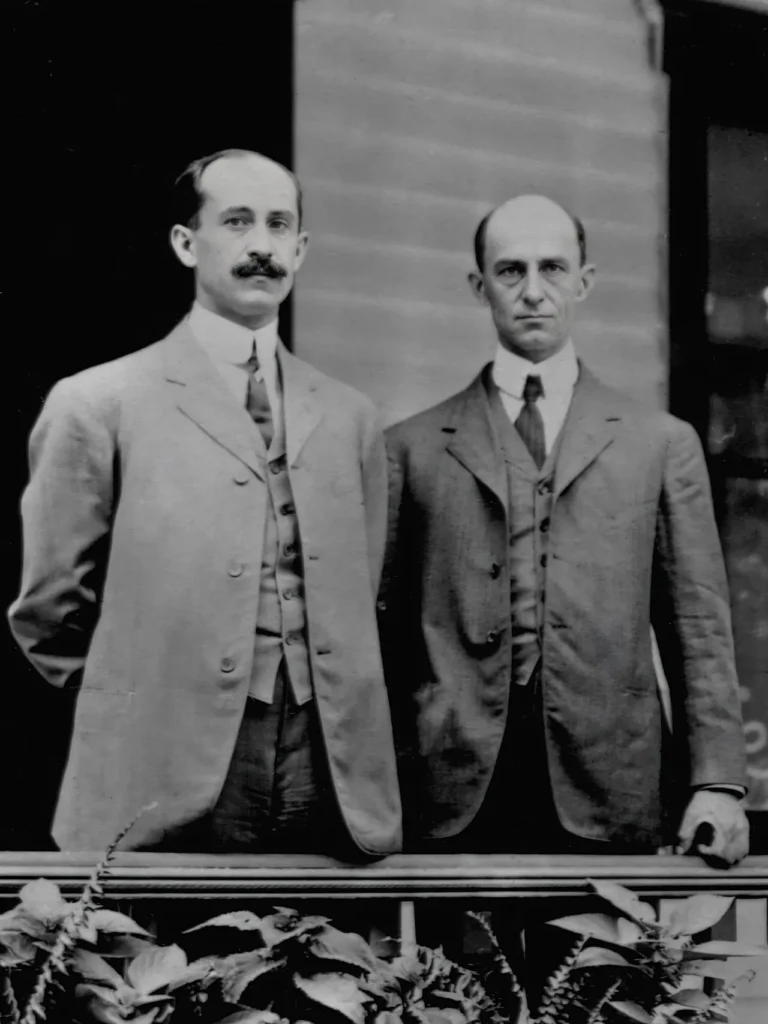
At this point, they’d done all the research. This had been their ambition for a long time.
Being bicycle makers from Dayton, Ohio, they had set their minds on one problem: how to make a machine that flies. They read any books they could get their hands on, did extensive research on aviation history, and even chose the Outer Banks for its strong, steady winds and sand dunes.
Everything was perfectly set up.
But the damn thing would not fly.
After a series of disappointing trials, they realized they needed to take a step back and analyse the problem with some calm. Eventually, they realized what the real culprit was: the glider. It was generating far less lift than they had calculated.
Their calculations were based on published knowledge. But in the field, they realized that they didn’t add up.
They later recalled:
“Having set out with absolute faith in the existing scientific data, we were driven to doubt one thing after another…”
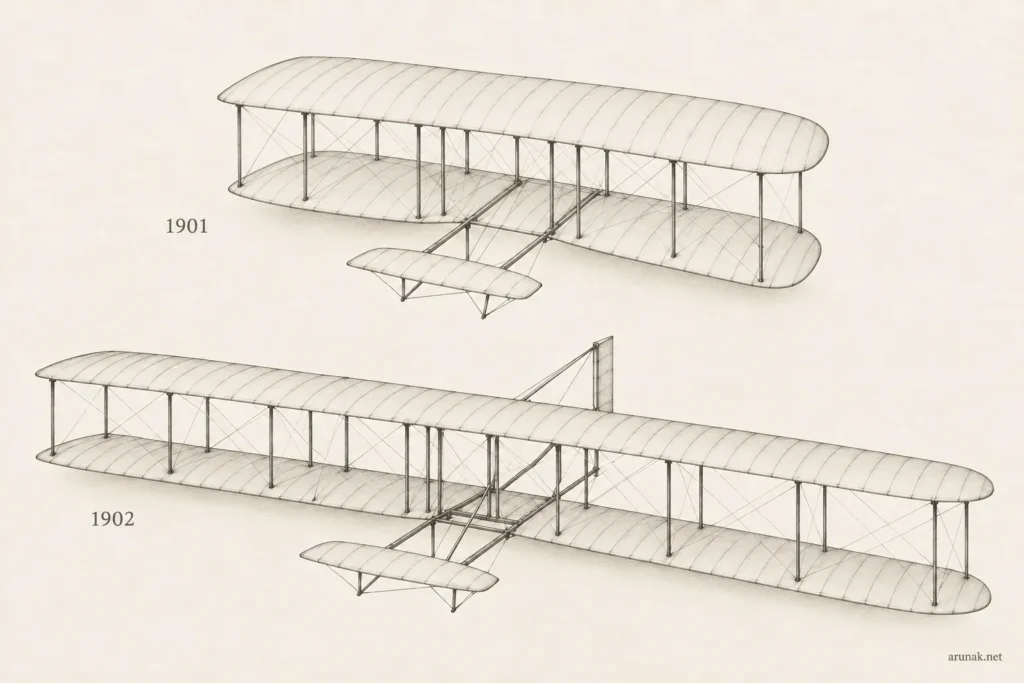
Realizing this, they began to rely more on their own experiments to guide the design. They turned their attention to wing shapes. After weeks of testing and comparing, the solution presented itself: longer and narrower wings.
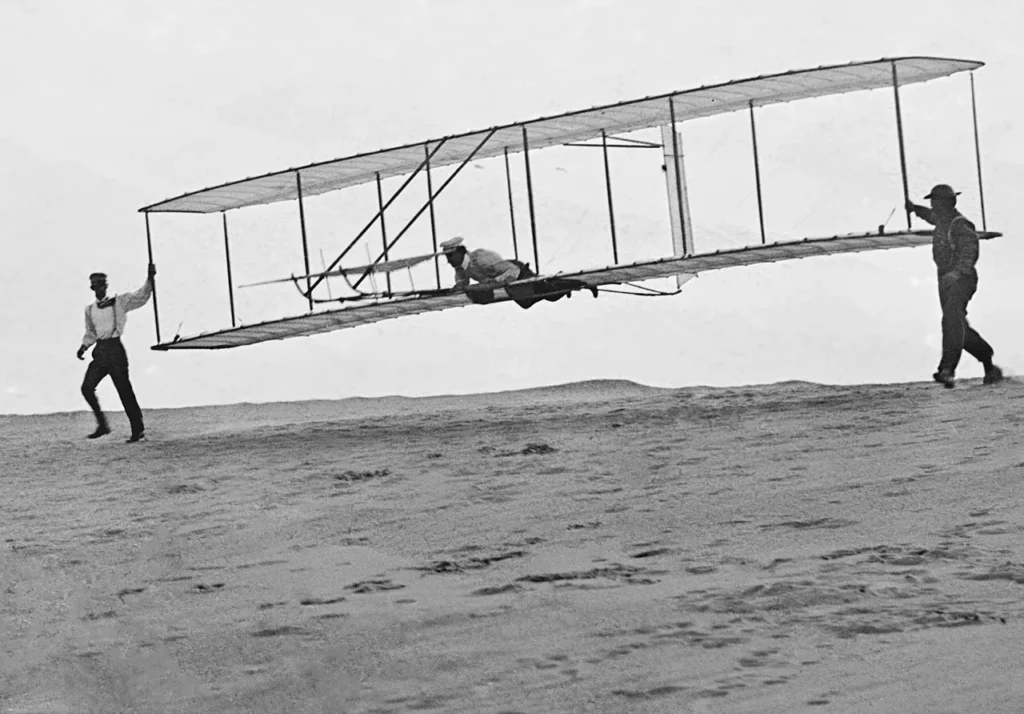
With these design changes, finally, they made their breakthrough in 1902. The glider took to the air and stayed airborne for up to 26 seconds. They could also now control it much more effectively.
The following year, on 17 December 1903, they became the first to make a sustained, controlled flight in a powered aeroplane.
The Structure Phase
Taking the plunge before we have all the answers unsettles us. But often, it is how we find a better solution. We don’t always get it right on the first go. It needs some doing. Most importantly, it needs some room for failure.
Among the studies that have explored this, one that caught my attention was published in 2014. Researcher Manu Kapur randomly assigned 75 ninth-grade students, aged 14–15, to two groups to solve problems with the concept of standard deviation.
The first group was taught the concept as the first step. Then they were assigned a problem to solve. But the second group did not get any instruction beforehand. They went straight to the problem-solving step. Both groups were given one hour to try as many approaches as possible.
None of the students in the second group discovered the standard method on their own. Yet, they produced about six approaches each, on average, to solve problems. By comparison, the first group produced about three.
At the end of this experiment, the second group received the same lessons about standard deviations that the first group did. With this knowledge, they performed even better on tests on conceptual understanding and problem solving.
Kapur calls this sequence of attempting a problem without prior instructions productive failure.
Trying to solve a problem while we’re still unsure how to approach it helps us see the limits of what we already know. The explanation that follows then makes more sense, because we’ve already encountered some of the stumbling blocks the problem presents.
This is exactly what the Wright brothers went through. The hiccups they ran into along the way directed them towards the right solution.
The best way to understand a problem, then, is to just start working on it.
The Interface
Here are three ways to embrace uncertainty in your day-to-day life:
- The attempt itself can improve the plan in hand: Writing that first draft, or launching a prototype before you have all the answers helps make the next attempt more deliberate, more focused, and better informed.
- Trying the same problem in different ways helps us understand it more fully: Comparing two unsuccessful approaches helps explain why they don’t work. Over time, those comparisons shift our understanding from why something doesn’t work to what actually might.
- Feedback becomes more useful when you’ve already had a go at the problem: A worked example, or someone else’s explanation of a problem you’re trying to solve, will make more sense if you have tried it yourself first.
Despite their careful preparation, the Wright brothers’ glider still fell short. But learning from its failures is what actually helped them build the world’s first successful aeroplane.
Sources
- Wilbur Wright, “Some Aeronautical Experiments” (1901). Near-contemporary report supporting the opening action and recorded wind. Read the report.
- National Park Service, “Wright Brothers National Memorial: Site of the First Controlled Powered Flight.” Institutional history supporting the wider setting and the subsequent development of the gliders. Read the history.
- NASA Glenn Research Center, “Smeaton Coefficient.” Technical explanation of the pressure-factor error behind the lift discrepancy. Read the explanation.
- Orville and Wilbur Wright, “The Wright Brothers’ Aeroplane,” collected in The Early History of the Airplane. Retrospective first-person account supporting the quotation and the role of preliminary study. Read the account.