In a previous issue, I wrote about the importance of drawing on ideas from outside your field to get better at yours.
I called this domain mapping.
But there might be times when you’re drawn to a couple of fields and want to carve out a completely new one by combining them all.
Is this even possible? What are the benefits of doing this? And how do you push back against a system that expects you to just … “pick a lane”?
That’s what this week’s newsletter is about.
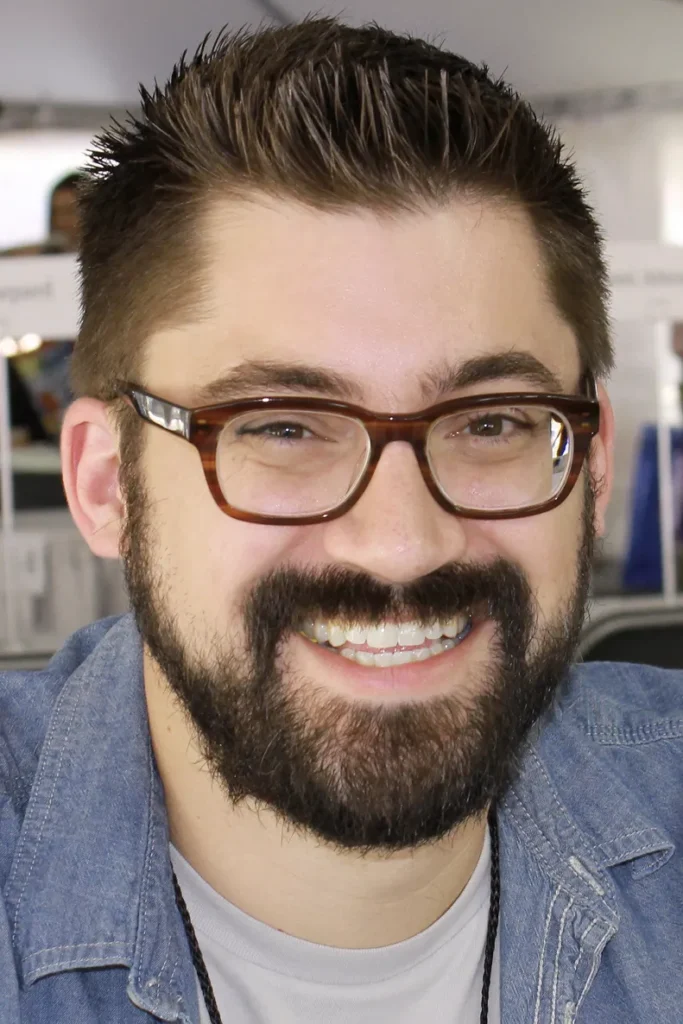
Growing up in a small rural town in Ohio, surrounded by the cornfields, Austin Kleon had plenty of room to let his imagination run wild.
He loved all things creative. Garfield cartoons, Play-Doh, and comic books were his go-tos growing up. With both of his parents working in education, he also took a keen interest in writing around the same time. Soon, pictures and words—the building blocks of art and writing—became the lens through which he learned to make sense of the world around him.
But as he started to climb the educational ladder from elementary school to middle school, his opportunities to express himself through a mixture of pictures and words slowed down to a halt. “All of a sudden, it is divided into art class and English class,” Kleon recalls in an interview. “After that point, words and pictures began to split apart for me.” The education system is not designed to combine domains. Realizing this uncomfortable truth, Kleon started to question his true identity in the world. The doubts started to creep in. He began to deviate from his true calling, and started to search for alternative paths that were available in the usual career catalogue.1
And then it occurred to him that he already had years of experience playing different musical instruments. He was particularly good at classical piano. One of his childhood friends, who later went on to become a world-class drummer, would play alongside him in various bands. Playing these gigs had already given him a taste of the music scene. So there he had it, a career straight from the catalogue—musician. For most of his teenage years, he’d spend his time playing in bands and making fake album covers.
But his urge to build a career that involved both words and pictures continued to nag at him. So, when the time finally came to go to college, hoping to find a way to bring his interests together, he chose Miami University, specifically because it offered a rather unconventional option of designing his own major and taking courses in different disciplines. Kleon would take art classes as well as courses in Greek and Roman literature, and would attend creative writing workshops alongside them, trying to finally fuse all his interests into a single degree.
But even with this decent enough freedom to combine his interests, he’d still feel the pressure to pick a lane at the end: the lane of writing, or the lane of art. Eventually, he decided to go with writing, because it struck him as a more “serious” and “responsible” subject than art. He started to study sixteenth-century tragedies and novels by Dostoyevsky and Dickens. But he soon began to wonder whether he had made a mistake by choosing literature. “I was losing my mind writing terrible papers for my tutor,” he later recalls.

Kleon’s struggles to find his place in the world are something that we all can relate to, one way or another. It is a fundamental issue. Our education systems are designed to help us learn the ins and outs of one particular domain, not merge different ones. So when you find yourself in a situation like this, it seems quite reasonable to put the blame on the system. But that’s too easy. If you dig deeper and try to answer the question of why our systems are built like this and why they’ve held up for centuries, you may see them in a different light.
The answer lies in a riddle that kept us busy for a very long time: “Why us?” Why don’t killer whales, crocodiles, or chimpanzees dominate Earth? What makes us so special? It’s quite tempting to answer this question with “intellect.” But that’s only partially true. We have no physical advantage over most animals. If you’re surrounded by a pack of hungry wolves, a sharp mind won’t stand against those sharp teeth. But even with all these physical disadvantages, our ancestors rose to the top in a way no other animal had.
How?
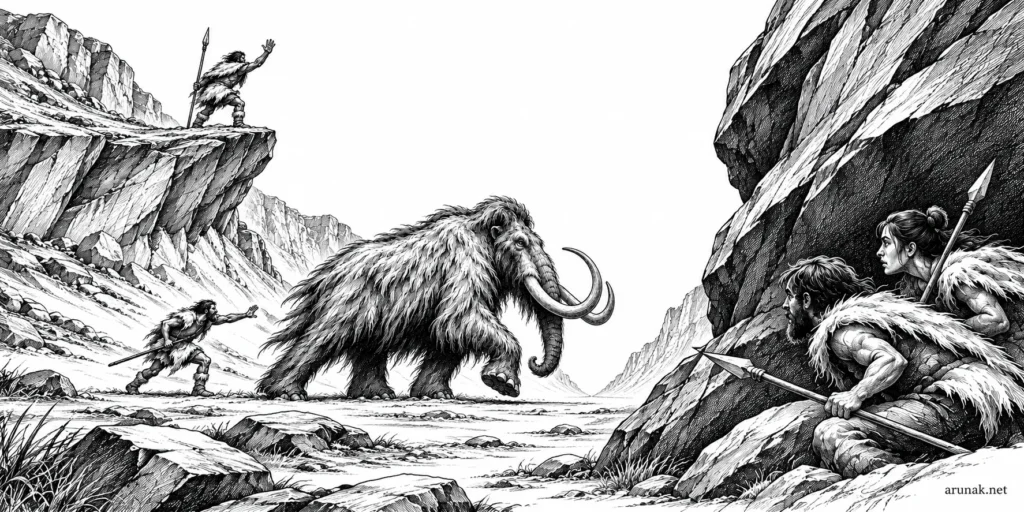
They did it by pooling their intelligence together. A group of specialists working together as a pack is what Ridley Scott, science writer, calls collective intelligence. While hunting for a mammoth, for example, one could spot a mammoth and signal its location to the others in the group, then another lure it toward a place to sabotage it, where a second group is waiting there with spears. That’s how we won the game: by specialization. “the whole notion of specialised individuals is rare outside the human race …,” says Matt Ridley in his book The Rational Optimist, bringing this idea home.
It worked for us. So we decided, very early on, that all our systems should favor it. From storytellers and shamans in hunter-gatherers to medical doctors and IT specialists, specialization has been the backbone of the human race.2
So it makes perfect sense that all our social systems, including education, are built to promote specialists, not generalists. And it is important that they stay that way.
However, there’s one condition under which this age-old logic breaks down. And that’s when you want to create a new specialization on your own. Because more often than not, you’ll have to fuse a couple of specializations together to create a new one.3
But in the process of doing so, you risk coming across as a generalist who’s trying to wear too many hats at once. So the system pushes back. This is exactly the situation Austin Kleon found himself in. But it’s not the system’s fault. We know that by now. And it is still possible to break through this systematic pressure. Many people have done it in the past. You just have to take a step back, plan your next move, and, most of all, be courageous enough to take the plunge, even if it means making compromises down the road.
And that’s the price you will have to pay to unlock your true potential.

Kleon finally came to understand this by accident. Continually being frustrated with the kind of writing he was working on, he drew a map of London one day, trying to explain the plot of Dickens’s Our Mutual Friend to his tutor. This was an unconventional choice, to say the least. Because this kind of thing is ordinarily presented in an essay. But the feedback he got from his tutor caught him off guard. “This is better than anything you’ve turned in for me,” his tutor said, as Kleon recalls in an interview.
This was the kind of encouragement he’d been aching for all this time. He finally got the green light. So he decided to pick up where he’d left off. “That crummy map was better than any of the writing I had done!” he says, looking back on that turning point. “I knew that I had to bring drawing back into my life, so I bought a sketchbook and started drawing again.” Yet this was still a rather unconventional career path. The system wouldn’t let him slip through that easily just because he was excited. Kleon already knew this. But now he was ready to take a step back and give it his all. He also had a clearer sense of direction this time. After graduating from college, Kleon took a “bridge job” as a public services assistant at the Cuyahoga County Public Library. Learn more about bridge jobs in my guide to choosing one during a career change. Having to work only 20 hours a week, he had enough free time to lay the groundwork for a new career. He’d start a blog—which he still updates today—and publish his “blackout poems” there.
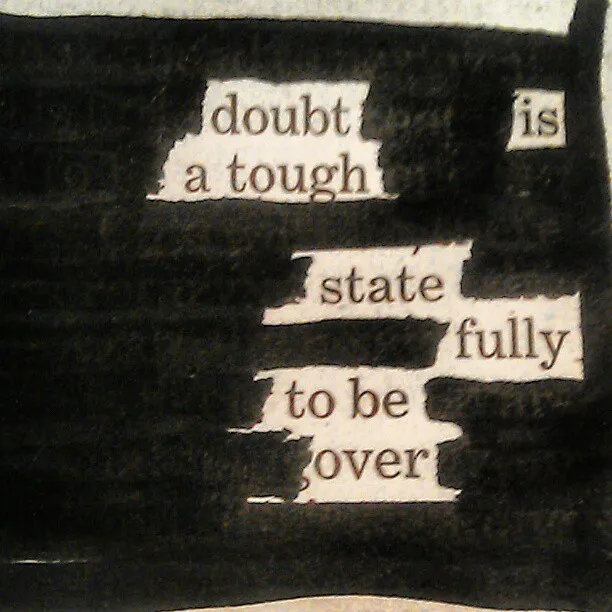
Around the same time, Kleon started following the work of information designers and cartoonists, which helped set him on the path to a job as a web designer. Now, with a foot in both worlds—writing and art—he had no doubt in his mind that his best work lived where the two met. “I suddenly realized that I wasn’t really a designer,” he says, looking back on the period after his first book, Newspaper Blackout, came out in 2010. “I was a writer with a design sensibility.” In 2012, having figured out what kind of work he could excel at, Kleon published a rather unusual, intriguing little book called Steal Like an Artist.
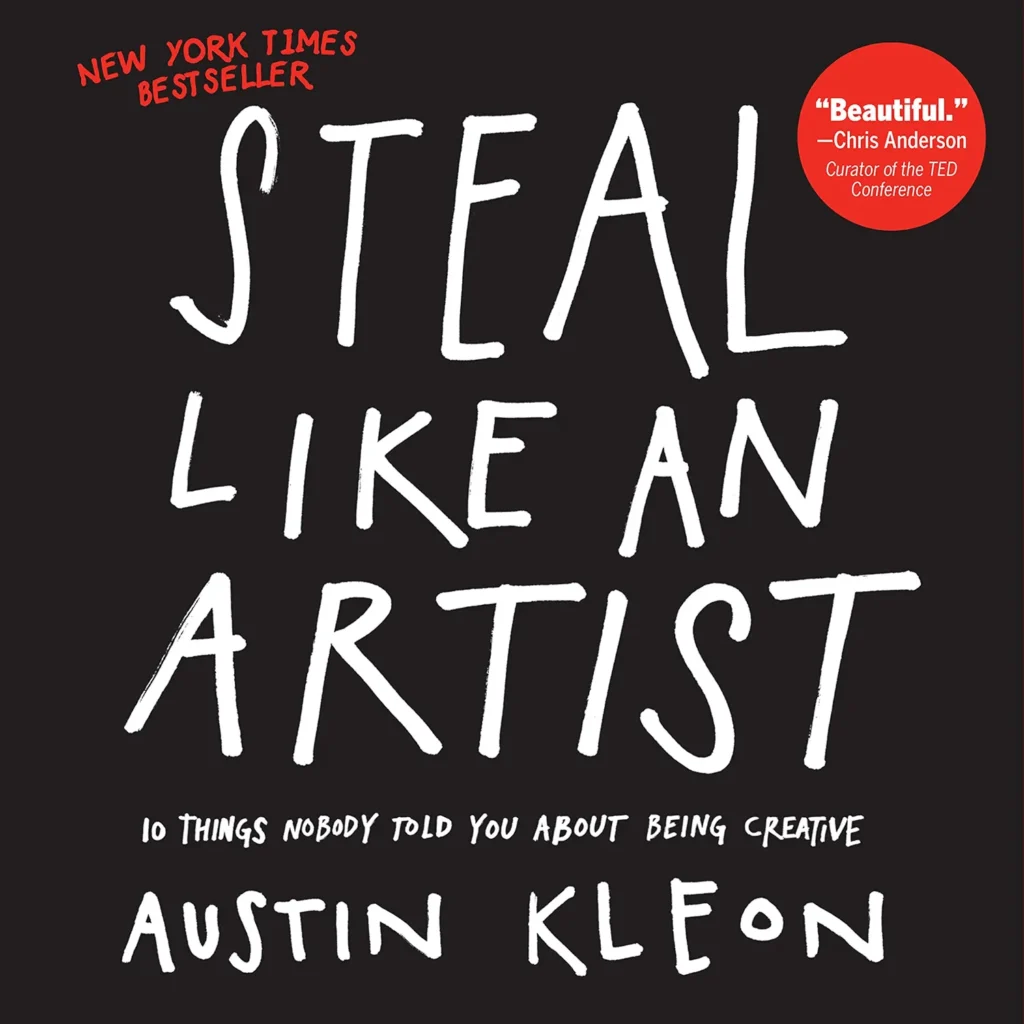
It became a massive success: made the New York Times bestseller list, sold more than a million copies, and was translated into more than 30 languages. Following the same playbook, Kleon continued to write books as distinctive and playful as his first one, including the bestsellers Show Your Work!, Keep Going, and Don’t Call It Art. He’s finally carved out a specialty of his own.
“Creativity is not the lone genius myth—it is actually the result of connectedness,” Kleon says
- In Mastery (2012), Robert Greene calls this your “Life’s Task.” For more information, read the full book review here. ↩︎
- Migliano, A. B., & Vinicius, L. (2022). The origins of human cumulative culture: From the foraging niche to collective intelligence. Philosophical Transactions of the Royal Society B: Biological Sciences, 377(1843), 20200317. https://doi.org/10.1098/rstb.2020.0317. ↩︎
- Zhang, S., & Nickerson, J. V. (2021). Occupation modularity and the work ecosystem. ICIS 2021 Proceedings, paper 20. Conference proceedings · Full text, p. 14 ↩︎